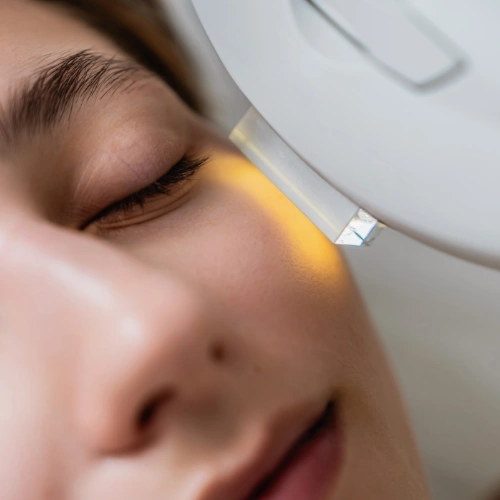
IPL Photofacial in Toronto

IPL (intense pulsed light) uses broad-spectrum light energy to target pigmentation, sun damage, redness, broken capillaries, and uneven skin tone. It's one of the most effective non-invasive treatments for reversing visible sun damage and is particularly popular in Toronto after summer, when years of UV exposure start showing up as brown spots and redness.

See providers in Toronto
IPL Photofacial in Toronto

Top IPL Photofacial Clinics in Toronto

IPL results depend heavily on device quality and your provider's ability to calibrate settings for your specific skin tone and concern. The light targets pigment (melanin) and hemoglobin (redness), which means the wrong settings on darker skin tones can cause burns or hyperpigmentation. The best IPL providers in Toronto use current-generation devices, perform a thorough Fitzpatrick skin typing, and do a test patch before your first full treatment.

The clinics below are the highest-rated IPL photofacial providers on PrettyLyst based on verified patient reviews, credentials, and overall experience.

ML Aesthetics Clinic

Toronto, ON

5.0 PrettyLyst

Toronto’s Non-Surgical Aesthetics Experts specializing in Botox, Fillers, Ultherapy, and Brazilian-inspired beauty treatments.

Chemical peel

ML Aesthetics Clinic

Toronto, ON

5.0 PrettyLyst

Toronto’s Non-Surgical Aesthetics Experts specializing in Botox, Fillers, Ultherapy, and Brazilian-inspired beauty treatments.

Lip filler

Dea Beauty Clinic

Toronto, ON

5.0 PrettyLyst

Non-surgical facial treatments to amplify your inner beauty. Specializing in PRP, laser treatments, fillers, and rejuvenation procedures.

Lip filler

Reviven Glow

Toronto, ON

5.0 PrettyLyst

A skincare studio offering personalized corrective skincare services in Etobicoke, Toronto, with advanced treatments for skin rejuvenation and health.

HydraFacial

PureGlow Aesthetics

Toronto, ON

5.0 PrettyLyst

Toronto's premier aesthetics studio offering rejuvenating facials and laser treatments for glowing, confident skin.

Classic facial

Reviven Glow

Toronto, ON

5.0 PrettyLyst

A skincare studio offering personalized corrective skincare services in Etobicoke, Toronto, with advanced treatments for skin rejuvenation and health.

Laser hair removal

How Much Does an IPL Photofacial Cost in Toronto?

IPL photofacials in Toronto run $200–$500 per session, with most standard full-face treatments falling in the $250–$400 range. Spot treatments targeting a specific area (hands, chest, single cheek) can be less. Most patients need 3–5 sessions spaced 3–4 weeks apart for optimal clearing of pigmentation and redness.

The device your clinic uses is a real pricing factor. Clinics using newer-generation IPL platforms (Lumecca, BBL, M22) tend to charge at the higher end but often require fewer sessions to achieve results. For more on IPL, see our guide to IPL photofacials.

Toronto IPL Photofacial Pricing
Based on 1177 listed Toronto providers
Per session
$200–$500
Toronto IPL Photofacial Pricing pricing
Treatment Price range
Single area
spot treatment or small zone · 15-20 min
$150 – $300
Full face
comprehensive treatment · 30-45 min
$250 – $400
Full face + neck or chest
extended treatment area · 45-60 min
$350 – $500+
Tip: Ask which IPL device your Toronto clinic uses. Newer-generation platforms like Lumecca and Sciton BBL deliver stronger results in fewer sessions than older devices, which can make a higher per-session price more cost-effective over a full treatment course.

IPL Photofacial by Neighbourhood in Toronto

Where you go shapes the experience. Each borough has a distinct clinic culture, price range, and clientele.

Price range: Lower Mid Premium

What to Know Before Getting an IPL Photofacial in Toronto

IPL is more aggressive than a facial and carries real risks on certain skin types. Here's what to understand before booking.

Skin tone determines your candidacy

IPL is not safe for all Fitzpatrick types

IPL targets melanin, which means it can't easily distinguish between unwanted pigmentation and your natural skin colour. On lighter skin tones (Fitzpatrick I–III), IPL is very effective and low-risk. On darker skin tones (Fitzpatrick IV–VI), the risk of burns, blistering, and post-inflammatory hyperpigmentation increases significantly. Some newer devices handle medium tones better, but IPL is generally not recommended for very dark skin. Your Toronto provider must assess your skin tone before treating.

Dark spots get darker before they clear

This is the treatment working, not a complication

After an IPL session, treated pigmentation spots will darken and rise to the surface over 3–7 days, then flake off naturally. Your skin may look worse during this "coffee ground" phase before it looks dramatically better once the darkened spots shed. This is normal and expected. Don't pick at the spots — let them fall off on their own.

3-5 sessions for full clearing

Each session targets a deeper layer

IPL works in layers — each session clears surface-level pigmentation, revealing deeper pigment that the next session targets. Most Toronto patients need 3–5 sessions spaced 3–4 weeks apart for comprehensive clearing. Stubborn melasma or deep sun damage may require more sessions or a combination approach with chemical peels.

No tanning before or after treatment

Active tan dramatically increases risk

You cannot have an active tan (natural or spray) when getting IPL. A tan increases melanin in your skin, which means the device can't differentiate between the tan and the pigmentation it's targeting, leading to burns. Most Toronto providers require you to avoid sun exposure for 2–4 weeks before and after treatment. Fall and winter are the safest seasons for IPL in Toronto.

This information is for general educational purposes. Always consult directly with a qualified provider to determine if IPL is right for you.

How to Choose an IPL Photofacial Provider in Toronto

IPL is one of the treatments where device generation and provider calibration skill both matter significantly. A current-generation device (Lumecca, Sciton BBL, Stellar M22) in the hands of an experienced operator will produce dramatically better results than an older device or a provider who uses the same settings on every patient. Ask which platform they use and how many IPL treatments they perform per month.

Your provider must perform a Fitzpatrick skin typing assessment and ideally a test patch before your first full treatment, particularly if you have medium to darker skin tones. They should ask about recent sun exposure, tanning, and any photosensitizing medications (retinoids, certain antibiotics, some acne medications). If a provider doesn't ask about any of these, find a different clinic.

Red flags to watch for: No skin typing or test patch, treating actively tanned skin, using the same energy settings on every patient, inability to name the device they use, performing IPL on Fitzpatrick V–VI skin without a specific safety protocol, and clinics that don't ask about medications.

The best IPL results in Toronto come from providers who combine technical device knowledge with experience reading skin response in real time — adjusting energy levels between pulses based on how your skin reacts. PrettyLyst's ratings let you compare Toronto IPL providers based on verified patient reviews.

Compare Pigmentation & Redness Treatments

IPL is one of several ways to address pigmentation and redness in Toronto. Here's how the main options compare.

Compare pigmentation and redness treatments in Toronto
Chemical Peel (Medium)
Chemical resurfacing for tone
Fraxel / Fractional Laser
Deeper resurfacing, more downtime
Topical Treatment (Prescription)
Gradual, no in-clinic sessions
LED Red Light Therapy
Gentle, anti-inflammatory
How it differs Uses acid solutions to remove pigmented surface layers chemically. More effective for diffuse discolouration and melasma than IPL in some cases, and safer on darker skin tones when performed by an experienced provider. 3–7 days of peeling. Lower cost per session but may need more sessions for stubborn pigment. Uses focused laser energy for deeper skin remodeling than IPL. More effective for textural concerns, fine lines, and deeper pigmentation. Significantly more downtime (5–10 days) and higher cost. Better for combined texture + pigmentation concerns rather than pigmentation alone. Prescription-strength hydroquinone, tretinoin, or azelaic acid applied at home over weeks to months. Slower results but no in-clinic visits, no downtime, and suitable for all skin tones. Often used as a prep before IPL or as maintenance between sessions. Available through Toronto dermatologists. Uses red light wavelengths to reduce inflammation and stimulate healing. Does not directly target pigment or redness the way IPL does. Better as a complement to IPL (used post-treatment to calm skin) than as a standalone pigmentation treatment. No downtime, no risk.
Price $200–$400 $500–$1,500 $50–$150/month for products $60–$200
Best for Melasma, diffuse discolouration, patients with darker skin tones where IPL is risky Deep pigmentation combined with scarring or texture issues, patients willing to invest in longer downtime Mild pigmentation, patients who prefer at-home treatment, darker skin tones Post-treatment healing, mild redness, patients who want the gentlest possible approach
In Toronto 308 providers 119 providers Via dermatologist prescription 149 providers

Common Questions About IPL Photofacials in Toronto

How much does an IPL photofacial cost in Toronto? +
Full-face IPL runs $250–$400 per session in Toronto, with extended treatments (face + neck or chest) reaching $350–$500+. North York and Etobicoke clinics tend to price at $200–$300, while Yorkville and downtown providers charge $300–$450. Newer devices like Lumecca often cost more per session but may require fewer total sessions.
Is IPL safe for darker skin tones in Toronto? +
IPL carries increased risk on Fitzpatrick IV–VI skin because the device targets melanin and can't fully distinguish between unwanted pigmentation and natural skin colour. Some newer-generation IPL platforms handle medium tones (Fitzpatrick IV) better, but IPL is generally not recommended for Fitzpatrick V–VI. If you have darker skin, ask your Toronto provider about alternative treatments like chemical peels, microneedling, or prescription topicals that are safer for your skin type.
When is the best time to get IPL in Toronto? +
Fall and winter are ideal because UV exposure is lower and you're less likely to have an active tan. IPL requires avoiding sun exposure for 2–4 weeks before and after treatment, which is much easier to manage during Toronto's November-to-March stretch. Starting a series in October or November gives you clean, even skin by spring.
How many IPL sessions do I need in Toronto? +
3–5 sessions spaced 3–4 weeks apart is standard. Light sun damage may clear in 3 sessions. Deeper pigmentation or rosacea-related redness may need 5+. Most Toronto clinics offer series pricing at a 10–15% discount. Your provider should be able to estimate your session count after your first treatment based on how your skin responds.
Does IPL hurt? +
Most Toronto patients describe it as a rubber band snapping against the skin. It's uncomfortable but tolerable, and each pulse lasts a fraction of a second. Most providers apply a cooling gel or use a chilled handpiece to manage discomfort. The face is generally more sensitive than the chest or hands. Sessions are short enough (20–45 minutes) that the discomfort doesn't accumulate.
Can I combine IPL with other treatments at my Toronto clinic? +
Yes. Many Toronto dermatologists and medi-spas alternate IPL with chemical peels in a pigmentation treatment plan. IPL can also be combined with microneedling (on separate visits) for patients addressing both pigmentation and texture. Avoid scheduling IPL within 2 weeks of a chemical peel or any treatment that compromises the skin barrier. Your provider will space treatments appropriately.

IPL photofacial providers in Toronto

Clear filter

Other Skin & Facial treatments in Toronto