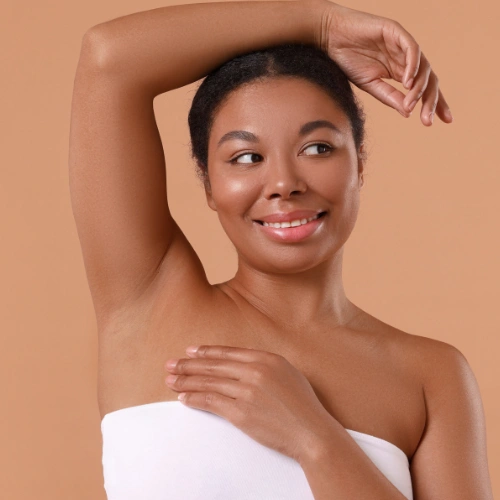
What is Laser hair removal?
Laser hair removal uses concentrated light energy to target melanin (pigment) in hair follicles. The laser converts to heat inside the follicle, damaging it and inhibiting future hair growth. Common systems include diode lasers (versatile, effective across most skin and hair types), alexandrite lasers (fast, best for lighter skin with dark hair), and Nd:YAG lasers (the preferred choice for deeper skin tones). IPL uses broad-spectrum light rather than a single laser wavelength and is generally less precise. A qualified provider will recommend the right device for your skin and hair at consultation. Most people achieve 70 to 90% hair reduction after completing a full series of sessions.
What laser hair removal can help with
- ✓ Long-term reduction of hair on the legs, underarms, bikini area, and full body
- ✓ Facial hair reduction on the upper lip, chin, cheeks, and sideburns
- ✓ Eliminating and preventing ingrown hairs, particularly in the bikini area and underarms
- ✓ Back, chest, and shoulder hair removal for men
- ✓ Refining hair texture so any regrowth comes back finer and lighter
- ✓ Precision shaping of the hairline, brows, or beard edges
What to expect during your laser hair removal appointment
Sessions run 10 to 60 minutes depending on the area. You will be asked to shave 24 to 48 hours beforehand. At the clinic, your provider cleanses the skin, fits you with protective eyewear, and passes a laser handpiece over the treatment area. The sensation is a quick snap or flick with each pulse, often compared to a rubber band against the skin, followed by brief warmth. Modern devices with integrated cooling make the process much more comfortable than older equipment. Skin may look slightly pink afterward and feel warm for a few hours. Treated hairs shed gradually over one to three weeks. Avoid sun exposure, heat, and exfoliation for 24 to 48 hours post-treatment.
What results can you expect with laser hair removal?
Each session progressively reduces active follicles, with hair coming back finer, sparser, and slower-growing after each treatment. A full series typically delivers 70 to 90% long-term hair reduction. Laser is most effective on dark, coarse hair; it is not effective on light, gray, red, or white hair, which lacks the pigment the laser needs to target. Hormonal fluctuations can stimulate dormant follicles over time, which is why some areas benefit from occasional maintenance sessions.
How long laser hair removal results last
Follicles that are fully disabled do not regrow hair. Most people enjoy long-term reduction for years after completing a full series. Hormonally sensitive areas like the face, chin, and bikini line are more prone to new growth over time and typically benefit from one or two maintenance sessions per year. Legs, underarms, and the back tend to stay clear longer without touch-ups.
Who's a good fit for laser hair removal?
Laser works best on dark hair. With the right device (particularly Nd:YAG), it can be performed safely across a wide range of skin tones including deeper complexions. It is not effective on light, gray, red, or white hair; those hair types are better served by electrolysis. Tanned skin should not be treated due to increased risk of burns or pigmentation changes. Laser is also not recommended during pregnancy or for people on certain photosensitizing medications. A consultation is the best way to confirm suitability and identify the right device for your skin and hair type.
Alternatives to laser hair removal?
- Electrolysis: the only permanently classified hair removal method; works on all hair colors including light and gray; treats follicles individually so better suited to smaller areas
- IPL (intense pulsed light): broad-spectrum light-based hair reduction; less precise than laser and also pigment-dependent
- Waxing and sugaring: temporary root-level removal lasting several weeks; should be avoided between laser sessions
- Shaving: the recommended method between laser appointments as it does not disturb the follicle
- Eflornithine cream (Vaniqa): prescription topical that slows facial hair regrowth; often used alongside laser or electrolysis
Common laser hair removal questions
How does laser hair removal work? + -
Does laser hair removal hurt? + -
How long does a laser hair removal session take? + -
How soon will I see results from laser hair removal? + -
Is there downtime with laser hair removal? + -
How many sessions does laser hair removal take? + -
Can laser hair removal treat all skin types? + -
Can laser hair removal be combined with other treatments? + -
Featured clinics
Top-rated providers offering laser hair removal.
Anagenesis Beauty Clinic & Spa
Toronto, ON
Anagenesis Beauty Clinic & Spa is Toronto's premier destination for professional hair removal and skincare treatments. We specialize in laser hair removal, waxing, sugaring, and advanced facial treatments with a focus on delivering exceptional results in a clean, welcoming environment.
BOSS Aesthetics
Toronto, ON
Boss Aesthetics is a nurse-led clinic in Toronto offering a wide range of aesthetic treatments including injectables, facials, laser services, and more. Enhance your confidence with our exceptional treatments!