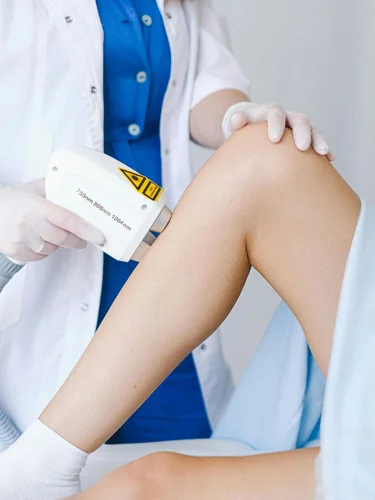
Is laser hair removal painful?
Laser can cause discomfort in some people, but it's generally well-tolerated across most treatment areas. Many describe it as quick, repetitive stings or snaps that last a fraction of a second each time the laser pulses. Mayo Clinic describes the sensation as discomfort like a warm pinprick, and notes you may also feel cold from a cooling device or gel used during treatment.
The "hurt" part also depends on what you're treating. Areas with thinner skin, more nerve endings, or coarse dense hair usually feel more intense than areas with thicker skin and finer hair. Cooling, settings, and your provider's technique can change your experience a lot, which is why two people can have totally different stories about the same treatment.
One quick future-proof note: the basics of comfort, cooling, and what-to-ask are similar across North America, but exact devices and protocols vary by clinic.
What laser hair removal feels like in real life
During a session, you'll feel pulses. Each pulse is a quick sensation, then it's gone, and you move on to the next one. Most people describe the laser as a series of stings, and note many people compare it to a rubber band snapping against the skin.
You might feel a warm pinprick from the pulse, and at the same time you may feel cold from the cooling device or gel. That mix of hot and cold is why some people describe it as "spicy but manageable," especially when the clinic has good cooling.
A few normal things that can surprise people:
- You might smell singed hair during the session. This can happen because hair above the skin can scorch if it's not shaved close enough.
- You can have redness and swelling afterward that looks like a mild sunburn.
- The intensity can jump around even within one area, especially near bony spots or where hair is denser.
A simple pain scale most people relate to
Pain is personal, but it helps to have a shared language when you're asking a clinic what to expect. For many people, laser hair removal lands somewhere in the "annoying but tolerable" range, especially with cooling.
Here's a practical scale:
- 1 to 3 out of 10: mild sting, very manageable, more noticeable than shaving but not a big deal
- 4 to 6 out of 10: sharp snaps in sensitive zones, you're tensing a bit, but you can get through it
- 7 to 9 out of 10: intense, you're counting pulses, you want breaks, usually tied to sensitive areas, higher settings, weak cooling, or high anxiety
If a clinic tells you "it never hurts," be skeptical. A more trustworthy answer is usually: "It varies by area and person, and we use cooling and adjustable settings to keep it tolerable."
Which areas hurt the most with laser?
Yes, some areas tend to feel more intense. It's not because something is wrong. It's usually because the skin is thinner, the area is more sensitive, or the hair is coarser and denser.
Pain by area at a glance
| Area | Typical comfort level | Why it can feel stronger |
|---|---|---|
| Upper lip | Often more intense | Thin skin, lots of nerve endings, close to the mouth |
| Underarms | Often more intense | Sensitive skin, friction, dense hair |
| Bikini line / Brazilian | Often more intense | High sensitivity, dense hair, friction from clothing |
| Chin / jawline | Medium to high | Hair can be coarse, facial sensitivity varies |
| Ankles / shins | Medium to high | Bony spots, thinner tissue over bone |
| Lower legs | Often more tolerable | Thicker skin than face, larger flat surface |
| Forearms | Often more tolerable | Typically less dense hair, easier coverage |
| Back / chest | Variable | Can be dense and large area, but skin is thicker |
This is a trend, not a rule. Some people find underarms easy and lower legs annoying. The key is that your provider can usually adjust comfort with cooling, pacing, and settings.
Why laser hair removal pain can vary session to session
A lot of people expect it to be exactly the same every time. It often isn't, and that's normal.
Reasons it can feel easier over time:
- As hair becomes finer or sparser, each pulse may feel less intense.
- You're less anxious because you know what's coming.
- The provider finds your "sweet spot" for settings and cooling.
Reasons it can feel sharper on a later session:
- You shaved too early and there's more surface hair to singe.
- Your skin is more sensitive that day (stress, hormonal shifts, skin irritation).
- The provider adjusted settings, especially if they are trying to target remaining coarse areas.
If your experience suddenly changes, it's reasonable to ask what changed in the protocol. Remember: you're not being difficult. You're being informed.
Skin type and hair type can change the hair removal experience
This part matters for both comfort and safety. Laser hair removal works by targeting pigment in the hair follicle. The laser passes through the skin to the hair follicles, and that heat damages follicles to inhibit hair growth. Because pigment is involved, your skin tone and hair color influence which settings and approaches are appropriate.
Darker skin tones and comfort
If your skin has more pigment, your provider generally needs to be thoughtful about laser choice and settings to reduce the risk of skin side effects. That can influence comfort in a few ways:
- Some providers use different pulse durations or energy levels for safety, which can change the sensation.
- Cooling becomes even more important because it can help protect the surface of the skin while the laser targets follicles.
- You may be asked to avoid sun exposure more strictly, because recently tanned skin can increase risk.
Very light or very fine hair
Laser tends to work best when there is clear contrast between hair pigment and skin. If your hair is very light, red, gray, or very fine, results can vary and a provider may recommend alternative strategies. Comfort-wise, fine hair areas sometimes feel less intense because the follicles are smaller, but the plan may be different. This is a good moment to ask about expectations and alternatives in a neutral, non-promising way.
Laser types you might hear about for hair removal
Clinics often mention laser "types" or wavelengths. You do not need to become a laser expert, but knowing the names helps you ask better questions and spot vague answers.
Common categories you may hear:
- Alexandrite
- Diode
- Nd:YAG
The important point is not picking a "least painful" laser. It's that the provider should be able to explain why a given device and protocol is appropriate for your skin type and hair, and how they manage comfort with cooling and settings.
If someone refuses to tell you what device they use, or can't explain how they choose settings, that's a signal to pause.
Cooling is the biggest comfort lever
If you're worried about pain, ask about cooling before you ask about numbing. Cooling can make a dramatic difference in how tolerable a session feels, and you'll likely feel the cold relief you need from a cooling device or gel. The American Society of Plastic Surgeons explains that a cold gel or a special cooling device may be used to protect the outer skin and minimize side effects, and describes discomfort as a warm pinprick or light rubber band snapping.
Cooling methods clinics commonly use
- Contact cooling: a chilled tip touches the skin during treatment
- Cooling gel: applied to help protect and cool the skin
- Chilled air: cold air is directed at the treatment area
- Spray cooling: a quick cooling burst right before the pulse, depending on the system
When cooling is strong, even sensitive areas can feel manageable. When cooling is weak or inconsistent, even "easy" areas can feel surprisingly sharp.
How to minimize laser hair removal pain before and during your appointment
Comfort is usually won or lost in the details. Here are simple things you can do to prepare for your appointment.
1. Shave correctly
Shaving is usually recommended because laser targets the follicle under the skin, not long hair above it. Shaving and trimming the day before can be part of preparation, but it's best to avoid plucking and waxing because they can disturb the hair follicle. Cleveland Clinic also advises shaving before treatment and avoiding waxing, tweezing, and plucking in treated areas once you begin.
How to do it in a way that helps comfort:
- Shave close enough that you don't have stubble that catches and heats.
- Avoid shaving so aggressively that you irritate the skin.
- If you get razor bumps easily, use a gentle shave routine and tell the clinic so they can adjust.
2. Do not show up with irritated skin
If your skin is already inflamed, the session can feel worse. Skip harsh exfoliants right before treatment, avoid strong actives if they make you sensitive, and let the clinic know if you have dermatitis, eczema flare-ups, or recent reactions.
3. Ask about topical anesthetic the right way
Topical anesthetic can help in sensitive areas, and Mayo Clinic notes that topical anesthetic may be applied to reduce discomfort. The safest approach is to ask your clinic what they allow and how they want it applied. Do not self-experiment with high-strength numbing products without guidance.
A good clinic will tell you:
- Whether they provide numbing or you bring it
- How long to leave it on
- Whether it should be removed before treatment
- Whether it changes how they assess sensation and settings
4. Use breaks strategically
On sensitive areas, short breaks can reduce tension and make the session easier. A lot of pain is amplified by bracing. If you're holding your breath, you're going to feel it more.
Try:
- Breathing out during each pulse
- Asking the provider to count down a few pulses
- Taking a 10-second reset after a "spicy" section
5. Schedule smartly if you're very sensitive
If you notice you're more sensitive at certain times of your cycle, or when you're stressed, schedule accordingly when you can. This is not always possible, but even small changes can help.
What to ask your clinic about laser pain and comfort
This is the part that makes a directory actually helpful. These questions separate clinics that are process-driven from clinics that are vague.
Questions that directly affect comfort
- What cooling method do you use, and do you use it for every pulse?
- How do you adjust settings for more sensitive areas like upper lip or bikini?
- Do you offer topical anesthetic, and what is your protocol?
- If I find an area too intense, can you change settings or pace in-session?
Questions that protect your skin type
- How do you assess skin type and choose the laser or settings?
- What side effects are most common for my skin type, and how do you reduce risk?
- What should I avoid before treatment, especially sun exposure?
Mayo Clinic emphasizes choosing someone with appropriate training and experience, and discusses the importance of correct settings based on skin and hair characteristics. Mayo Clinic
Questions that help you compare quotes fairly
Comfort features can be bundled into pricing. Some clinics include consultations, cooling upgrades, or numbing as part of a plan, while others charge separately. If you want a realistic "total experience" comparison, ask:
- Is consultation included?
- Are patch tests included?
- Are there extra fees for numbing or specific devices?
- What happens if I need to reschedule?
What to expect after laser hair removal treatment
After treatment, it's common to feel warm, look flushed, and have some swelling. The American Academy of Dermatology notes that redness and swelling are common and can look like a mild sunburn, and a cool compress can help reduce discomfort.
A few "normal" after-feels:
- Warmth and mild tenderness
- Redness around follicles
- Slight swelling, especially in underarms or bikini area
A few aftercare basics that also help comfort:
- Use cool compresses if you feel hot or irritated
- Avoid intense heat exposure right after if your clinic advises it
- Take sun protection seriously on exposed treated areas
If something feels unusually intense to you, or you develop symptoms that worry you, contact the provider who treated you. When in doubt, it's always better to ask than to tough it out.
How to tell the difference between normal discomfort and a red flag
Laser hair removal can have side effects, and it's normal to be cautious. Possible side effects include temporary discomfort, redness, swelling, and pigment changes, so clinic communication matters. Always make sure to get detailed information about the side effects and tell your clinic immediately if you're uncomfortable.
Usually normal
- Mild redness and swelling that settles down
- Warmth like a mild sunburn feeling
- Sensitivity that improves over hours
Worth contacting the clinic promptly
- Severe pain that doesn't calm down
- Blistering or significant skin injury
- Rapidly worsening redness or swelling
- Any reaction that feels out of proportion to what you were told to expect
How to find the least painful laser hair removal option
It's totally normal to go looking for the "least painful" laser hair removal, especially if you're nervous or you've heard horror stories. The thing is, comfort usually comes down less to a specific brand name and more to whether the clinic is using the right laser for your skin type, strong cooling, and sensible settings.
A better way to approach it is to ask how they plan to treat you, not what device they advertise. Here are the questions that actually get you useful answers:
-
Which laser type are you planning to use for my skin and hair, and why?
You want to hear a clear explanation, not just a device name. -
What cooling do you use during treatment?
Ask whether it's contact cooling, cold air, gel, or spray, and whether it's used consistently for every pulse. -
How do you handle the most sensitive areas?
For spots like upper lip, underarms, and bikini, ask how they adjust pacing, settings, and cooling. -
If it feels too intense, what can you change in the moment?
A good clinic can talk through options like adjusting settings, adding cooling, or taking quick breaks while keeping safety in mind.
If a clinic can't answer these clearly, it's a sign you might not get the comfortable, well-managed experience you're looking for.