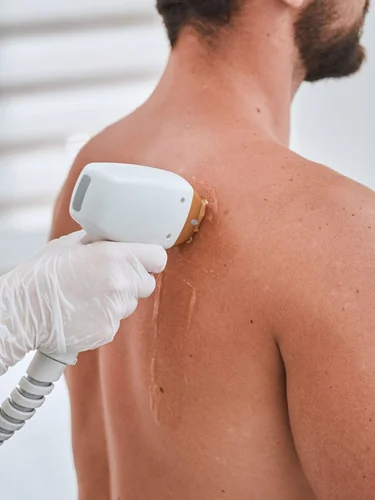
Quick Answer: laser hair removal for men, what should you know first?
Laser hair removal for men is usually about convenience and comfort: less shaving, fewer ingrowns, and smoother skin in the areas that annoy you the most. The most common treatment areas are back, shoulders, chest, abdomen, neck, and beard shaping zones, but almost any area can be treated with the right plan.
Results and timelines vary, so it's best to think in terms of a series of sessions rather than a single appointment. Cost depends mostly on the size of the area and how many sessions you end up doing, which is why price quotes can look wildly different. Pain is real but often manageable, and it tends to be more intense in dense or sensitive areas like the beard line and neck.
This information is educational and isn't medical advice. A qualified provider can help you understand what's appropriate for your skin, hair, and medical history.
Men's laser hair removal: why guys get it (and what it's usually for)
Most men don't book laser because they want "perfect." They book it because they're tired of dealing with the same problem over and over. For some, it's the constant maintenance of shaving. For others, it's ingrown hairs, razor bumps, and irritation that never fully settles down. And for a lot of guys, it's purely practical: back hair you can't manage easily, chest hair you want to thin out, or a beard neckline you want to keep clean without daily battle.
Men's laser hair removal also isn't one-size-fits-all. Some men want full removal in a specific area. Others want reduction and cleanup so hair grows in more evenly, feels less coarse, or is easier to maintain. If you walk in with that mindset, it's much easier to have a good consultation because your provider can build a plan around your actual goal instead of assuming you want everything gone.
How laser hair removal works (in plain language)
Laser hair removal uses concentrated light energy to heat the hair follicle and reduce its ability to produce hair. It targets pigment in the hair, which is why darker hair often responds more predictably than very light hair. Treatments are spaced out because hair grows in cycles, and not every follicle is in the right growth phase at the same time. That's also why you'll see a plan laid out as a "series," not a one-off appointment.
For men, the "cycle" issue matters a lot because men often have thicker, denser hair, especially on areas like the beard, chest, and back. Dense hair can respond well, but it can also mean you'll feel more during treatment and you may need more sessions than someone treating a smaller, finer area. None of that is a dealbreaker, it just sets your expectations so you can plan realistically.
If you want a deeper overview of how it works, candidates, and what to expect, start with laser hair removal.
Laser hair removal for men: the most popular areas (and what to expect with each)
Back laser hair removal for men
Back hair is one of the top reasons men look into laser because it's hard to manage consistently. Shaving your own back isn't fun, waxing is painful for many people, and stubble can feel rough fast. Laser can be a practical option because it treats a large area relatively efficiently, and over time many men find the hair that grows back is less dense and easier to keep under control.
Back treatments can feel intense because the area is large and hair can be thick, but sessions are typically straightforward and predictable. Cost tends to be higher because it's a large area, so it helps to budget for a series rather than a single session. If you want a pricing framework that actually makes sense, use laser hair removal cost to estimate a total plan.
Chest and stomach laser hair removal for men
Chest and abdomen treatments are often about reducing density rather than full removal. A lot of men prefer a "cleaner" look and feel without going completely hairless, especially if they want a natural result. This is where having a good consultation matters because your provider can talk through settings and how they approach reduction versus full removal.
Comfort varies here, but the center chest and sternum area can feel sharper than you'd expect. It's not a reason to avoid it, it's just a reason to plan for comfort. If you want an honest breakdown of what tends to feel more intense and how to make it easier, check does laser hair removal hurt.
Shoulders and upper arms
Shoulders are popular because the hair is often coarse and visible, especially in the summer. Upper arms can be treated too, though men sometimes choose a "thin out" approach instead of complete removal. Because these areas are moderately sized, they're often manageable to fit into a routine without a huge time commitment.
Neck laser hair removal for men (including razor bumps)
Neck hair is a big one for men who deal with bumps, irritation, or ingrowns from shaving. Laser can reduce the amount of hair and the frequency of shaving, which for some men means less ongoing irritation. The neck can be sensitive, though, and because it's close to the beard line, you'll want to be clear about your preferred shape.
If the neck is your main reason, you'll get the best results from being specific. Bring photos of the neckline you like, or describe exactly where you want the "clean line" to sit. That makes it easier to avoid disappointment later.
Ears, nose, and small "detail" areas
Small areas like ears and nose can be treated, but they require an experienced provider and realistic expectations. Hair in these areas can be finer, and it can also be hormonally influenced as men age. Some men use laser for reduction and maintenance, while others find electrolysis is better for truly precise removal of small hairs. If you're deciding between approaches, compare electrolysis vs laser hair removal.
Beard laser hair removal: what "beard laser" usually means for men
The phrase beard laser hair removal can mean two very different goals, so it's worth separating them:
- Beard shaping and cleanup
This is the most common. Think cheek line, neckline, and the areas where you want a cleaner edge. Men choose this when they want less daily maintenance and fewer bumps, but still want a beard. - Full beard removal or major reduction
This is less common, and it's a bigger decision because the beard is a strong identity feature for many men. Full removal can also take more sessions, can be more uncomfortable, and can be more sensitive to hair growth patterns and hormones. If you go this route, you want a provider who can explain the plan clearly and conservatively.
Beard shaping: the practical approach that fits most men
If you've ever spent too much time trying to get a crisp neckline or a symmetrical cheek line, you get why this is appealing. Laser can make those lines easier to maintain by reducing hair growth outside the shape you actually want. It can also lower the frequency of shaving, which is where a lot of irritation comes from.
The key is communication. "Neck" is vague. "Two fingers above the Adam's apple" is clearer. "I want the neckline to curve from under the ear to here" is clearer. In beard areas, small differences matter, so don't be shy about being specific.
Beard area comfort: what to expect
The beard line and neck can feel more intense than places like arms or legs because the hair is dense and the skin can be sensitive. Cooling, pacing, and smart settings matter here. If you're nervous about pain, start by reading does laser hair removal hurt, then bring your questions to a consult so you know what comfort options are available.
How many sessions do men need for laser hair removal?
There isn't one number that fits everyone, but there are predictable patterns. In general, you're paying for a plan, not a single visit. Most providers will recommend a series of sessions spaced out over weeks to align with hair growth cycles. Men often need a similar number of sessions as anyone else for comparable areas, but dense areas like the beard, chest, and back can sometimes require more patience.
A useful way to plan is to budget for a range rather than a fixed number. Many people start with 6 sessions as a baseline and then reassess. Some areas may respond quickly. Others may need additional sessions, especially if the area is hormonally influenced or the hair is particularly dense. Your provider should be able to explain why they're recommending the plan they're recommending.
Men's laser hair removal cost: real budgeting without getting tricked by promo pricing
Laser pricing is confusing because most quotes are per session, while most results require a series. That makes it easy to see a low number and assume it's the total. For men, that mistake can be extra expensive because men often treat larger areas like back, chest, and shoulders.
Here's a realistic way to think about pricing in North America, using ballparks that match common market ranges:
- Small areas (upper lip, small neck cleanup, ears): often $75 to $300 per session
- Medium areas (beard line, underarms, bikini line-style zones, partial chest): often $200 to $600 per session
- Large areas (full back, full chest, full legs): often $400 to $1,100+ per session
Those numbers can swing based on city, provider, device, and area definition. "Beard shaping" might be priced as a small area at one place and a medium area at another, depending on what's included. That's why the best cost question isn't "what's your price," it's "what exactly is included in that price?"
Package pricing vs per-session pricing
Many clinics offer packages, usually 6 or 8 sessions, and that can lower the effective per-session price. Packages can be a great fit if you're confident you can stick to the schedule. They can be less ideal if your calendar is unpredictable or you travel often.
To compare fairly, convert everything into the same unit:
- effective cost per session (package price ÷ number of sessions)
- estimated total (effective session cost × expected number of sessions)
For a deeper breakdown of how to estimate totals by area and session count, go to laser hair removal cost.
Does laser hair removal hurt for men?
Pain is personal, but a few patterns show up consistently. Areas with thicker hair often feel more intense because more energy is being used to target more follicles. Sensitive skin and thinner skin areas also tend to feel sharper. And stress matters, too. If you're tense, everything feels worse.
Many men describe laser as quick snaps or heat pulses. The upside is the sensation is usually fast. The downside is dense areas like the beard and neck can feel spicy, especially along the jawline and under the chin.
If you want the real breakdown, including which areas tend to feel more intense and what helps, read does laser hair removal hurt.
Comfort upgrades that actually make a difference
If comfort is your sticking point, these are the questions worth asking at a consult:
- What cooling method do you use during treatment, and is it used the whole time?
- How do you adjust settings for sensitive areas like the neck or beard line?
- If my skin reacts strongly, what changes can you make next session?
- What should I do before my appointment to make it more comfortable?
A good provider won't act annoyed by these questions. They'll answer clearly and treat comfort as part of a safe plan.
Laser prep and aftercare for men: what actually matters (and what's a waste of effort)
Laser is more straightforward when you prep well and avoid easy mistakes.
Before your appointment
- Shave the area as instructed, usually within 12 to 24 hours before treatment. Laser targets hair in the follicle, not hair above the skin, so you typically don't want visible length.
- Skip waxing, plucking, and threading for a period before treatment because those remove the follicle target.
- Avoid heavy sun exposure and tanning in the lead-up when possible. Tanned or irritated skin can change the safety approach and may lead to rescheduling.
- Keep skincare simple. If you're using strong actives (like retinoids or acids), ask what they want you to pause and when.
After your appointment
- Expect some redness or sensitivity, especially on the face and neck.
- Keep the area cool and calm. Gentle cleansing and avoiding friction helps.
- Be conservative with heat exposure. Hot showers, saunas, and heavy workouts right after can make irritation worse for some people.
- Use sun protection consistently on exposed areas. This is especially important on face and neck zones.
Aftercare is less about "perfect skin routines" and more about reducing irritation so you can keep your schedule consistent.
Laser hair removal vs electrolysis for men: when each makes sense
Laser is popular for men because it treats larger areas efficiently. Electrolysis is different because it treats individual follicles and is often the go-to for very light hair or for very precise removal. If you're looking at beard shaping and your hair is dark enough, laser may be a practical first step. If you have very light hair or want a method described as permanent hair removal, electrolysis is worth discussing.
If you're choosing between the two, read electrolysis vs laser hair removal and decide based on hair color, area size, and how much time you're willing to commit.
Choosing a provider for men's laser hair removal: what to look for and what to ask
A good laser experience is not only about the device. It's about the person using it, how they assess your skin, and whether they communicate clearly.
Green flags
- They ask about your skin tone, hair color, and any history of irritation or pigment issues.
- They explain what device they plan to use and why it fits your skin and hair.
- They define the treatment area clearly, especially for beard and neckline work.
- They give aftercare instructions that sound practical, not dramatic or vague.
Questions that help you compare clinics quickly
- "What exact area is included in this price?"
- "What type of laser do you use for my skin tone and hair type?"
- "How many sessions do you usually recommend as a range for this area?"
- "What's your policy if I need to reschedule or pause?"
- "What side effects do you see most often, and how do you handle them?"
If a clinic can't answer those questions clearly, you're allowed to keep looking.
A quick confidence guide: deciding what you actually want (reduction, shaping, or removal)
A lot of guys walk in saying "I want laser," but what they really mean is one of these:
1. You want less maintenance
You don't mind hair existing, you just don't want to manage it constantly. This often looks like reducing density on chest, stomach, shoulders, or back.
2. You want fewer ingrowns and less irritation
This is common for neck and beard line treatments. Reducing the hair that triggers irritation can make daily grooming easier and calmer.
3. You want a clean, consistent look
This is beard shaping and neckline cleanup. Your goal is less time in the mirror and fewer "why does my beard do that" days.
When you know which bucket you're in, it's much easier to choose the right area and set the right expectations.