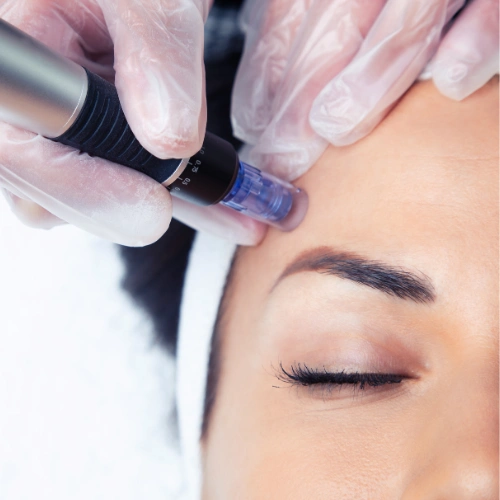
What is Microneedling?
Microneedling uses a device fitted with fine needles to create thousands of controlled micro-channels in the skin, triggering the body’s wound-healing response and stimulating new collagen and elastin production. Needle depth is adjustable, typically ranging from 0.5mm for superficial texture work to 2.5mm or more for deeper scarring. It is safe for all skin tones because it does not use heat or target pigment, which distinguishes it from laser-based resurfacing. Common devices include the SkinPen, Dermapen, and Collagen PIN.
What microneedling can help with
- ✓ Improving acne scarring, including rolling, boxcar, and icepick scars
- ✓ Smoothing uneven skin texture and minimizing enlarged pores
- ✓ Reducing the appearance of fine lines and early signs of skin laxity
- ✓ Fading stretch marks and surgical or injury scars on the face and body
- ✓ Improving skin tone and overall radiance over a series of treatments
- ✓ Enhancing the absorption of serums applied during or after treatment
What to expect during your microneedling appointment
A topical numbing cream is applied 30 to 45 minutes before the session. Treatment takes 20 to 45 minutes depending on the area. The provider moves the device across the skin in overlapping passes; the sensation ranges from mild pressure to a light scratching, most intense over bonier areas like the forehead and jaw. Skin looks red and feels warm immediately after, similar to a moderate sunburn. Pinpoint bleeding is normal at deeper settings and is not a cause for concern. Redness and mild swelling typically settle within 24 to 48 hours, though deeper treatments may take three to five days to fully resolve. Makeup should be avoided for at least 24 hours.
What results can you expect with microneedling?
Results develop gradually as the collagen remodeling process unfolds over weeks. Most people notice improved texture and a subtle glow starting two to four weeks after their first session, with more significant changes becoming visible after a completed series. Acne scarring and deeper texture concerns respond most noticeably but require the most sessions. A single session is genuinely beneficial for overall skin health and radiance, but a series of three to six treatments spaced four to six weeks apart produces the most meaningful structural improvement.
How long microneedling results last
The collagen stimulated by microneedling continues to remodel for up to six months after a session, meaning improvements can still be progressing well after treatment. Results from a completed series typically last one to two years depending on skin type, age, lifestyle, and sun protection habits. Most providers recommend maintenance sessions every six to twelve months to sustain results and continue stimulating collagen over time.
Who's a good fit for microneedling?
Microneedling suits a wide range of skin types and tones, making it one of the more inclusive resurfacing options available. It is particularly effective for people with acne scarring, enlarged pores, uneven texture, and mild to moderate skin laxity who want meaningful improvement without the downtime or skin tone restrictions of laser. It is not recommended for people with active acne breakouts, open wounds, or active skin infections in the treatment area, as needling can spread bacteria. It is also not suitable during pregnancy, for people with a history of keloid scarring, or those on blood thinners. Anyone who has taken isotretinoin should wait at least six months before treatment.
Alternatives to microneedling?
- RF microneedling (Morpheus8, Sylfirm): combines microneedling with radiofrequency heat for added skin tightening and fat remodeling; more effective for laxity but more downtime and cost
- Fraxel laser: fractional laser resurfacing with more dramatic results per session for scarring and texture; more downtime and not suitable for all skin tones
- Chemical peel: acid-based exfoliation addressing surface pigmentation and texture; less effective for deeper scarring but more widely available and lower cost
- Microdermabrasion: surface-only mechanical exfoliation; no collagen stimulation, better suited to maintenance and glow rather than structural improvement
- PRP (platelet-rich plasma): often combined with microneedling as a booster; can also be used standalone for skin rejuvenation and hair restoration
Common microneedling questions
How does microneedling work? + -
Does microneedling hurt? + -
How soon will I see results from microneedling? + -
Is there downtime after microneedling? + -
How many microneedling sessions will I need? + -
Can microneedling be combined with other treatments? + -
Is microneedling safe for all skin tones? + -
What should I avoid after microneedling? + -
Featured clinics
Top-rated providers offering microneedling.
Beauty By Dr Joe | North York Med Spa, Cosmetic Clinic | Botox and Fillers
Toronto, ON
Dr. Joe Truong’s Aesthetic Medicine | North York, ON, CA
SKN Beauty Centre - Vaughan
Toronto, ON
SKN Beauty Centre is a medically supervised skin care clinic operating in Vaughan. We offer a wide range of facial and body treatments using the most up-to-date technologies.