Quick Answer
Microneedling at home usually means using a roller, stamp, or microneedling pen at home to create tiny micro-injuries in the skin. Professional microneedling uses medical-grade devices, controlled depth, and sterile technique, plus someone trained to adjust the approach to your skin and goals.
At-home microneedling may help with mild texture and temporary "glow" for some people, but it's less reliable for deeper concerns like acne scarring because depth, technique, and consistency are hard to replicate safely. The biggest risks of microneedling at home are infection, irritation, scarring, and discoloration, especially if you're acne-prone, sensitive, or go too deep too often. If you're considering home microneedling, the smartest mindset is: small improvements, slow pace, and strict hygiene, not aggressive "results chasing." If your goal is scar remodeling, more noticeable fine-line improvement, or you have pigment concerns, professional microneedling is often the safer and more predictable route.
Either way, it helps to understand microneedling basics and what it's best at, which you can read on our microneedling benefits.
This page is general info and isn't a substitute for medical advice, so if you have a skin condition, history of pigment changes, or you're unsure what's safe for you, it's worth checking with a qualified professional first.
At-home microneedling vs professional: what's the real difference?
The difference between microneedling at home vs professional isn't just "who's holding the device." It's depth control, sterile setup, and how the plan is tailored to your skin. In a professional setting, the provider can adjust depth by area, avoid high-risk zones, and choose a pace that fits your tolerance and healing. That matters because face skin is not evenly thick, and what's appropriate for your cheeks may be too much for your forehead or around the mouth.
Professional microneedling also tends to be more structured. You're usually doing a series, and spacing is planned around how long the skin needs to calm down and rebuild. At home, it's easy to overdo it because the device is sitting in your bathroom and it's tempting to "just do one more pass." Over-treatment is one of the fastest ways to trade a short-term glow for irritation that lingers.
If you want a medical overview of how microneedling works and what it's used for, the Cleveland Clinic's microneedling guide is a good baseline read. It can help you separate what microneedling can often improve from what it can't realistically change on its own.
Is microneedling at home safe?
Microneedling at home looks straightforward, and a lot of content online makes it sound low-risk. It can be lower-risk when it stays truly superficial, you're careful with hygiene, and your skin tolerates it well. The risk climbs when needles go deeper, when devices aren't properly cleaned, or when you microneedle over active breakouts or irritated skin.
Home microneedling isn't automatically reckless, but it does require more caution than most people expect. You're creating microchannels in your skin, and that opens the door for bacteria, irritation, and pigment issues if your skin reacts strongly. Even if you're very clean, technique matters, and it's hard to replicate the consistency of a trained hand and a clinical setup.
The most common risks of microneedling at home
These are the risks people typically underestimate because they don't show up immediately.
- Infection risk: Any time you puncture skin, there's a chance bacteria gets in, especially if the device is reused, not disinfected correctly, or used on irritated skin. Infection risk also goes up if you touch your face a lot afterward or apply products that aren't appropriate on freshly needled skin.
- Irritation and barrier damage: Over-rolling or over-penning can leave skin feeling raw, tight, and inflamed for longer than it should. Barrier damage can trigger breakouts, sensitivity, and a cycle where you keep trying to "fix" skin with more treatments.
- Post-inflammatory hyperpigmentation: If your skin is prone to discoloration after irritation, aggressive home microneedling can leave marks that outlast the original concern. This matters for all skin tones, but pigment risk is especially important if you tan easily or have a history of dark marks after acne.
- Scarring: This is less common with truly superficial use, but scarring risk increases with deeper needling, repeated passes, heavy pressure, or needling over inflamed acne. The "more is more" approach is where people get into trouble.
If you're already sensitive to irritation, you may want to compare gentler options first, like microdermabrasion vs microneedling, because a less invasive treatment can sometimes be a better starting point.
Does at-home microneedling work?
If you're looking for a mild improvement in texture, a temporary glow, or skincare absorption feeling stronger, some people do notice changes when they keep it superficial and consistent. If you want visible scar remodeling and bigger structural change, professional microneedling tends to be more predictable because depth and technique can be controlled more reliably.
It also depends on your baseline skin. If your skin is already in a good place and you're looking for a small bump in smoothness, home microneedling may feel "worth it" because the goal is modest. If you're dealing with deeper acne scars, significant texture, or pigment concerns, home microneedling can be frustrating because you may not get the results you're hoping for, and pushing harder can backfire.
A good way to set expectations is to think in outcomes:
- At-home microneedling is more likely to support minor texture improvements when used carefully and infrequently.
- Professional microneedling is more likely to support bigger improvements for scars and texture because the plan can be customized and controlled.
If you're still unsure whether the procedure itself makes sense for you, revisit what microneedling is best at on microneedling benefits. It helps keep your expectations aligned with what the treatment is actually designed to do.
Roller vs microneedling pen at home vs stamp: what's the difference?
At-home microneedling tools are often sold like they're interchangeable, but they behave differently on skin. The tool you choose can change both results and risk.
Microneedling roller at home
Rollers are common because they're easy to use, but they can be tricky. The rolling motion can create uneven pressure, and it's easier to drag or snag on skin, especially if you go fast or press too hard. Rollers also have more nooks and crannies, which can make cleaning harder than people expect.
Rollers are usually used for very superficial treatments. If you're someone who gets irritated easily, a roller can be a little more unpredictable because pressure changes with angles and movement. If you choose a roller, being gentle and slow matters more than trying to "get it done quickly."
Microneedling pen at home
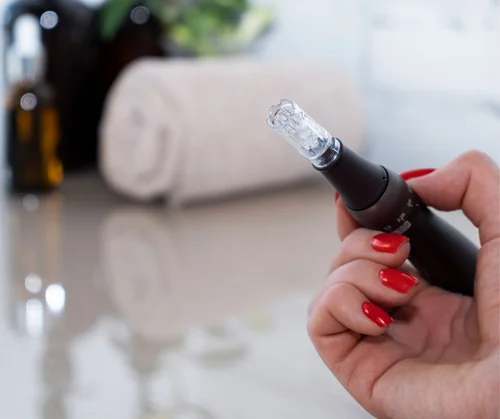
A microneedling pen at home can feel more controlled because it stamps vertically, and many people like that it doesn't drag across the skin the same way. The downside is that pens are easier to misuse if you crank up needle depth or speed without understanding what those settings do. Pens also require careful cartridge handling and sanitation, which is where some DIY routines get sloppy.
If you're considering a pen, the safer approach is to stay shallow, reduce frequency, and keep your aftercare routine simple. The "pro-level" look of a pen can create a false sense of safety, even though it's still puncturing skin.
Microneedling stamp
Stamps can be a more controlled option for small areas because you're pressing down rather than rolling. They can be useful for spot-focused texture, but they're still not risk-free. It's easy to overwork the same patch because it's right in front of you and you want it to look "even."
No matter which tool you use, the biggest difference between home microneedling and professional microneedling is still technique, hygiene, and depth control.
Needle length and depth: the part you should not wing
Needle length is one of the most important details in microneedling at home, and it's also one of the easiest to misunderstand. Depth affects what layer of skin you're reaching, and that changes both potential benefit and potential risk. Deeper is not automatically better, especially at home where you don't have clinical-level sterility and a trained plan.
Most people who do at home microneedling safely keep it superficial. Once you move into deeper needling, the risk of irritation, scarring, and pigment issues goes up fast. Your face also has areas where deeper needling is higher risk, and those zones are exactly where DIY users tend to press harder because they're trying to treat stubborn texture.
If you're unsure about depth, that's usually a sign that professional microneedling may be the better choice for your goals. A provider can explain what depth they use for different concerns and why, and you can still decide if it feels worth it.
Who should avoid microneedling at home
This isn't about gatekeeping. It's about protecting your skin from avoidable problems. Home microneedling may not be a good idea if you're in any of these buckets.
- You have active acne, especially inflamed cystic acne. Needling over inflamed breakouts can spread bacteria and worsen irritation.
- You're prone to dark marks after irritation. If you know you hyperpigment easily, you'll want to be extra cautious.
- You have eczema, rosacea flares, or very reactive skin. Even shallow needling can trigger a flare in some people.
- You're not confident about sanitation and aftercare. If you're not the person who disinfects tools perfectly every time, it's better to skip DIY needling.
- You're using strong actives and you're not willing to pause them. Skin that's already being pushed by retinoids, acids, or other strong products may not tolerate needling well.
If you want the smoothing and glow side of microneedling without needles, comparing to a peel can be helpful. This page, microneedling vs chemical peel, can help you decide if a different option fits your skin and lifestyle better.
If you still want to try microneedling at home, here's how to lower risk
If you're going to do home microneedling, the goal is to make it boring. Boring means consistent, clean, shallow, and spaced out enough that your skin can fully calm down. Most DIY problems happen when someone tries to speedrun results.
Hygiene rules that actually matter
You don't need a complicated routine, but you do need a strict one.
- Start with a clean face and clean hands, and avoid doing this right after the gym or when you're sweaty.
- Disinfect the device correctly every time and follow the manufacturer's cleaning instructions. "Rinsing it" is not disinfecting.
- Use a fresh cartridge when required for pens, and don't try to stretch a cartridge longer than it should be used.
- Avoid sharing devices with anyone, even if you think you're both clean.
- Keep pets, towels, and random surfaces away from your tool while you're setting up.
Technique tips that reduce the chance of irritation
At home microneedling works best when you keep it light and controlled.
- Use gentle pressure. If you're pressing hard enough that you're chasing redness, you're probably going too far.
- Limit passes. More passes mean more inflammation, and that doesn't always translate to better results.
- Avoid high-risk zones. Around the eyes, very close to the lips, and areas that feel thin should be approached with extra caution or avoided.
- Space sessions out. Your skin needs time to recover, and rushing the schedule is how irritation stacks.
Aftercare: the part people mess up
After you microneedle, your skin can be more reactive, and what you put on it matters. You want a simple routine that supports your barrier and avoids unnecessary irritation. If you want a clear, no-drama routine for what to do after, use our microneedling aftercare guide as your checklist.
A big aftercare mistake is jumping back into strong skincare too quickly. Another common mistake is using fragranced products because they "feel soothing," even though they can be irritating on freshly needled skin. If you do nothing else, keep it gentle and protect your skin from the sun.
When professional microneedling is usually the better move
Professional microneedling is often worth it when your goal is more than a subtle refresh. If you're trying to improve acne scars, deeper texture, or fine lines that bother you in certain lighting, professional treatment is typically more predictable. You're paying for controlled depth, sterile technique, and someone who can tailor the plan to your skin.
It can also be worth it if you want to avoid the DIY mental load. A lot of people start at home because it feels cheaper, then end up stressed about whether they're doing it right. If you know you'll feel anxious about sterilizing tools, pressure, and aftercare, it's okay to choose the option that feels more supportive.
If you're worried about sensation, it may help to read microneedling pain so you know what's normal and what comfort strategies are common.
Is professional microneedling better?
For many people, yes, professional microneedling is better in the sense that results are often more consistent and risk is easier to manage. Better doesn't mean home microneedling is always useless. It means professional microneedling is usually a better match for bigger goals and for people with higher-risk skin types or histories.
Professional can also be better because it's easier to track progress. With a provider, you're usually documenting baseline and changes, and you have someone who can adjust depth, spacing, or aftercare if your skin is reacting. At home, it's easy to change too many variables at once and then you don't know what helped and what hurt.
Microneedling at home cost vs professional cost
Cost is the reason many people start with microneedling at home. It's totally fair to compare the numbers, but it helps to compare total cost over time, not just the first purchase.
At home, you might pay for a device plus replacement heads or cartridges, plus skincare to support healing. Professional treatments can cost more per session, but they may be more efficient for certain goals because the treatment is tailored and you're less likely to waste time doing something that doesn't match your skin. If you want a deeper pricing breakdown and what can change the total, see microneedling cost.
A simple way to think about it is value per outcome. If home microneedling gives you a small improvement that you like, it may be worth it. If you spend months DIY-ing without seeing the change you want, that cost can add up too, just more quietly.
What to ask if you're choosing a professional
If you're leaning professional, the best move is to ask questions that keep you in control of the plan. You want to feel informed, not sold to.
- What skin concern do you think microneedling will help most for me, and why? This tells you if your provider is actually listening to your goals.
- What kind of timeline should I expect for results? This helps you avoid the "one session miracle" mindset.
- How do you choose depth and adjust it by area? A thoughtful answer is usually a good sign.
- What should I do before and after to reduce irritation? This helps you plan around your schedule and skincare routine.
You can also explore alternative versions of microneedling-like treatments, such as microchanneling vs microneedling, because sometimes a slightly different approach fits your comfort level better.
If you want smoother skin but you're not sure about needles
If microneedling at home feels like a lot, you still have options. For a more surface-focused refresh, microdermabrasion can be appealing for some people, especially if your concern is dullness and surface texture. If your concern is pigment or glow, a peel may fit better depending on your skin and sensitivity.
The easiest way to choose is to match the treatment to the problem you want to improve most. If you're mostly chasing brightness and smooth makeup application, you may not need needles at all. If you're chasing scar texture improvement, microneedling tends to make more sense than surface-only treatments.