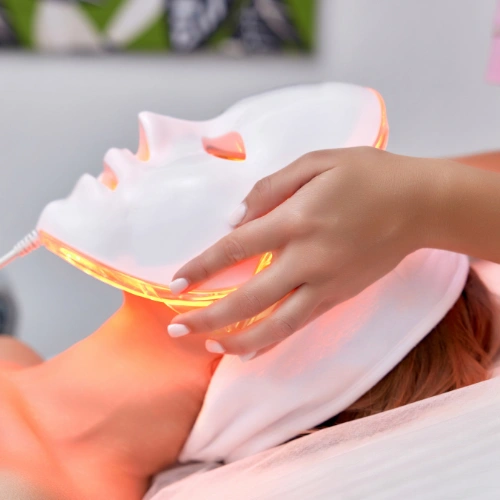
What is LED facial?
LED stands for light-emitting diode. An LED facial delivers concentrated, non-thermal light energy at specific wavelengths through a panel or mask positioned close to the face. Different wavelengths penetrate the skin to different depths and trigger different cellular responses. Blue light (around 415nm) targets the sebaceous glands and the acne-causing bacteria Cutibacterium acnes, making it effective for active breakouts. Red light (around 630 to 660nm) penetrates more deeply to stimulate fibroblasts and collagen production, reduce inflammation, and support skin repair. Near-infrared light (around 830nm) reaches the deepest tissue layers to accelerate wound healing and reduce redness, and is commonly used after more aggressive treatments. Many professional devices combine wavelengths in a single session. LED is not a laser and produces no ablation, heat damage, or downtime.
What LED facials can help with
- ✓ Reducing active acne and calming breakout-prone skin (blue light)
- ✓ Stimulating collagen production and improving skin firmness over time (red light)
- ✓ Calming visible redness, inflammation, and rosacea-related flushing (red and near-infrared light)
- ✓ Supporting skin recovery and accelerating healing after peels, laser, or microneedling (near-infrared)
- ✓ Improving overall skin tone, radiance, and texture with regular sessions
- ✓ Providing a gentle, zero-downtime treatment option for sensitive or reactive skin that cannot tolerate more active treatments
What to expect during your LED facial appointment
Sessions typically run 20 to 30 minutes. After cleansing, you lie down while a large LED panel or flexible mask is positioned a few centimetres above the face. Protective goggles are worn throughout. The experience is completely passive and comfortable; most people describe it as warm and relaxing, some find it meditative. There is no vibration, suction, heat, or sensation beyond a gentle warmth from certain devices. You leave with no redness, no sensitivity, and no restrictions on your routine afterward. When used as an add-on after a facial, peel, or other treatment, it is typically performed as the final step to calm the skin before you leave the clinic.
What results can you expect with LED facials?
LED facials are cumulative rather than immediately dramatic. A single session can produce a subtle glow and a calmer-looking complexion, but consistent results come from repeated treatments over several weeks. Clinical studies support meaningful improvements in acne frequency and severity with regular blue light use, and collagen stimulation with red light. Results are modest compared to laser or chemical peels, and LED is not the right primary treatment for deep pigmentation, significant scarring, or advanced texture concerns. Its value is in consistency, accessibility, and its ability to complement more intensive treatments without adding risk or recovery time.
How long LED facial results last
Individual session benefits typically last one to two weeks. The collagen and anti-inflammatory effects of red and near-infrared light are cumulative, meaning a consistent course of treatment produces longer-lasting improvements than occasional sessions. Most providers recommend starting with weekly sessions for four to six weeks, then spacing out to monthly maintenance. For acne management, more frequent sessions of two to three times per week during flare-up periods are common. LED does not produce permanent changes on its own and requires ongoing use to maintain its benefits.
Who's a good fit for LED facials?
LED facials suit almost everyone. There are no skin tone restrictions, no contraindications related to sensitivity, and no minimum age requirement for most professional devices. They are particularly well suited to people managing acne or redness who want a low-risk, non-irritating treatment option; people recovering from more intensive procedures who want to accelerate healing; and anyone building a regular skin maintenance routine who wants a gentle, evidence-backed option to layer in alongside other treatments. The main limitation is that LED requires commitment to multiple sessions to see meaningful results, and is not a substitute for more targeted treatments when stronger intervention is needed. People with epilepsy or light sensitivity, or those taking photosensitizing medications, should consult their provider before booking.
Alternatives to LED facials?
- Acne facial: more targeted for congestion and active breakouts through deep cleansing and extractions; more active than LED but still low downtime
- IPL photofacial: addresses redness and pigmentation with light energy; more downtime than LED and not suitable for all skin tones, but produces more visible results per session
- RF microneedling: stronger collagen stimulation than red LED with more dramatic results for texture and firmness; some downtime required
- Classic or HydraFacial: more comprehensive skin maintenance combining multiple steps; can include LED as an add-on
- At-home LED devices: consumer-grade masks and panels are widely available; less powerful than professional devices but can support maintenance between clinic visits
Common LED facial questions
How does an LED facial work? + -
Does an LED facial hurt? + -
How soon will I see results from an LED facial? + -
Is there downtime after an LED facial? + -
How often should I get LED facials? + -
Can LED facials be combined with other treatments? + -
Is LED safe for sensitive skin? + -
What should I avoid after an LED facial? + -
Featured clinics
Top-rated providers offering LED facials.
TIME2WAX Waxing | Sugaring WaxBar
Toronto, ON
Professional waxing salon, sugaring & threading in Mississauga — efficient, affordable, and done right every time.
Mederm Esthetics & Laser Clinic
Toronto, ON
Mederm Esthetics is a leading Best Med Spa in Vaughan specializing in advanced skincare and medical aesthetic treatments.