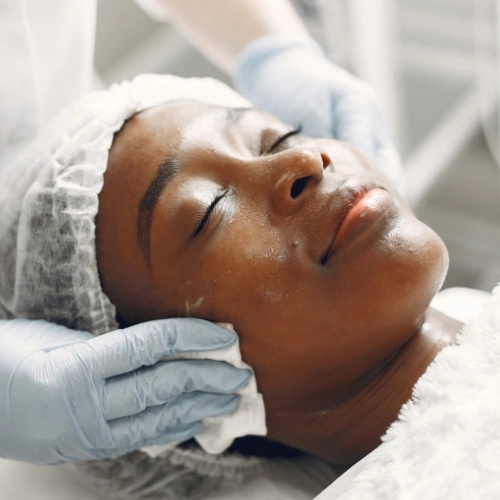
What is Acne facial?
An acne facial is a customized treatment that typically combines deep cleansing, exfoliation, steam, extractions, and targeted masking to address active breakouts and congested skin. Unlike a standard relaxation facial, it focuses specifically on clearing blocked pores and reducing the conditions that lead to breakouts. Providers tailor the steps based on your skin type, current breakout activity, and sensitivity level. Active ingredients commonly used include salicylic acid, benzoyl peroxide, sulfur, and kaolin clay, all of which help dissolve oil, draw out impurities, and calm inflammation.
What acne facials can help with
- ✓ Deep-cleaning clogged pores and removing blackheads, whiteheads, and surface congestion
- ✓ Reducing the frequency and severity of breakouts with regular treatment
- ✓ Calming visible redness and inflammation around active spots
- ✓ Smoothing rough or uneven skin texture caused by oil buildup
- ✓ Refreshing oily or dull-looking skin and restoring a more balanced complexion
- ✓ Supporting skin between more advanced treatments like chemical peels or laser
What to expect during your acne facial appointment
Sessions typically run 45 to 75 minutes. Your provider will begin with a thorough cleanse, followed by gentle exfoliation and steam to soften the skin and open pores. Extractions are then performed to manually clear blackheads and congested pores, which is the most active part of the treatment and may cause brief pressure or mild discomfort in sensitive areas. The session finishes with a clarifying or calming mask and a light moisturizer with SPF. Most people leave with skin that looks slightly flushed but noticeably cleaner. Any redness from extractions typically settles within a few hours.
What results can you expect with acne facials?
Most people notice cleaner, smoother, and less congested skin within a day or two of treatment. Visible pores often appear more refined and surface breakouts look less prominent. An acne facial is not a cure for acne; it works on what is currently present and helps slow the buildup cycle. Meaningful improvement in skin clarity and texture tends to come with consistent, repeated treatments rather than a single session. People with moderate to severe cystic acne may need to combine facials with prescription skincare or dermatology care for more significant results.
How long acne facial results last
Results typically last one to four weeks depending on skin type, oil production, lifestyle, and home skincare routine. People with oilier skin or hormonal acne tend to see buildup return more quickly. Most providers recommend scheduling every three to four weeks to stay ahead of congestion cycles, which aligns roughly with the skin’s natural cell turnover rate. Consistent treatment over several months produces more stable, lasting improvements than sporadic sessions.
Who's a good fit for acne facials?
Acne facials are well-suited to people dealing with mild to moderate acne, recurring blackheads, oily or congested skin, or anyone looking for regular professional support for their skin health. They can be adjusted for most skin types, including sensitive skin, by modifying exfoliation intensity and limiting or skipping extractions. They are not the right primary treatment for severe cystic or nodular acne, which requires medical management. People currently using prescription retinoids or strong actives should let their provider know, as some ingredients may need to be paused around treatment days.
Alternatives to acne facials?
- HydraFacial: device-based treatment that combines cleansing, exfoliation, and serum infusion; gentler on sensitive skin and more consistent than manual facials
- Chemical peel: stronger exfoliation using acids like salicylic, glycolic, or lactic acid; better for texture, post-acne marks, and more pronounced surface renewal
- Microdermabrasion: mechanical exfoliation that resurfaces the skin; effective for texture but does not address active breakouts or congestion as directly
- LED light therapy: uses blue light to target acne-causing bacteria; often combined with facials rather than used as a standalone replacement
- Classic facial: a more relaxing, less targeted option suitable for maintenance when breakouts are not the primary concern
Common acne facial questions
How does an acne facial work? + -
Are acne facials painful? + -
How soon will I see results from an acne facial? + -
Is there downtime after an acne facial? + -
How often should I get acne facials? + -
Can acne facials be combined with other treatments? + -
Are acne facials suitable for sensitive skin? + -
What should I avoid after an acne facial? + -
Featured clinics
Top-rated providers offering acne facials.
TMB Cosmetic Surgery: Trevor M. Born, MD
Toronto, ON
World-Renowned Plastic Surgeon, Featured in Vogue, Elle and O Magazine
Dr. Mike Roskies
Toronto, ON
Healthy, beautiful skin. Everyone wants it. But wrinkles, dull patches, and scars can happen to everyone too. When your skin needs a serious refresh, don’t keep trying creams or use harsh chemicals—turn to laser power!