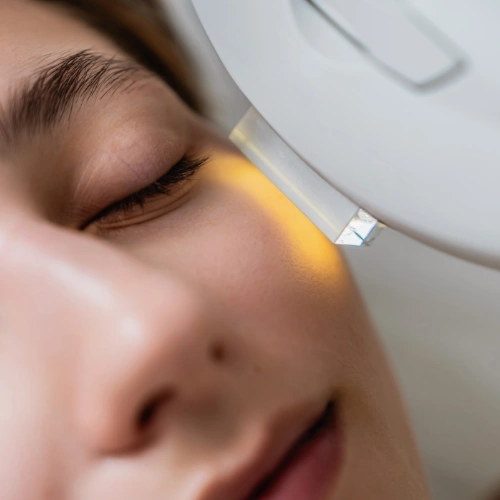
What is IPL photofacial?
IPL stands for intense pulsed light. Unlike lasers, which use a single focused wavelength, IPL delivers broad-spectrum light across multiple wavelengths simultaneously. This allows it to target two different chromophores in the skin at once: melanin (responsible for brown spots and sun damage) and oxyhemoglobin (responsible for redness and visible blood vessels). Cut-off filters are used to block wavelengths that could harm the skin and direct the appropriate spectrum toward the target. IPL is not a laser, and should not be confused with laser hair removal or laser resurfacing, though it can achieve mild hair reduction as a secondary effect. It does not resurface or remove skin layers, making recovery much lighter than ablative treatments.
What IPL photofacials can help with
- ✓ Fading sun spots, age spots, and freckles caused by UV exposure
- ✓ Reducing diffuse redness, flushing, and the appearance of rosacea
- ✓ Minimizing the look of broken capillaries and small visible blood vessels
- ✓ Improving overall skin tone and evening out blotchy or irregular pigmentation
- ✓ Brightening dull or sun-damaged skin over a series of sessions
- ✓ Mild improvement in skin texture and fine lines as a secondary benefit of collagen stimulation
What to expect during your IPL photofacial appointment
Sessions run 20 to 45 minutes. Your provider will cleanse the skin, apply a cool ultrasound gel, and fit you with protective eyewear before passing the IPL handpiece across the treatment area in sections. Each pulse feels like a quick snap or flick of a rubber band against the skin, followed by brief warmth. Immediately after, the skin looks flushed and feels warm. Brown spots often darken noticeably in the first day or two as the targeted pigment rises to the surface before breaking up and flaking off over five to ten days. This darkening, sometimes described as a coffee ground appearance, is a normal and expected part of how IPL works on pigmentation. Redness from vascular treatment typically calms over a few days without the same visible surface change.
What results can you expect with IPL photofacials?
After the darkened spots flake off, the skin typically looks clearer, brighter, and more even in tone. Redness and visible capillaries are often noticeably reduced. Results build with each session; most providers recommend a series of three to five treatments spaced three to four weeks apart for the best outcome. IPL does not resurface or tighten skin to the degree that laser treatments do, so it is not the strongest option for texture, scarring, or significant lines. Its strength is specifically in tone correction, pigmentation clearance, and vascular improvement.
How long IPL photofacial results last
Results from a completed series typically last six months to a year or longer for pigmentation and redness, provided consistent sun protection is maintained. Sun damage and rosacea-related redness can recur with ongoing UV exposure and environmental triggers, which is why most providers recommend one or two maintenance sessions per year. Without daily SPF, the pigmentation IPL clears can return within months, particularly in people with active sun exposure or a tendency toward melasma.
Who's a good fit for IPL photofacials?
IPL is best suited to people with lighter skin tones (Fitzpatrick I to III) who have sun spots, redness, rosacea, or uneven tone they want to address without significant downtime. Because IPL targets melanin broadly, it carries a meaningful risk of burns, blistering, and post-inflammatory hyperpigmentation on medium to darker skin tones (Fitzpatrick IV to VI). People with these skin types should seek alternatives such as Nd:YAG laser, RF microneedling, or targeted pigment lasers from experienced providers who work with darker skin. IPL should not be performed on tanned skin of any tone. It is also not recommended during pregnancy, for people on photosensitizing medications, or for those with active cold sores or skin infections in the treatment area.
Alternatives to IPL photofacials?
- Fraxel (1927nm): more precise fractional laser targeting for pigmentation with greater depth and more consistent results; more downtime than IPL
- Nd:YAG laser: a safer option for vascular and pigmentation concerns on medium to darker skin tones; more targeted than IPL
- Chemical peel (glycolic or lactic acid): addresses surface pigmentation with no light-based risk; requires more sessions for comparable results to IPL
- Microneedling with vitamin C or brightening serums: improves pigmentation gradually with no skin tone restrictions; no heat-based risk
- LED facial (yellow or red light): addresses redness and mild vascular concerns non-thermally; very gentle with no downtime but more limited results
- Topical brightening treatments (vitamin C, niacinamide, tranexamic acid): maintenance-level pigmentation support used between professional treatments
Common IPL photofacial questions
How does an IPL photofacial work? + -
Does an IPL photofacial hurt? + -
How soon will I see results from an IPL photofacial? + -
Is there downtime after an IPL photofacial? + -
How many IPL sessions are recommended? + -
Can IPL be combined with other treatments? + -
Is IPL safe for all skin tones? + -
What should I avoid after an IPL photofacial? + -
Featured clinics
Top-rated providers offering IPL photofacials.
THE CLINICA - Downtown Toronto
Toronto, ON
The Clinica is a medical spa in Toronto, redefining beauty solutions for women to live their best lives. Our approach offers a unique blend of beauty and wellness, empowering women to feel their best.
Elixir Beauty Clinic
Toronto, ON
Elixir Beauty Clinic is a Medical Aesthetics Clinic Located in Westboro Ottawa. We provide a complete range of beauty services to fit your personal needs.