What is Dermaplaning?
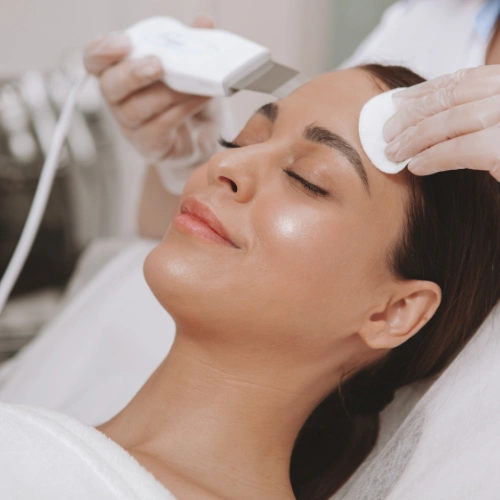
Dermaplaning is performed by a trained esthetician or medical aesthetician using a sterile 10-gauge scalpel blade held at a 45-degree angle against the skin. Using short, feathering strokes, the provider removes the superficial layer of keratinized dead skin cells along with vellus hair in a single pass. Unlike chemical exfoliation, dermaplaning works entirely through physical removal with no acids, heat, or devices involved. The result is a noticeably smoother skin surface with improved light reflection, better product penetration, and a cleaner base for makeup application.
What dermaplaning can help with
- ✓ Removing peach fuzz and dead skin buildup for an immediately smoother, more polished surface
- ✓ Improving the way foundation, powder, and skincare products sit on and absorb into the skin
- ✓ Brightening dull skin by clearing the layer of debris that mutes natural radiance
- ✓ Softening the appearance of fine surface texture without chemicals or downtime
- ✓ Enhancing the effectiveness of serums and active skincare applied immediately after treatment
- ✓ Providing a non-chemical exfoliation option for people who are sensitive to acids or prefer a physical approach
What to expect during your dermaplaning appointment
Sessions run 20 to 45 minutes, or longer when combined with a facial or other treatment. The provider begins with a thorough cleanse to remove all makeup, oil, and debris. The skin is then held taut while the blade is drawn across the face in short upward strokes, working section by section from forehead to chin, avoiding the brow area and any active breakouts. The sensation is often described as light, gentle scraping with no discomfort when performed correctly. Mild pinkness or a slightly warm feeling immediately after is normal and typically fades within 30 to 60 minutes. There is no peeling, crusting, or recovery period.
What results can you expect with dermaplaning?
Results are immediate and visible. Skin looks noticeably smoother, brighter, and more even right after treatment, and makeup application feels noticeably different on a freshly dermaplaned surface. Skincare products also absorb more efficiently because the dead cell layer that was previously limiting penetration has been removed. Dermaplaning does not address deeper concerns like hyperpigmentation, acne scarring, or significant texture irregularities. For those concerns, it works best as part of a treatment plan that includes chemical peels, microneedling, or laser.
How long dermaplaning results last
Results typically last three to four weeks, which aligns with the skin’s natural cell turnover cycle. As new dead cells accumulate and vellus hair regrows, the skin gradually returns to its pre-treatment state. Most providers recommend monthly appointments to maintain consistent smoothness. Vellus hair grows back at the same rate and with the same fine texture as before; dermaplaning does not change hair thickness or growth patterns.
Who's a good fit for dermaplaning?
Dermaplaning suits most skin types including dry, normal, combination, and mature skin. It is particularly well-suited to people bothered by peach fuzz, those who want a non-chemical exfoliation option, and anyone preparing for an event where smoother makeup application matters. It is not recommended for people with active acne, inflamed pustules, or cystic breakouts, as dragging a blade across active lesions can spread bacteria and worsen breakouts. People with rosacea, very sensitive skin, or raised skin conditions like keratosis pilaris on the face should consult their provider before booking, as the physical exfoliation may cause increased redness or irritation. Dermaplaning is safe for all skin tones.
Alternatives to dermaplaning?
- Microdermabrasion: mechanical exfoliation using a diamond-tip or crystal device; more aggressive than dermaplaning and better suited for texture and mild scarring, but does not remove vellus hair
- Chemical peel: acid-based exfoliation for deeper surface renewal; more downtime but greater impact on pigmentation, acne, and texture concerns
- HydraFacial: device-based exfoliation combined with hydration and serum infusion; no vellus hair removal but very effective for overall skin health
- Enzyme facial: gentler chemical exfoliation using fruit enzymes; a good alternative for highly sensitive skin that cannot tolerate physical exfoliation
- At-home dermaplaning tools: consumer-grade versions are available but use much smaller, less precise blades; results are more superficial and carry higher risk of nicks if used without proper technique
Common dermaplaning questions
How does dermaplaning work? + -
Does dermaplaning hurt? + -
Will dermaplaning make hair grow back thicker or darker? + -
How soon will I see results from dermaplaning? + -
Is there downtime after dermaplaning? + -
How often should I get dermaplaning? + -
Can dermaplaning be combined with other treatments? + -
What should I avoid after dermaplaning? + -
Featured clinics
Top-rated providers offering dermaplaning.
Tight Clinic Toronto
Toronto, ON
Explore the range of treatments offered at Tight Clinic, including skin tightening, body contouring, facial rejuvenation, and more.
Featuring You Spa & Salon
Toronto, ON
Terms of Service for Featuring...You Spa