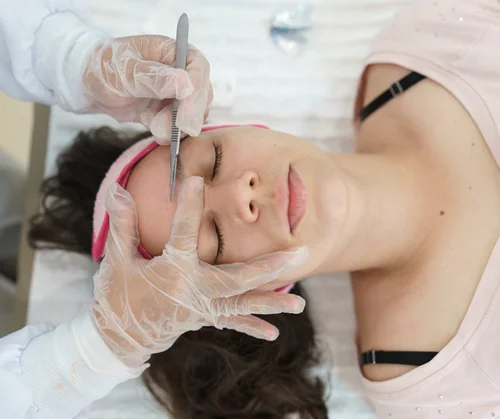
Breaking Down Dermaplaning Cost Per Session
Professional dermaplaning typically costs between $75 and $250 per session, with most people paying around $100 to $150 for a standard facial treatment. This price reflects a single appointment lasting 30 to 45 minutes, during which a trained provider uses a surgical scalpel to remove dead skin cells and fine vellus hair from your face. The treatment is performed as an outpatient cosmetic procedure with no downtime, making it accessible for people with busy schedules who want immediate results.
The cost covers more than just the provider's time with the blade. Your session typically includes a thorough skin cleansing, the dermaplaning treatment itself, post-treatment serums or moisturizers applied to soothe and protect freshly exfoliated skin, and detailed aftercare instructions. Some providers include a brief consultation at the beginning to assess your skin and discuss goals, while others charge separately for initial consultations.
What's included in the base price:
- Pre-treatment cleansing to remove makeup, oil, and debris
- Sterile surgical-grade scalpel (single-use blade discarded after your session)
- The dermaplaning procedure performed by a licensed professional
- Post-treatment products like hydrating serums, calming treatments, or SPF
- Immediate post-treatment assessment and at-home care guidance
What typically costs extra:
- Initial consultation fees if the provider charges separately (usually $50-100)
- Add-on treatments like chemical peels, LED therapy, or hydrating masks
- Premium post-treatment products or take-home skincare kits
- Follow-up appointments within shorter timeframes than recommended
- Treatments on areas beyond the standard face (neck, décolletage)
The national average sits around $125 per session, but this varies significantly based on your location, the provider's credentials, and whether you're getting dermaplaning as a standalone treatment or combined with other services. Understanding what dermaplaning actually involves helps you evaluate whether the pricing you're seeing reflects appropriate value.
As with any cosmetic treatment, this information is for educational purposes only and should not replace professional advice from qualified providers.
Why Dermaplaning Costs Vary So Much Between Providers
Geographic location creates dramatic price differences: Coastal cities and metropolitan areas typically charge $150 to $250 per session due to higher overhead costs, increased demand, and more competitive markets. New York City, Los Angeles, San Francisco, Seattle, and Miami generally fall at the higher end of the pricing spectrum. The cost of commercial real estate, higher wages for licensed professionals, and affluent clientele willing to pay premium prices all contribute to elevated costs in these areas.
Smaller cities and suburban areas usually charge $75 to $150 per session because operating costs are lower and competition may be less intense. Rural areas might offer even lower prices, though availability of trained providers can be limited. The local cost of living directly impacts what providers need to charge to maintain profitable businesses while paying competitive wages.
Provider credentials and experience matter: Board-certified dermatologists typically charge the highest rates ($150-250 per session) because they have extensive medical training, can address complex skin conditions, and operate in medical settings with higher overhead costs. Their expertise commands premium pricing, and many patients prefer the peace of mind that comes with treatment from a physician.
Licensed aestheticians working in medical spas or high-end salons usually charge mid-range prices ($100-175 per session). They have specialized training in cosmetic procedures and work under physician supervision in many states, providing quality treatment at a more accessible price point than dermatologists.
Licensed cosmetologists at day spas or beauty salons often offer the most affordable options ($75-125 per session). While they're trained and licensed, their scope of practice may be more limited, and they typically can't address medical skin concerns the way dermatologists can.
Facility type influences pricing structure: Medical spas and dermatology practices charge higher rates because they maintain clinical standards, invest in advanced equipment and products, and employ highly trained staff. They often combine dermaplaning with medical-grade skincare consultations and can address more complex skin issues.
Day spas and beauty salons price more competitively because their overhead costs are generally lower and they focus on cosmetic rather than medical treatments. The experience may be more relaxation-focused with less clinical assessment, which appeals to some clients but may not suit everyone's needs.
The American Society for Dermatologic Surgery notes that provider training and facility standards significantly impact both safety and outcomes for cosmetic procedures.
Average Dermaplaning Price by Major U.S. Cities
Higher-cost metropolitan areas ($150-$250 per session):
- New York City: $175-250 (Manhattan typically at the highest end)
- Los Angeles: $150-225 (Beverly Hills and West Hollywood command premium pricing)
- San Francisco: $165-240 (downtown and affluent neighborhoods price higher)
- Miami: $140-220 (South Beach and Coral Gables at upper range)
- Seattle: $145-215 (downtown core and Bellevue price higher)
- Boston: $150-225 (Back Bay and Cambridge at premium levels)
Mid-range cities ($100-$175 per session):
- Chicago: $120-180
- Atlanta: $110-165
- Denver: $115-170
- Portland: $110-175
- Austin: $115-170
- Phoenix: $100-160
Lower-cost areas ($75-$150 per session):
- Indianapolis: $85-140
- Kansas City: $80-135
- Birmingham: $75-130
- Omaha: $80-140
- Boise: $85-145
- Albuquerque: $80-135
These ranges represent typical pricing in each market but individual providers may fall outside these estimates based on their specific credentials, reputation, and clientele. Always get quotes from multiple providers in your area to understand local pricing patterns.
How Often You Need Dermaplaning Affects Total Cost
Most providers recommend dermaplaning every 4 to 6 weeks to maintain optimal results. Your skin's natural cell turnover cycle takes approximately 28 days, and vellus hair regrows to noticeable length within 3 to 4 weeks. This frequency ensures you're consistently removing dead cell buildup and maintaining smooth, hair-free skin without over-exfoliating or damaging your skin barrier.
Annual cost estimates:
- Monthly treatments (12 sessions per year): $900-$3,000 annually depending on your area and provider
- Every 5 weeks (10-11 sessions per year): $750-$2,750 annually
- Every 6 weeks (8-9 sessions per year): $600-$2,250 annually
- Quarterly treatments (4 sessions per year): $300-$1,000 annually
The frequency that works best for you depends on your skin type, how quickly you notice texture returning, and your budget. People with naturally smooth skin or minimal vellus hair may maintain results longer and can space treatments to every 6-8 weeks. Those with significant texture issues, faster hair growth, or visible peach fuzz often prefer monthly sessions for consistently smooth results.
Factors affecting ideal frequency: Your skin's natural cell turnover rate varies based on age, with younger skin shedding cells faster than mature skin. Faster turnover means you may see dullness return more quickly. Environmental exposure to pollution, sun, and harsh weather accelerates dead cell accumulation, potentially requiring more frequent treatments. How well you maintain results with proper skincare between sessions also impacts how long benefits last.
Understanding the full range of dermaplaning benefits helps you decide how frequently treatments align with your goals and whether the cumulative cost delivers adequate value.
Package Deals and Membership Options to Save Money
Many providers offer packages that reduce the per-session cost when you commit to multiple treatments upfront. These packages typically provide 10-20% savings compared to individual session pricing.
Common package structures:
- 3-session packages: Often priced at 10% off individual rates (saves $22-$75 total)
- 6-session packages: Typically 15% off individual rates (saves $67-$225 total)
- 12-session packages: Usually 20% off individual rates (saves $180-$600 total)
For example, if individual sessions cost $150, a package of six might run $765 instead of $900, saving you $135. The larger the package, the better the per-treatment discount. However, packages require upfront payment and commitment to that specific provider, so make sure you're satisfied with their service before purchasing.
Membership programs: Some medical spas and dermatology practices offer monthly membership programs where you pay a fixed fee (usually $100-200 per month) that includes one dermaplaning session plus discounts on other services. These memberships can provide significant value if you plan to get regular treatments and use other services the practice offers.
Promotional pricing: First-time client specials often discount your initial session by 20-30% to encourage you to try the service. Seasonal promotions around holidays or "skincare awareness" months may offer limited-time savings. Referral programs sometimes provide discounts or credits when you refer friends who book treatments. Birthday month specials at some spas include percentage discounts on all services.
Questions to ask about packages:
- What's the expiration date on package sessions?
- Can unused sessions be transferred to someone else or refunded?
- Are package sessions valid with all providers or only specific aestheticians?
- Can package sessions be used for combination treatments or only standalone dermaplaning?
- What happens if you move or can't continue treatment?
Insurance Coverage and FSA/HSA Eligibility
Dermaplaning is classified as a cosmetic procedure, which means health insurance doesn't cover the cost. Insurance companies distinguish between reconstructive procedures (correcting abnormal structures from injury, disease, or congenital defects) and cosmetic procedures (improving appearance of normal structures). Since dermaplaning improves appearance rather than treating medical conditions, it falls squarely in the cosmetic category.
Why insurance won't pay: The treatment doesn't address a medical necessity. It's elective, meaning you choose to have it for aesthetic reasons rather than needing it for health. No diagnosis codes exist that would justify dermaplaning as medically necessary treatment. Even if you have acne scarring or other skin concerns, insurance views dermaplaning as cosmetic rather than reconstructive.
FSA and HSA considerations: Flexible Spending Accounts (FSA) and Health Savings Accounts (HSA) typically don't cover cosmetic procedures either. These accounts are designed for qualified medical expenses, and dermaplaning doesn't usually meet IRS criteria. However, if a dermatologist prescribes dermaplaning as part of treating a specific medical condition (like severe acne or keratosis pilaris), you might be able to use HSA/FSA funds with proper documentation. Check with your account administrator and get a letter of medical necessity from your dermatologist if you think you might qualify.
Tax deduction possibility: In rare cases where dermaplaning is prescribed as medical treatment for a diagnosed condition, you might be able to deduct the cost as a medical expense on your taxes if your total medical expenses exceed the IRS threshold (currently 7.5% of adjusted gross income). This situation is uncommon and requires thorough documentation. Consult a tax professional if you think you might qualify.
Professional Dermaplaning Cost vs. At-Home Tools
Professional treatment costs ($75-$250 per session): You're paying for medical-grade equipment, sterile technique, professional expertise, and comprehensive treatment. Providers use surgical scalpels (#10 or #14 blades) that are significantly sharper than consumer tools. They can exfoliate more deeply while minimizing risk through proper angle, pressure, and technique. The experience includes skin assessment, customized treatment, and professional-grade post-care products.
At-home tool costs ($5-$30 initial investment): Consumer dermaplaning tools include disposable facial razors ($5-15 for multi-packs) or reusable handles with replaceable blades ($15-30). These tools are designed with safety features like blade guards that reduce cutting risk but also limit exfoliation depth. You'll also want to budget for facial oil ($15-30) if you practice "oilplaning" for smoother gliding.
Annual cost comparison: If you dermaplane professionally every 5 weeks (10 sessions per year) at $125 per session, you'll spend $1,250 annually. At-home dermaplaning might cost $60-120 per year for replacement blades and oil, a savings of over $1,000. However, this comparison doesn't account for the significant difference in results quality, safety, and depth of exfoliation.
Value considerations beyond price: Professional dermaplaning provides superior results that last longer, with dramatically smoother skin and better product absorption. The risk of cuts, infections, or uneven results is much lower with trained providers. You can't replicate professional technique, blade sharpness, or comprehensive treatment at home no matter which tools you buy.
At-home dermaplaning offers maintenance between professional sessions or provides basic hair removal and light exfoliation for people who can't afford regular professional treatments. Results are subtler and shorter-lived, but the low cost makes frequent use feasible. Many people use a hybrid approach with at-home dermaplaning between professional sessions.
Combination Treatments and How They Affect Cost
Many providers recommend combining dermaplaning with other treatments for enhanced results. The combination often costs less than booking each service separately.
Dermaplaning + chemical peel: Adding a light chemical peel immediately after dermaplaning typically costs an additional $50-150 on top of the base dermaplaning price. The total might be $150-350 per session. Dermaplaning removes the dead cell barrier that prevents peel penetration, making the peel more effective. This combination works well for people targeting pigmentation, texture issues, or dull skin.
Dermaplaning + hydrating facial: Pairing dermaplaning with a hydrating facial or HydraFacial usually adds $75-200 to the dermaplaning cost, totaling $150-400 per session. The freshly exfoliated skin absorbs serums and treatments more effectively, maximizing hydration benefits. This combo suits people with dry skin or those wanting deep moisture restoration.
Dermaplaning + LED light therapy: Adding LED light therapy costs an extra $50-100, bringing total session cost to $125-350. Red light supports collagen production and healing, while blue light prevents post-treatment breakouts. This addition works well for anti-aging goals or acne-prone skin.
Package pricing for combinations: Providers often offer better rates when you commit to multiple sessions of combination treatments. A package of 6 dermaplaning + peel sessions might run $1,200-1,800 instead of $1,500-2,100 individually, saving $300-450.
Questions to Ask Providers About Pricing
Before your first appointment:
- What's included in the quoted price versus what costs extra?
- Do you charge separately for the initial consultation?
- What payment methods do you accept (cash, credit, payment plans)?
- Do you offer package deals or memberships that reduce per-session cost?
- Are there additional fees for products, aftercare items, or follow-up visits?
About their experience and qualifications:
- What are your credentials and how long have you performed dermaplaning?
- How many dermaplaning treatments do you perform monthly?
- What happens if I'm not satisfied with results?
- Do you have before and after photos from previous clients?
About treatment frequency and maintenance:
- How often will I need treatments to maintain results?
- Do return visits cost the same as initial sessions?
- Are there discounts for regular clients or loyalty programs?
- What happens if I need to cancel or reschedule?
About combined services:
- Which add-on treatments do you recommend for my skin concerns?
- How much does it cost to combine dermaplaning with other services?
- Are combination packages available at a discount?
Getting clear answers upfront prevents surprise charges and helps you budget accurately for ongoing treatments.
When Dermaplaning Is Worth the Investment
The treatment provides good value if: You have visible vellus hair that bothers you or creates a shadow effect. Dermaplaning removes this hair instantly and consistently, which alternatives like shaving can't match. You struggle with rough texture or dull skin that hasn't improved with regular exfoliation. Professional dermaplaning provides deeper renewal than at-home methods.
Your expensive skincare products don't seem to work well. Better absorption after dermaplaning helps you get more value from products you're already buying. You want immediate, zero-downtime results for special events or regular maintenance. The instant transformation justifies the cost for people who value appearance.
You have sensitive skin that can't tolerate chemical exfoliants or harsh scrubs. Dermaplaning provides gentle exfoliation when other methods irritate. You enjoy professional skincare treatments and can budget for regular maintenance. The ritual and results make it a worthwhile self-care investment.
Dermaplaning may not be worth it if: You have active acne, severe rosacea, or inflammatory skin conditions that make you a poor candidate. You'd be spending money on a treatment you shouldn't get. Your budget is extremely tight and $100-250 every 4-6 weeks creates financial stress. The cost outweighs the benefit when money is a genuine hardship.
You already have smooth skin texture with minimal vellus hair. The improvements would be subtle and might not justify the expense. You need more aggressive anti-aging treatments for deep wrinkles or significant sun damage. Dermaplaning can't deliver the results you need, making it a poor use of funds.
Understanding dermaplaning versus regular shaving helps you decide if the professional cost premium is worthwhile for your specific situation.
Regional Pricing Patterns Across the United States
West Coast pricing: California, Washington, and Oregon typically price at the higher end due to coastal living costs and high demand for cosmetic treatments. Major metros like Los Angeles and San Francisco see the highest prices ($175-250), while smaller cities like Sacramento or Spokane charge less ($110-165).
East Coast pricing: New York, Massachusetts, and major cities in the Northeast also command premium pricing ($150-240 in metro areas). The corridor from Washington DC to Boston has abundant providers and affluent clientele willing to pay higher rates. Smaller East Coast cities and rural areas drop to $90-150 range.
Southern pricing: The South generally offers more affordable dermaplaning ($80-175 in most markets) except in major metros like Miami or Atlanta. Texas cities vary widely, with Dallas and Houston at $100-180 while smaller Texas markets charge $75-140. The lower cost of living translates to lower service pricing.
Midwest and Mountain states: These regions typically provide the most affordable options ($75-150 in most areas) due to lower overhead costs. Denver and Minneapolis price slightly higher ($115-180) than surrounding areas, but still below coastal markets. Rural Midwest communities may have limited provider availability despite lower prices.
Why these patterns exist: Operating costs including rent, utilities, insurance, and wages vary dramatically by region. Provider supply and demand dynamics differ across the country. Demographic factors like median income and willingness to spend on cosmetic treatments influence what markets can bear.
Hidden Costs and Unexpected Expenses
Pre-treatment requirements: Some providers require you to stop using retinoids, acids, or other active ingredients 3-5 days before dermaplaning. If you need to replace products or alter your routine, this creates additional cost. Initial consultations at certain practices run $50-100 if not included in the treatment price.
Post-treatment skincare: Freshly dermaplaned skin benefits from gentle, hydrating products. You might need to buy new cleansers, serums, or moisturizers recommended by your provider if your current products are too harsh. High-quality sunscreen is essential post-treatment, potentially adding $15-40 to your skincare budget if you don't already use SPF daily.
Treating complications: If you experience unexpected reactions, irritation, or breakouts (rare but possible), you might need additional appointments or products to address issues. This could mean dermatologist visits or prescription treatments adding $100-300 to your total cost.
Maintenance between sessions: Some people invest in at-home tools ($20-60) to maintain smoothness between professional treatments. Facial oils for oilplaning add another $15-30. These aren't required but extend professional results for some clients.
Travel and parking: If you're visiting a provider in a city center or upscale shopping district, parking fees might add $5-20 per visit. Gas or public transit costs for multiple annual appointments add up over time.