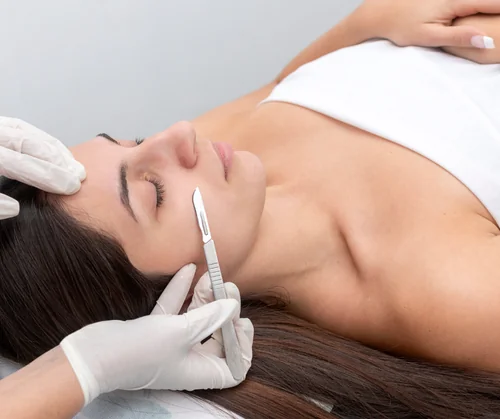
How Dermaplaning Removes Dead Skin and Hair
Dermaplaning is a professional exfoliation treatment that uses a sterile surgical scalpel to gently scrape away the top layer of dead skin cells and fine vellus hair (commonly called peach fuzz) from your face. A trained provider holds the blade at a precise 45-degree angle and glides it across your skin in short, feathering strokes. The treatment physically removes the outermost layer of buildup that makes skin look dull, along with the fine facial hair that can trap oil and create texture issues.
The blade used is a medical-grade surgical scalpel, typically a #10 or #14 blade. This isn't the same as a regular razor or the small disposable blades sold for at-home use. Professional dermaplaning blades are made from high-quality surgical steel, designed for precision work, and discarded after each use to maintain sterility. The provider works systematically across your face, cleaning the blade frequently to remove the accumulated skin cells and hair.
What dermaplaning physically removes:
- Dead skin cells from the stratum corneum (outermost skin layer)
- Fine vellus hair (peach fuzz) from cheeks, forehead, chin, and jawline
- Surface debris, oil buildup, and environmental pollutants
- Dry patches and flaky skin texture
- The barrier preventing skincare products from absorbing effectively
What dermaplaning does not remove:
- Terminal hair (the thicker, darker hair that grows on eyebrows or from hormonal conditions)
- Deeper layers of skin beyond the stratum corneum
- Active acne lesions or inflamed areas
- Scars themselves (though it can improve their appearance)
- Permanent facial hair (results are temporary)
The entire process takes 20 to 40 minutes for a full face, though some providers offer shorter treatments focusing only on specific areas. You're awake throughout the treatment and can feel the gentle scraping sensation, though it shouldn't hurt. Most people describe it as relaxing or satisfying rather than uncomfortable.
As with any skincare approach, this information is for educational purposes only and should not replace professional advice from qualified providers.
The Science Behind How Dermaplaning Works
Dermaplaning triggers several beneficial skin responses beyond just mechanical removal. Understanding the science helps explain why results go deeper than simple hair removal.
Immediate mechanical exfoliation: When the blade removes dead cells from the stratum corneum, it instantly reveals the fresher, younger cells beneath. Your skin goes through natural cell turnover roughly every 28 days, but dead cells don't always shed evenly. They accumulate in patches, creating dull, rough texture. Dermaplaning accelerates this natural process by manually clearing away the buildup.
Enhanced product penetration: With the dead cell layer and vellus hair removed, your skincare products can penetrate more effectively. Active ingredients like vitamin C, hyaluronic acid, retinoids, and peptides absorb better because they're not blocked by a barrier of debris. This doesn't mean you should immediately apply strong actives after treatment (you shouldn't), but once your skin has recovered, your regular products work more efficiently.
Controlled wound response: While dermaplaning feels gentle, it creates microscopic controlled injury to the skin. This triggers your body's healing response, which includes increased collagen and elastin production. The response is much subtler than aggressive treatments like laser resurfacing or deep chemical peels, but it still stimulates some skin renewal. Over time with repeated treatments, this can contribute to improved skin texture and firmness.
Improved light reflection: Vellus hair, even though it's fine and nearly transparent, affects how light reflects off your skin. When removed, skin appears brighter and more radiant because light bounces off the smooth surface more evenly. This is especially noticeable around the hairline, jawline, and upper lip where vellus hair tends to be slightly darker or more dense.
Better makeup application: Removing dead skin cells and hair creates an ultra-smooth canvas for makeup. Foundation, powder, and other products sit more evenly on the skin rather than catching on rough patches or settling into texture. Many people notice they need less product after dermaplaning because it applies more effectively.
The American Academy of Dermatology recognizes dermaplaning as a safe exfoliation method when performed by trained professionals.
What Happens During a Professional Dermaplaning Treatment
Before the treatment: Your provider conducts a skin assessment to ensure you're a good candidate. They check for active breakouts, inflammatory conditions, open wounds, or other contraindications. You discuss your skin concerns, goals, and any medications or products you're using that might affect treatment safety. Many providers take before photos to help you track results over time.
Preparation (5-10 minutes): Your face is thoroughly cleansed to remove all makeup, sunscreen, oil, and debris. Some providers use a pre-treatment cleanser with gentle acids to help loosen dead skin cells. Your skin must be completely clean and dry before the blade touches it. The provider may apply a light dusting of powder to help the blade glide more smoothly and see the areas more clearly.
The dermaplaning process (20-30 minutes): You lie on a treatment table in a comfortable position with good lighting. The provider holds your skin taut with one hand while using the scalpel with the other. They work in small sections, using short, feathering strokes at a consistent 45-degree angle. The blade moves in one direction only (no back-and-forth sawing motion). They systematically cover your forehead, temples, cheeks, chin, jawline, and upper lip area, avoiding the thin skin around your eyes.
The sensation: Most people describe dermaplaning as a gentle scraping or scratching feeling. You can hear the blade removing hair and dead skin, which some find satisfying. There should be no pain. If you feel pinching, burning, or sharp discomfort, tell your provider immediately. The treatment should feel relaxing and controlled.
Post-treatment care (5-10 minutes): After removing all the targeted areas, the provider applies soothing products. This typically includes a hydrating serum with hyaluronic acid, a calming treatment to reduce any minor redness, and broad-spectrum sunscreen if you're leaving during daylight hours. They explain aftercare instructions and answer questions about what to expect in the coming days.
How Long Dermaplaning Results Last
Immediate results: Your skin looks noticeably smoother, brighter, and more radiant as soon as the treatment ends. The "glow" effect is instant because you've removed the dull, dead cell layer and the light-scattering vellus hair. Makeup applies more smoothly immediately, and many people skip foundation altogether for the first few days because their skin looks so good.
Texture improvements (1-3 weeks): The ultra-smooth texture lasts while your skin regenerates and new vellus hair grows back. Most people maintain peak smoothness for about two weeks, then gradually notice the return of fine texture as hair regrows and dead cells accumulate again.
Hair regrowth timeline: Vellus hair typically takes 3 to 4 weeks to grow back to its pre-treatment length. Everyone's hair growth rate varies slightly. The hair doesn't grow back thicker or darker (this is a myth), but you may notice it more during the regrowth phase because the tips are blunt from being cut rather than naturally tapered. Once it reaches full length, it looks and feels exactly the same as before treatment.
Recommended treatment frequency: Most providers recommend dermaplaning every 4 to 6 weeks to maintain results. This timing aligns with your natural skin cell turnover cycle (approximately 28 days) and allows sufficient time for vellus hair to regrow. More frequent treatments don't improve results and can potentially irritate skin. Less frequent treatments (every 8-12 weeks) still provide benefits but with less consistent results.
Cumulative benefits: With regular treatments over time, you may notice gradually improved skin texture, reduced appearance of fine lines, and more even tone. These cumulative effects come from repeated exfoliation stimulating cell turnover and collagen production. However, dermaplaning doesn't create permanent changes or prevent aging.
Understanding the full range of dermaplaning benefits helps you set realistic expectations for both immediate and long-term results.
Safety Considerations and Who Should Avoid Dermaplaning
Dermaplaning is generally safe when performed by trained professionals: Licensed aestheticians, registered nurses, physician assistants, and physicians can perform dermaplaning depending on state regulations. The treatment has minimal risk when proper technique, sterile equipment, and appropriate candidate selection are followed. Serious complications are rare.
Potential side effects:
- Temporary redness lasting a few hours (most common)
- Slight sensitivity for 24-48 hours after treatment
- Minor nicks or cuts if technique is imperfect (rare with experienced providers)
- Breakouts from bacteria introduction or products applied too soon
- Increased sun sensitivity requiring diligent SPF use
Who should not get dermaplaning:
- People with active acne, inflammatory breakouts, or cystic acne (dermaplaning can spread bacteria and worsen inflammation)
- Anyone with active cold sores, fever blisters, or herpes simplex virus outbreaks (treatment can spread the virus)
- Those with inflammatory skin conditions like eczema, psoriasis, or severe rosacea in active flare
- People using isotretinoin (Accutane) should wait 6 months after stopping before dermaplaning
- Anyone who has used prescription retinoids within the past week
- People with very thin, sensitive skin prone to broken capillaries
- Those with skin infections, open wounds, or healing injuries on treatment areas
- People with excessive terminal hair growth from hormonal conditions (dermaplaning won't effectively address this)
Special considerations: If you have darker skin tones, discuss post-inflammatory hyperpigmentation risk with your provider. While dermaplaning is generally safer than some other exfoliation methods for darker skin, any skin trauma carries some risk of pigmentation changes. A skilled provider can assess your individual risk and adjust technique accordingly.
People taking blood thinners or with clotting disorders should inform their provider, as minor bleeding risk exists if the skin is nicked. Pregnant or nursing individuals should consult their healthcare provider, though dermaplaning is generally considered safe since it's purely mechanical with no chemicals.
Preparing for Your Dermaplaning Appointment
One week before treatment: Stop using prescription retinoids and strong retinol products, as these thin skin and increase sensitivity. Avoid aggressive exfoliation treatments like chemical peels, microdermabrasion, or scrubs. Continue basic cleansing and moisturizing but skip potentially irritating actives.
Day of appointment: Come with clean skin or arrive early for cleansing. Avoid heavy moisturizers or oils that can interfere with blade effectiveness. Inform your provider about all medications (especially retinoids and blood thinners), any history of cold sores, skin sensitivities, recent sun exposure or treatments, and your regular skincare routine.
Post-Treatment Care and Recovery
First 24 hours: Your skin may look slightly pink or flushed, similar to a mild sunburn. This is normal and typically fades within a few hours. Keep your hands off your face to avoid introducing bacteria to freshly exfoliated skin. Use only gentle, fragrance-free products. Skip makeup if possible to let skin breathe.
Cleansing and moisturizing: Use a gentle, pH-balanced cleanser without scrubbing particles, acids, or active ingredients. Pat skin dry rather than rubbing. Apply a simple, hydrating moisturizer with soothing ingredients like ceramides, hyaluronic acid, or aloe vera. Avoid anything with strong actives, fragrances, or potential irritants.
Sun protection (critical): Freshly dermaplaned skin is more vulnerable to UV damage. Apply broad-spectrum SPF 30 or higher every single day, even if you're mostly indoors. Reapply every two hours when in direct sunlight. Wear a hat for extra protection during the first week. Skipping sunscreen can lead to hyperpigmentation and undo all the treatment benefits.
What to avoid:
- Chemical exfoliants (AHAs, BHAs) for at least 3-5 days
- Retinoids for at least 3-5 days
- Physical scrubs and harsh cleansers for one week
- Hot showers, saunas, steam rooms for 24-48 hours
- Swimming pools and hot tubs for 24-48 hours (bacteria exposure risk)
- Heavy sweating and intense exercise for 24 hours
- Makeup application for 24 hours if possible
- Touching, picking, or rubbing your face
When to reintroduce active ingredients: Wait 3 to 5 days before gradually reintroducing your active skincare products. Start with the gentlest products first. If your skin feels normal and shows no lingering redness or sensitivity, you can resume your regular routine. If you experience any irritation, wait a few more days.
Combining Dermaplaning with Other Treatments
Effective combinations: Many providers perform dermaplaning immediately before light chemical peels, as removing dead skin allows the peel to penetrate more evenly. Following dermaplaning with a HydraFacial or hydrating treatment maximizes serum absorption. Some providers add LED light therapy after dermaplaning to calm skin and promote healing.
Treatments to avoid combining: Don't schedule dermaplaning with microneedling, laser treatments, or any procedure creating wounds or significant inflammation on the same day. Space these treatments at least 2-4 weeks apart to allow full healing between sessions.
Finding a Qualified Dermaplaning Provider
Who can legally perform dermaplaning: Regulations vary by state. In most states, dermaplaning is considered a medical procedure because it uses a surgical blade. Licensed aestheticians can typically perform it in medical spas under physician supervision. Registered nurses, physician assistants, and physicians can perform it in most states. Check your state's specific regulations.
What to look for in a provider:
- Proper licensing and credentials for your state
- Training specifically in dermaplaning technique
- Experience performing the treatment (ask how many they've done)
- Clean, professional treatment environment
- Proper sterilization protocols for tools and equipment
- Clear before and after care instructions
- Willingness to answer questions and assess your candidacy
- Before and after photos of previous clients
Red flags:
- Providers who don't assess your skin before booking treatment
- Facilities that seem unclean or disorganized
- Anyone using reusable blades or questionable sterilization
- Providers who dismiss your concerns or contraindications
- Prices significantly below market rate (usually $150-$250)
- Pressure to book immediately without proper consultation
Understanding dermaplaning cost factors helps you evaluate whether pricing aligns with quality and experience.
Dermaplaning vs. Other Exfoliation Methods
Dermaplaning vs. chemical peels: Chemical peels use acids to dissolve dead cells, while dermaplaning physically removes them. Peels penetrate deeper and address pigmentation more effectively but carry higher sensitivity risk. Dermaplaning is gentler with immediate visible results.
Dermaplaning vs. microdermabrasion: Both physically exfoliate, but microdermabrasion uses abrasive crystals or a diamond tip. Microdermabrasion treats face and body, dermaplaning is typically facial only. Dermaplaning removes hair, microdermabrasion doesn't.
Many people wonder about the key differences between dermaplaning and simple shaving, as the techniques appear similar but serve different purposes.
Common Myths About Dermaplaning
Myth: Hair grows back thicker and darker Fact: Vellus hair is determined by genetics and hormones, not by cutting it. The hair grows back at exactly the same thickness, color, and rate. It may feel different during regrowth because tips are blunt rather than tapered, but once it reaches full length, it's identical to before.
Myth: Dermaplaning is just shaving Fact: Dermaplaning is a medical-grade exfoliation treatment using surgical scalpels and trained technique. It removes dead skin cells along with hair, while shaving only cuts hair at the surface.
Myth: You'll get stubble Fact: Vellus hair is structurally different from terminal hair and doesn't create stubble. As it grows back, it remains fine and soft.
Myth: Dermaplaning works for everyone Fact: Some people aren't good candidates due to active acne, certain skin conditions, or medications. Proper consultation determines individual candidacy.