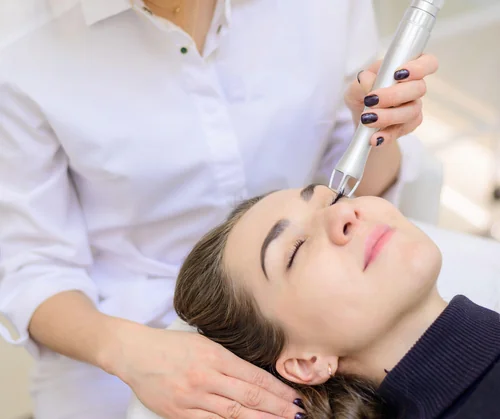
Why CO2 Laser Under Eye Treatment Works Differently
The skin around your eyes is the thinnest, most delicate facial tissue, measuring only 0.5mm thick compared to 2mm on your cheeks. This fragile area shows aging first through fine lines, crepey texture, dark circles, and loss of elasticity. CO2 laser resurfacing targets these concerns by vaporizing damaged outer layers while simultaneously stimulating deep collagen production in this specialized tissue. The treatment requires exceptional precision because the periorbital region has unique anatomy, thinner skin, and different healing characteristics than other facial areas.
Fractional CO2 laser technology delivers controlled thermal energy in a microscopic grid pattern, creating thousands of tiny treatment columns while preserving surrounding tissue. This fractional approach is essential for under-eye safety because it allows faster healing through the untreated skin between treatment zones. The laser removes damaged cells contributing to wrinkles and discoloration while triggering your body's natural repair mechanisms to rebuild collagen scaffolding. Understanding how CO2 laser works at the cellular level explains why results continue improving for months after your single treatment session.
What makes under-eye CO2 laser unique:
- Requires conservative settings compared to treating cheeks or forehead due to skin thickness and proximity to eyes. Providers use lower energy levels and shallower depth to avoid complications while still achieving dramatic improvement.
- Demands specialized expertise in periorbital anatomy to safely navigate this complex area. Board-certified oculoplastic surgeons or experienced dermatologists understand the delicate structures, vascular patterns, and healing limitations specific to eye region.
- Addresses both skin quality issues (texture, tone, wrinkles) and some degree of laxity through tightening, though it can't replace volume loss or surgically correct severe bags. Realistic expectations about what laser can and cannot fix are essential.
- Combines well with eyelid surgery (blepharoplasty) to address skin quality after removing excess tissue. Many surgeons perform both procedures simultaneously to optimize results and consolidate recovery time.
As with any medical procedure, this information is for educational purposes and should not replace professional consultation with qualified providers experienced in periorbital laser treatments. According to the American Society of Ophthalmic Plastic and Reconstructive Surgery, CO2 laser resurfacing around the eyes requires specialized training beyond basic laser certification.
What CO2 Laser Treats in the Under-Eye Area
Fine lines and wrinkles:
- Crow's feet radiating from outer corners respond dramatically to CO2 laser by removing the damaged epidermis creating these creases and stimulating new collagen to plump the area. Even deep-set dynamic wrinkles soften significantly.
- Under-eye fine lines from sun damage, aging, and repeated facial expressions smooth out as fresh, undamaged skin replaces old tissue. The laser essentially resurfaces this thin area with new skin.
- Static wrinkles that remain when your face is at rest improve as collagen remodeling tightens underlying support structures. These stubborn lines that don't respond to Botox often require resurfacing for meaningful change.
Crepey skin texture:
- Paper-thin, fragile-looking skin under eyes regains thickness and resilience as collagen production increases over 3-6 months post-treatment. The tightening effect from collagen contraction provides immediate improvement that continues developing.
- Loss of elasticity causing sagging or loose appearance improves through skin tightening, though severe laxity or fat prolapse (true bags) may need surgical intervention. Laser addresses skin quality, not structural volume issues.
- Sun damage and photoaging that create rough, irregular texture smooth out as damaged cells are removed and replaced with fresh, healthy skin. Years of accumulated damage can be significantly reversed.
Dark circles and pigmentation:
- Pigmentation-related dark circles caused by melanin deposits lighten as laser removes pigmented cells and stimulates even-toned new skin growth. This works best when dark circles stem from skin discoloration rather than shadows.
- Vascular dark circles from visible blood vessels may improve somewhat through skin thickening that obscures vessels, though laser primarily targets pigment and texture rather than vascular issues.
- Shadowing from volume loss or structural hollowing won't respond to laser alone and typically requires filler or fat grafting to replace lost volume. Laser and filler combination treatments work synergistically.
Skin laxity and tightening:
- Mild to moderate looseness tightens through collagen contraction during treatment and continued collagen remodeling afterward. The thermal effect causes immediate shrinkage while long-term collagen building creates sustained firmness.
- Lower eyelid skin that's begun to sag or wrinkle regains some lift and smoothness, though the improvement is more subtle than surgical tightening. Conservative expectations prevent disappointment.
Is CO2 Laser Safe Under the Eyes
CO2 laser under eyes is considered safe when performed by experienced providers using appropriate settings and safety protocols, though the periorbital area carries specific risks due to its delicate nature and proximity to eyes. The key to safety lies in provider expertise, conservative treatment parameters, and strict adherence to eye protection measures during the procedure.
Safety measures during treatment:
- Metal corneal shields placed directly on the eyeball under topical anesthetic protect eyes from laser energy. These medical-grade devices prevent any laser contact with eyes.
- Conservative laser settings using lower energy and shallower depth than other facial areas minimize complications while delivering results.
- Gradual, methodical treatment allows providers to assess skin response continuously. Rushing periorbital laser increases risk unnecessarily.
Potential risks and complications:
- Ectropion (eyelid pulling away from eye) can occur if skin contracts excessively during healing, though this is rare with fractional CO2 and conservative settings. Mild cases resolve on their own while severe cases may need surgical correction.
- Hyperpigmentation (darkening) or hypopigmentation (lightening) can develop in darker skin tones or with inadequate sun protection during healing. Pre-treatment skin prep and post-treatment sun avoidance minimize this risk significantly.
- Prolonged redness lasting 2-4 months is normal and expected, not technically a complication. The under-eye area takes longer to heal than other facial zones due to thin skin and constant movement.
- Infection risk is low but increases if proper aftercare isn't followed. Keeping the area clean and using prescribed ointments as directed prevents bacterial complications.
- Scarring is extremely rare with fractional CO2 when performed by experienced providers following proper protocols. The fractional approach dramatically reduces scarring risk compared to full ablative treatment.
Who should avoid under-eye CO2 laser:
- Active eye infections or inflammatory conditions
- Recent eye surgery (wait 3-6 months)
- Certain autoimmune conditions affecting healing
- Unrealistic expectations about what laser can achieve
- Inability to commit to recovery and aftercare requirements
Understanding CO2 laser downtime helps you prepare mentally and practically for the healing process specific to delicate eye area.
CO2 Laser Under Eyes Before and After Results
Real patient results demonstrate CO2 laser's transformative effects on under-eye wrinkles, texture, and skin quality, though individual outcomes vary based on age, skin condition, treatment settings, and healing response.
Immediate to 10-day transformation:
- Treated skin appears red, swollen, and raw immediately, looking worse before improvement begins. Swelling peaks at 24-48 hours with protective ointment covering the area.
- Days 3-5 bring bronzing and flaking as damaged tissue separates. Resist the urge to pick or peel, letting skin slough naturally.
- By day 7-10, pink new skin emerges with improved texture already visible. The transformation happens fast once peeling completes.
Long-term improvement timeline:
- Weeks 2-4 show continued refinement as redness fades and texture smooths. You can resume makeup to camouflage residual pinkness.
- Months 2-6 reveal full impact as collagen production peaks. Fine lines soften, skin thickens, and crepey appearance diminishes.
- Results last 3-5 years or more with proper sun protection and skincare. Natural aging continues but improvement remains significant.
Typical improvements patients see:
- 50-70% reduction in fine line depth and visibility
- Significant tightening of crepey, loose skin texture
- Smoother, more uniform skin tone with reduced pigmentation
- Improved overall eye area brightness and rejuvenated appearance
How Long is Recovery for CO2 Laser Under Eyes
Recovery from CO2 laser under eyes typically takes 7-10 days for fractional treatment before you can resume normal activities with makeup, though complete healing and fade of all pinkness requires 4-8 weeks. The under-eye area heals slower than other facial zones due to constant movement, thin skin, and high vascularity.
Day-by-day healing progression:
Days 1-2:
- Maximum swelling, redness, and oozing. Ice packs and elevation help minimize swelling. The area feels hot and tight despite pain medication.
- Gentle cleansing with prescribed cleanser and frequent healing ointment application every 2-3 hours keeps skin protected.
Days 3-5:
- Bronzing and peeling begin. Appearance may look worse but this signals normal healing.
- Continue ointment to prevent crusting. Swelling subsides considerably though some puffiness persists.
Days 6-10:
- New pink skin emerges. You can return to work around day 7-10 with makeup covering pinkness.
- Transition from ointment to lighter moisturizer around day 7-10. Strict SPF 50+ sun protection is essential.
Weeks 2-8:
- Pinkness gradually fades over 4-8 weeks. Continue sun protection and avoid irritating products.
- Resume normal skincare by week 4-6. Results continue improving as collagen production accelerates.
Recovery factors affecting timeline:
- Age and skin health (younger, healthier skin heals faster)
- Treatment aggressiveness (conservative settings recover quicker)
- Individual healing capacity (genetics play a role)
- Adherence to aftercare instructions (this is hugely important)
Fractional CO2 Laser Under Eyes vs. Full Ablative
Fractional CO2 laser is the standard approach for under-eye treatment because it balances impressive results with manageable recovery and lower complication risk. Full ablative CO2 under eyes is rarely performed due to safety concerns and extended healing in this delicate area.
Fractional CO2 advantages for under eyes:
- Faster healing of 7-10 days versus 14-21 days for full ablative makes it practical for most people's schedules and lives
- Lower complication risk, particularly for ectropion and prolonged redness
- Ability to treat close to lash line safely
- Option for repeat treatments if needed to build results progressively
- Better suited for combination with other treatments like fillers
When full ablative might be considered:
- Severe crepey texture or deep wrinkles requiring maximum depth
- Combination with aggressive eyelid surgery where recovery is already extensive
- Patient acceptance of 2-3 week recovery and higher complication risk
- Very experienced surgeon comfortable with periorbital full ablative technique
Most providers default to fractional CO2 for under-eye safety and patient satisfaction. The results from well-executed fractional treatment rival full ablative outcomes without the added risk. CO2 laser cost for under-eye treatment typically reflects the specialized skill required regardless of fractional or ablative approach.
CO2 Laser Under Eyes vs. Other Treatment Options
CO2 laser vs. dermal fillers:
- Fillers add volume to hollow tear troughs, providing instant results but not improving skin quality or wrinkles
- CO2 laser improves texture and wrinkles but doesn't replace volume
- Combined approach delivers comprehensive under-eye rejuvenation
- Fillers need maintenance every 9-12 months while laser lasts years
CO2 laser vs. chemical peels:
- Peels brighten and improve mild texture with minimal downtime (3-5 days) but don't provide dramatic collagen stimulation
- CO2 laser penetrates deeper for superior long-term improvement
- One laser treatment often exceeds multiple peel results
CO2 laser vs. blepharoplasty:
- Surgery removes excess skin and fat for structural correction with incisions
- Laser improves skin quality without surgery but can't remove significant tissue
- Many patients benefit from both: surgery for structure, laser for skin quality
Choosing the Right Provider for Under-Eye CO2 Laser
The under-eye area demands exceptional expertise due to its delicate anatomy, complex healing characteristics, and proximity to eyes. Provider credentials and experience matter more for periorbital laser than almost any other aesthetic treatment.
Ideal provider qualifications:
- Board certification in dermatology, oculoplastic surgery, or facial plastic surgery with specific periorbital training
- Extensive experience treating the periorbital region with CO2 laser, not just general facial laser work
- Access to high-quality laser equipment with precise control settings necessary for delicate under-eye treatment
- Comprehensive consultation process including realistic expectations discussion and detailed treatment planning
Questions to ask during consultation:
- How many under-eye CO2 laser treatments have you personally performed?
- What's your complication rate for periorbital laser, specifically ectropion?
- Can I see before and after photos of patients with similar concerns to mine?
- What laser system do you use and why is it appropriate for under-eye treatment?
- How will you customize settings for my skin type and concerns?
- What's your protocol if complications develop during healing?
Red flags to avoid:
- Providers who don't specialize in periorbital procedures attempting under-eye laser
- Extremely low pricing that suggests cutting corners on equipment, expertise, or safety
- Lack of detailed consultation or rushing through health screening
- Inability or unwillingness to show results photos from actual patients
- Aggressive sales tactics or dismissing your concerns and questions