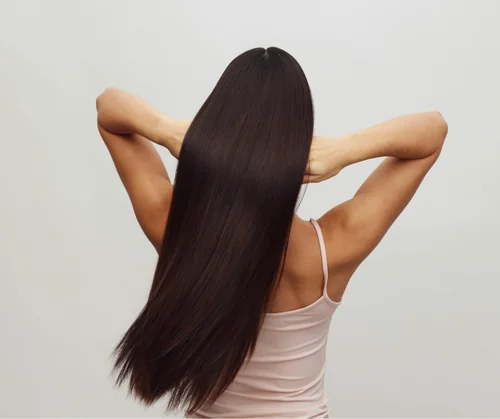
Quick Answer: What Hair Botox Actually Is
Hair botox is a deep conditioning treatment that repairs damaged, dry, or frizzy hair using a blend of proteins (like keratin and collagen), vitamins, and amino acids. The name comes purely from marketing and, in fact, it contains no actual botulinum toxin like facial Botox injections.
Instead, the treatment fills gaps and breaks in your hair shaft to create smoother, shinier, more manageable hair.
Key facts about hair botox:
- No needles or injections involved
- Chemical-free or formaldehyde-free formulation
- Applied at salons or with at-home kits
- Results last 2-4 months typically
- Costs $150-$400 per salon treatment
- Safe for all hair types
The treatment works by penetrating your hair cuticle and cortex to deliver nutrients that repair damage from the inside out. Think of it as an intensive conditioning mask on steroids—it provides deep hydration, fills in porous areas along the hair shaft, and creates a protective coating that reduces frizz and adds shine.
Unlike keratin treatments that straighten hair using chemicals, hair botox maintains your natural texture while improving overall health and manageability.
Understanding the Hair Botox Treatment Explained
The confusion around "hair botox" starts with the name itself, which is entirely a marketing creation.
Why It's Called Botox
The beauty industry borrowed the Botox name because both treatments aim to "rejuvenate" and create a smoother appearance—one for skin, one for hair. Facial Botox temporarily relaxes facial muscles to smooth wrinkles, while hair botox fills in damaged areas along hair strands to create a smoother surface.
That's where the similarities end. Hair botox contains zero botulinum toxin and involves no injections of any kind. It's simply a deep conditioning treatment packaged with a catchy, recognizable name that promises anti-aging benefits for your hair.
The Actual Ingredients
Hair botox formulations vary by brand and salon, but they typically include:
Proteins:
- Keratin: The natural protein that makes up your hair structure, helping to rebuild damaged areas
- Collagen complex: Improves hair elasticity and resilience
- Soy or wheat protein: Provides strength and repairs breakage
Vitamins:
- Vitamin B5 (panthenol): Deeply hydrates and adds moisture retention
- Vitamin E: Antioxidant that protects against environmental damage
- Other B vitamins: Support overall hair health
Nourishing oils:
- Caviar oil: Rich in omega-3 fatty acids for shine and smoothness
- Argan oil: Moisturizes and tames frizz
- Jojoba oil or macadamia oil: Seals in moisture
Amino acids: Building blocks of proteins that repair hair fiber structure. Cysteine complex strengthens hair bonds without harsh chemicals.
Other ingredients: Hyaluronic acid (attracts and retains moisture), antioxidants (protect hair from free radical damage), natural extracts such as meadowfoam seed extract and other botanical ingredients.
The exact formula depends on the brand, with some using proprietary blends. Since "hair botox" isn't a regulated term or specific product, each salon or product line creates its own version.
How Hair Botox Works on Your Hair
Understanding the science helps you appreciate what the treatment actually accomplishes.
The Hair Damage Process
Your hair shaft consists of layers of keratin proteins. Over time, several factors create gaps, cracks, and porous areas in these protein structures:
- Heat styling (flat irons, curling irons, blow dryers)
- Chemical processing (coloring, bleaching, perms, relaxers)
- Environmental damage (sun exposure, chlorine, hard water)
- Physical stress (brushing, tight hairstyles, friction)
- Natural aging and weathering
These damaged areas make hair look dull, feel dry and brittle, tangle easily, and develop frizz as the rough cuticle surface tries to absorb moisture from the air.
How the Treatment Repairs Damage
Hair botox addresses these issues through a multi-step process:
Step 1: Penetration After your hair is shampooed, the small molecular size of the proteins, vitamins, and amino acids allows them to penetrate through the cuticle layer into the cortex (the inner part of your hair shaft).
Step 2: Filling and Repairing These ingredients fill in the gaps and cracks where your hair's natural keratin has broken down. Think of it like spackling holes in a wall—the proteins patch the damaged spots to restore structural integrity.
Step 3: Coating and Sealing The treatment creates a protective layer around each strand, smoothing the cuticle surface. This coating helps seal in moisture, reduce porosity, and create that glossy, frizz-free appearance.
Step 4: Heat Activation Most hair botox treatments use heat (blow dryer or flat iron) to help the ingredients bond to your hair and seal the cuticle. The heat opens the cuticle scales initially, allows penetration, then seals everything in place.
What Makes It Different from Daily Conditioning
Regular conditioners sit on the hair surface and provide temporary smoothness. Hair botox penetrates deeper, delivers more concentrated nutrients, and creates longer-lasting results because the proteins actually repair damaged areas rather than just coating them.
The Salon Treatment Process
Knowing what happens during your appointment helps you prepare and understand the time commitment.
Before Your Appointment
Avoid washing your hair the day of treatment: Clean but not freshly washed hair works best for product penetration.
Come with honest expectations: Hair botox improves condition and manageability but won't dramatically straighten very curly hair or completely transform severely damaged hair in one session.
Discuss your hair history: Tell your stylist about chemical treatments, heat damage, and specific concerns so they can customize the application.
During the Treatment
Step 1: Clarifying shampoo (5-10 minutes) Your stylist washes your hair with a clarifying or deep-cleansing shampoo to remove product buildup, oils, and residue. This opens the cuticle and prepares strands to absorb the treatment.
Step 2: Application (15-30 minutes) Working in sections, your stylist applies the hair botox product from roots to ends, ensuring every strand is saturated. Some formulas require focusing on mid-lengths and ends rather than the scalp.
Step 3: Processing time (20-90 minutes) The treatment sits on your hair to penetrate and work its magic. Processing times vary significantly by brand—some need 20 minutes while others require up to 90 minutes. Many salons have you sit under a heat cap or dryer to enhance penetration.
Step 4: Rinse or leave-in (varies by product) Some formulas get rinsed out with water or a gentle sulfate-free shampoo. Others stay in your hair for the next steps. Your stylist follows the specific product's instructions.
Step 5: Blow-dry and flat iron (20-45 minutes) Heat is essential to seal in the treatment. Your hair gets blow-dried completely, then flat-ironed in small sections at a moderate temperature (usually 350-400°F). This seals the cuticle and locks in all the nourishing ingredients.
Total time: Expect to spend 1.5-3 hours at the salon depending on your hair length, thickness, and the specific product used.
Immediate Aftercare
Unlike some keratin treatments that require waiting 3 days to wash your hair, most hair botox formulas allow you to:
- Wash your hair the same day or next day
- Get your hair wet immediately
- Swim if desired
- Style as usual
Check with your stylist about specific aftercare for the product they used, as requirements vary.
Hair Botox Benefits for Your Hair
The treatment addresses multiple hair concerns simultaneously.
Frizz Reduction
The smoothed cuticle and sealed coating dramatically reduce frizz and flyaways. This is especially noticeable in humid weather when untreated hair would normally puff up trying to absorb moisture from the air. With hair botox, the protective barrier keeps humidity out while locking moisture in.
Improved Shine and Luster
Damaged hair with rough, raised cuticles scatters light, making it look dull. Hair botox smooths the cuticle surface so it reflects light evenly, creating that glossy, healthy shine. The effect is visible immediately after treatment.
Repair for Damaged Hair
If your hair is dry, brittle, or breaking from heat damage or chemical processing, hair botox delivers intensive repair. The proteins rebuild damaged areas, the vitamins provide nourishment, and the oils restore moisture balance. You'll notice less breakage and split ends.
Enhanced Manageability
Hair botox makes detangling easier, reduces styling time, and helps your hair cooperate better when you brush or style it. The coating adds slight weight to unruly strands while keeping them soft rather than heavy or greasy.
Maintained Natural Texture
This is a key benefit that distinguishes hair botox from straightening treatments. If you have wavy or curly hair, your waves and curls remain intact—they just look healthier, more defined, and less frizzy. The treatment enhances your natural pattern rather than altering it.
Volume Restoration
Fine or limp hair that's damaged often looks flat and lifeless. By repairing the hair fiber and removing frizz without weighing hair down, botox can actually make your hair appear fuller and more voluminous.
Scalp Benefits
The extra moisture benefits your scalp too, potentially reducing dryness, flaking, and conditions like dandruff or mild scalp irritation that come from an unhealthy scalp environment.
Hair Botox vs Keratin Treatment: Key Differences
These are the two most popular smoothing treatments, but they work differently and achieve different results.
Primary Purpose
Hair botox: Repairs and conditions damaged hair while maintaining natural texture. The goal is healthier, shinier, more manageable hair without structural changes.
Keratin treatment: Straightens or relaxes curly/wavy hair using a chemical process while also providing some conditioning benefits. The goal is sleek, straight hair with reduced styling time.
Chemical Composition
Hair botox: Formulated without harsh chemicals. It's free from formaldehyde, a controversial ingredient that raises safety concerns. The formula focuses on nourishing ingredients.
Keratin treatment: Often contains formaldehyde or formaldehyde-releasing chemicals (like methylene glycol) that bond the keratin to your hair and create the straightening effect. Some newer formulas are formaldehyde-free but may use other chemicals.
Effect on Hair Structure
Hair botox: Doesn't chemically alter your hair structure. Your curl pattern, wave, or natural texture stays the same—it just looks healthier and less frizzy.
Keratin treatment: Chemically breaks and reforms bonds in your hair to create a straighter structure. Curls and waves are significantly relaxed or eliminated depending on the strength of the treatment.
Duration of Results
Hair botox: Typically lasts 2-4 months with proper maintenance. The treatment gradually washes out over time.
Keratin treatment: Usually lasts 3-6 months, sometimes longer. The straightening effect is more permanent since the hair structure has been altered.
Best Candidates
Hair botox: People with dry, damaged, chemically-treated, or frizzy hair who want to maintain their natural texture. Perfect for wavy or curly hair that needs moisture and definition without straightening.
Keratin treatment: People with very curly, wavy, or frizzy hair who want a straighter, sleeker finish and don't mind temporary structural changes.
Cost Comparison
Hair botox: $150-$400 per salon session on average.
Keratin treatment: $200-$600 per salon session, sometimes higher.
Both require maintenance every few months, so annual costs for regular treatments can range from $600-$2,400+ depending on your location and how often you retreat.
Safety Considerations
Hair botox: Generally considered safer since it doesn't use harsh chemicals. Safe for pregnant women (though always check with your doctor), people with chemical sensitivities, and those avoiding formaldehyde.
Keratin treatment: Not recommended during pregnancy or breastfeeding due to formaldehyde exposure when the product is heated. Some people experience eye, nose, or throat irritation from the fumes.
How Long Does Hair Botox Last
Duration depends on several factors, and you can extend results with proper care.
Typical Timeline
Days 1-3: Results are at their peak. Your hair looks and feels its absolute best right after treatment.
Weeks 1-8: You maintain excellent results with proper aftercare. Hair stays smooth, shiny, and manageable.
Weeks 8-12: Effects start gradually fading as the treatment washes out. You'll notice your natural texture returning and frizz increasing slightly.
Months 3-4: Most people retreat around this point to maintain results, though some extend to 4+ months.
Factors Affecting Duration
Washing frequency: The more you wash, the faster the treatment fades. People who wash hair daily may see 2 months of results, while those washing 2-3 times weekly might get 4 months.
Shampoo type: Sulfate-free, gentle shampoos preserve the treatment much longer than harsh, clarifying, or anti-dandruff shampoos that strip the coating.
Hair porosity: Highly porous (very damaged) hair may lose the treatment faster because it can't hold onto the proteins as effectively.
Heat styling: Excessive heat after the treatment can break down the proteins faster, though moderate heat styling with protection is fine.
Swimming: Chlorine and salt water accelerate fading. If you swim frequently, results won't last as long.
Natural hair growth: As new hair grows in at the roots, the contrast between treated and untreated hair becomes visible, prompting many people to retreat.
Extending Your Results
To maximize how long your hair botox lasts:
- Use sulfate-free shampoo and conditioner
- Wash hair 2-3 times per week maximum rather than daily
- Apply a heat protectant before any heat styling
- Rinse hair after swimming in pools or ocean
- Use a silk or satin pillowcase to reduce friction
- Apply a weekly deep conditioning mask
- Limit exposure to sun, which can degrade the proteins
Who Should Try Hair Botox
The treatment works well for specific hair types and concerns.
Ideal Candidates
People with heat-damaged hair: If you regularly use flat irons, curling irons, or blow dryers and your hair has become dry and brittle, hair botox can repair that damage.
Color-treated or bleached hair: Chemical processing depletes natural proteins and moisture. Hair botox replenishes both, making it perfect for frequently colored or highlighted hair.
Naturally frizzy hair: If you battle frizz, especially in humid weather, the smoothing and sealing effects of hair botox make a noticeable difference.
Wavy or curly hair that needs definition: Want your curls to look healthier and more defined without straightening them? Hair botox enhances your natural pattern.
Fine or thin hair needing volume: The treatment strengthens hair and reduces frizz without heavy silicones that can weigh fine hair down, actually creating more fullness.
Anyone with split ends and breakage: The repair benefits target weak points along the hair shaft to reduce splitting and breaking.
People avoiding harsh chemicals: If you want smoothing benefits without formaldehyde or strong straightening chemicals, hair botox provides a gentler alternative.
Who Should Avoid or Use Caution
Very oily hair: Adding more conditioning products might make already oily hair feel greasy, though this varies by person and formula.
People expecting dramatic straightening: Hair botox won't significantly straighten very curly hair. If that's your goal, keratin treatments work better.
Those with active hair loss: Focus on treating hair loss with appropriate medical treatments before adding cosmetic conditioning treatments.
Anyone with scalp conditions: Active scalp infections, severe dandruff, or untreated scalp issues should be addressed before cosmetic hair treatments.
Pregnancy: While hair botox is generally considered safer than keratin because it's chemical-free, always consult your doctor before any salon treatment during pregnancy.
Cost and Where to Get Hair Botox
Understanding pricing helps you budget and find quality services.
Salon Treatment Costs
Average price range: $150-$400 per session
Factors affecting cost:
- Geographic location: Major cities (New York, Los Angeles, Miami) charge $300-$500+, while smaller markets may offer treatments for $150-$250
- Salon prestige: High-end salons with celebrity stylists charge premium prices
- Hair length and thickness: Long, thick hair requires more product and time, increasing cost
- Stylist expertise: Experienced stylists specializing in treatments command higher rates
- Product brand: Some salons use proprietary or premium hair botox formulas that cost more
At-Home Kits
Many brands sell at-home hair botox kits for $30-$100. While more affordable, results typically don't match professional applications because:
- You can't section and apply as precisely
- Home products often use lower concentrations
- Proper heat sealing is harder to achieve alone
- Professional expertise makes a difference
If you try at-home treatments, follow instructions carefully and don't expect salon-quality results.
Finding a Reputable Salon
Look for salons that:
- Specialize in hair treatments and have multiple stylists trained in hair botox
- Can explain which specific product they use and why
- Show before/after photos of actual clients
- Provide clear pricing upfront
- Use professional-grade products from known brands
- Have good reviews specifically mentioning hair botox or smoothing treatments
Ask during consultation:
- Which hair botox brand do you use?
- How long have you been offering this treatment?
- Can I see examples of results on hair similar to mine?
- What aftercare products do you recommend?
- How long should results last based on my hair type?
- What happens if I'm not satisfied with the results?
Annual Maintenance Costs
Since treatments last 2-4 months, expect to pay:
- 4 treatments per year at $200 each: $800 annually
- 4 treatments per year at $350 each: $1,400 annually
- 3 treatments per year at $300 each: $900 annually
Factor in sulfate-free shampoos and conditioners ($15-$40 each) for proper maintenance.
Maintaining Your Hair Botox Results
Proper aftercare determines how long your treatment lasts and how good your hair looks.
Immediate Post-Treatment Care (First 24-48 Hours)
Most hair botox formulas don't require the strict 3-day "no washing" rule that some keratin treatments demand. However:
- Avoid excessive heat styling for 24 hours to let everything settle
- Don't tie hair tightly or use elastics that create creases
- Let hair air dry when possible rather than blow drying immediately
Check your stylist's specific recommendations, as some products have unique requirements.
Ongoing Hair Care
Shampoo strategy: Use sulfate-free, gentle shampoos labeled "safe for color-treated hair" or "smoothing." Sulfates strip the protective coating and shorten results dramatically.
Washing frequency: Reduce how often you wash. Every 2-3 days works well for most people. Use dry shampoo between washes to absorb oil at roots.
Conditioning: Apply a good rinse-out conditioner every wash, focusing on mid-lengths and ends. Once weekly, use a deep conditioning mask for extra moisture.
Heat protection: Always apply a heat protectant spray or cream before blow drying, flat ironing, or curling. This preserves both the treatment and your natural hair health.
Styling products: Choose lightweight, sulfate-free styling products. Avoid heavy gels or mousses that contain sulfates or alcohols that dry hair.
Swimming protection: Wet your hair with clean water before entering pools or ocean, then apply a leave-in conditioner. This helps prevent chlorine and salt from penetrating. Rinse thoroughly after swimming.
Sun protection: UV rays can break down the proteins in your treatment. Use hair products with UV protection or wear hats in intense sun.
Signs It's Time to Retreat
You'll know it's time for another treatment when:
- Frizz returns significantly
- Hair feels dry or rough again
- Detangling becomes difficult
- Shine diminishes noticeably
- You're struggling to manage your hair like you used to
Most people retreat every 3-4 months to maintain consistent results.
Safety and Side Effects
Hair botox is generally very safe, but understanding potential issues helps you make informed decisions.
Why It's Considered Safe
Unlike keratin treatments, hair botox doesn't use formaldehyde or harsh straightening chemicals. It's essentially an intensive conditioning treatment using proteins and vitamins already safe for topical hair use.
Possible Side Effects
Scalp irritation: Some people experience mild itching or sensitivity if product touches the scalp. This usually resolves within a few days.
Allergic reactions: Rare, but possible with any cosmetic product. Ingredients like specific oils, proteins, or preservatives might trigger reactions in sensitive individuals.
Greasy appearance: In the first week, hair might feel heavier or slightly greasy as the treatment settles. This typically resolves as you wash hair.
Over-conditioning: Very fine hair might become too soft or limp if over-conditioned. Discuss this concern with your stylist beforehand.
Who Should Be Cautious
Pregnant or breastfeeding women: While hair botox is safer than chemical treatments, always consult your doctor before any salon service.
People with scalp conditions: Active infections, severe dandruff, psoriasis, or eczema should be treated before applying conditioning treatments.
Those with product sensitivities: If you have a history of reactions to hair products, request a patch test or ingredient list before proceeding.
Minimizing Risks
- Choose reputable salons using quality, professional-grade products
- Discuss your hair history and any sensitivities during consultation
- Request a patch test if you have concerns about allergic reactions
- Ensure the stylist doesn't apply product directly to your scalp if you're prone to sensitivity
- Follow all aftercare instructions