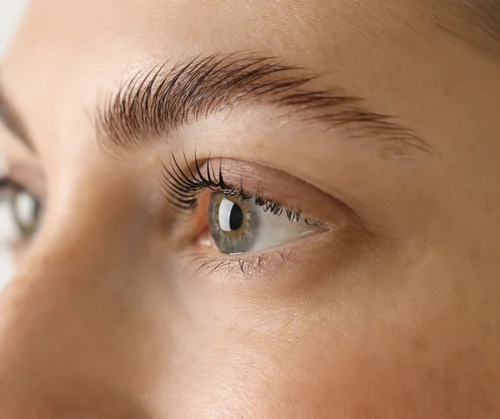
Quick Answer: How a Botox Brow Lift Works
A Botox brow lift is a non-surgical procedure that uses targeted injections to relax specific muscles around your eyebrows and forehead. When these downward-pulling muscles are relaxed, your forehead muscles can lift your brows naturally, creating a more open, awake appearance.
Here's what you need to know:
The technique:
- Targets muscles that pull brows downward (orbicularis oculi, corrugator, depressor supercilii)
- Relaxes these muscles so the frontalis muscle can lift brows unopposed
- Creates a subtle elevation of 1-3mm on average
Treatment details:
- Takes 10-20 minutes
- Uses 4-10 units per brow typically (20-40 units total for full treatment)
- Minimal discomfort with tiny needles
- No downtime required
Results timeline:
- Initial changes: 3-7 days
- Full results: 10-14 days
- Duration: 3-4 months on average
Cost range:
- $150-$600 per session depending on location and units needed
- Annual maintenance: $600-$2,400 for 3-4 treatments
Unlike surgical brow lifts that involve incisions and weeks of recovery, this approach works with your natural muscle structure for subtle enhancement.
Understanding the Botox Brow Lift Technique
Before diving into specifics, it helps to understand the muscle dynamics that make this technique work.
The Muscle Balance
Your brow position results from a constant tug-of-war between muscles that lift and muscles that lower:
Muscles that lift the brows:
- Frontalis muscle: The large forehead muscle that raises your eyebrows when you look surprised or raise your eyebrows
Muscles that pull the brows down:
- Corrugator supercilii: Creates vertical frown lines between your brows
- Depressor supercilii: Pulls the inner brow downward
- Orbicularis oculi: The muscle encircling your eyes, particularly the lateral (outer) portion
As we age or make repetitive facial expressions, the downward-pulling muscles often become stronger or more active, causing the brows to lower. This creates a tired, heavy, or even angry appearance.
How Botox Changes the Balance
Botox works by blocking nerve signals that tell muscles to contract. When your provider strategically injects Botox into the muscles pulling your brows down, these muscles temporarily relax. With the downward pull reduced, your frontalis muscle can work more effectively to lift the brows naturally.
This technique doesn't add volume or physically lift tissue like surgery does. Instead, it changes the muscle dynamics to allow your brows to sit higher on their own.
Strategic Injection Points
A skilled injector targets specific areas to create lift:
For overall brow lift:
- Between the eyebrows (glabellar region) to relax the corrugator and procerus muscles
- Just above the brows to address the depressor supercilii
For lateral brow lift:
- Outer portions of the orbicularis oculi muscle to create that coveted "tail" lift
- This opens up the eye area and creates an arched, more feminine brow shape
Forehead considerations:
- The frontalis muscle is typically left untreated or treated minimally to maintain its lifting ability
- Some advanced techniques use strategic placement in specific frontalis areas to indirectly enhance lift
The exact placement and dosing depend entirely on your facial anatomy, muscle strength, and desired outcomes.
Botox Brow Lift Results: What to Expect
Understanding realistic outcomes helps prevent disappointment and informs your decision.
How Much Lift You'll Get
A Botox brow lift creates subtle rather than dramatic changes. Most people experience:
- 1-3mm of elevation: This might sound minimal, but it's visibly noticeable in photographs and creates a refreshed appearance
- More open eye area: Even small brow changes significantly affect how "open" your eyes appear
- Softened frown lines: The same injections that lift also smooth the "11" lines between your brows
If you're looking for a dramatic transformation with several millimeters of lift, a surgical brow lift produces more substantial changes. Botox works best for mild to moderate brow ptosis (drooping).
Timeline for Seeing Changes
After your treatment, results appear gradually:
Days 1-3:
- Minimal visible changes
- Possible minor redness, tenderness, or small bruises at injection sites
- These resolve quickly, usually within hours
Days 3-7:
- Initial results become noticeable
- Brows start appearing slightly lifted
- Frown lines begin softening
Days 10-14:
- Full effects appear
- Maximum brow elevation reached
- Frown lines significantly reduced
Months 1-3:
- Peak results maintained
- Brows stay in elevated position
- Natural facial expressions preserved
Month 3-4:
- Effects gradually fade as your body metabolizes the Botox
- Brows slowly return to original position
- Time to schedule maintenance treatment
According to the American Academy of Dermatology, Botox injections last about three to four months on average, though some people experience results lasting up to six months.
Before and After Differences
In before and after photos, you'll typically notice:
- Higher brow arch, especially at the outer third
- More visible eyelid space
- Lifted appearance at brow tails
- Reduced heaviness over the eyes
- Smoother area between the brows
- More alert, refreshed overall expression
The changes are usually described as "rested" or "refreshed" rather than "dramatically different."
How Many Units for a Botox Brow Lift
Dosing varies significantly based on individual factors, but here are typical ranges.
Average Unit Requirements
Per brow:
- 4-6 units: Minimal lift for someone with weak muscles or seeking very subtle change
- 6-8 units: Standard dosing for most patients
- 8-10 units: Stronger muscles or more lift desired
Additional areas often treated simultaneously:
- Glabellar lines (frown lines): 20 units average
- Forehead lines: 10-24 units depending on coverage
- Full brow lift with frown line treatment: 30-50 units total
Men typically require more units than women due to stronger facial muscles and larger treatment areas.
Factors Affecting Your Dosage
Your provider determines the right amount based on:
Muscle strength: People with naturally strong forehead and brow muscles need higher doses to achieve relaxation and lift.
Degree of ptosis: More significant brow drooping may require strategic higher dosing in certain areas.
Previous Botox experience: First-time patients start conservatively. Those who've had multiple treatments might need adjustments based on their response patterns.
Facial anatomy: Brow shape, forehead size, and muscle positioning influence optimal injection sites and amounts.
Desired outcome: A subtle lift requires fewer units than attempting maximum elevation.
Getting the Dosing Right
Your first Botox brow lift often serves as a baseline. Your provider will:
- Start conservatively to avoid over-treatment
- Schedule a two-week follow-up to assess results
- Make adjustments at future appointments based on your response
- Fine-tune placement and dosing over multiple sessions
It's much easier to add more Botox if needed than to reverse an overcorrection.
Botox Brow Lift Cost: What You'll Pay
Understanding pricing helps you budget for initial treatment and ongoing maintenance.
Average Cost Range
Per treatment session:
- $150-$300: Lower-cost markets, competitive pricing, or special promotions
- $300-$500: Average range in most locations
- $500-$800: Major metropolitan areas, premium providers, or higher unit requirements
The wide range reflects geographic variation, provider expertise, and individual unit needs.
Pricing Structure
Most practices use one of two models:
Per-unit pricing:
- $10-$15 per unit: Suburban and smaller markets
- $12-$18 per unit: Average pricing nationally
- $15-$25 per unit: Major cities (New York, Los Angeles, Miami, San Francisco)
With 20-40 units typical for a brow lift (including frown line treatment), your total cost ranges from $240-$800 per session at these rates.
Per-area pricing:
- Some practices charge flat fees per treatment area rather than per unit
- Brow lift might be priced as a standalone "area" at $300-$500
- This can be advantageous if you require more units than average
Factors Influencing Your Final Cost
Provider credentials and experience: Board-certified dermatologists and plastic surgeons often charge premium rates compared to nurse injectors at medical spas, but their expertise can justify higher costs.
Geographic location: The cost of Botox varies dramatically by region, with coastal cities and upscale suburbs commanding higher prices than rural areas.
Facility overhead: High-end medical spas and dermatology offices in premium locations have higher operating costs reflected in pricing.
Combination treatments: If you're treating multiple areas (brow lift + forehead + crow's feet), you'll pay for all units used but might receive volume discounts.
First-time vs. returning patient: Some practices offer new patient specials or membership programs providing per-unit discounts for loyal clients.
Annual Maintenance Costs
Since results last 3-4 months, maintaining your lifted brows requires:
- 3-4 treatments per year: Most people
- Annual cost at $400/session: $1,200-$1,600
- Annual cost at $600/session: $1,800-$2,400
Compare this to surgical brow lift costs of $3,000-$8,000 that last many years but involve incisions, anesthesia, and recovery time.
Ways to Save
- Manufacturer loyalty programs: Join Allé Rewards to earn points on Botox treatments redeemable for future discounts.
- Practice promotions: Many providers offer seasonal specials or happy hour pricing on specific days.
- Membership programs: Some medical spas provide monthly subscriptions with reduced per-unit rates.
- Combining treatments: Addressing multiple areas in one session may qualify for package pricing.
Botox Brow Lift vs. Surgical Brow Lift
Understanding the differences helps you choose the right option.
Botox Brow Lift Advantages
- No incisions or scars: Injections only, no surgical cuts or visible scarring
- Minimal recovery: Return to normal activities immediately, unlike 1-2 weeks for surgery
- Temporary results: If you don't like the outcome, it fades within 3-4 months
- Lower upfront cost: $150-$600 per treatment vs. $3,000-$8,000 for surgery
- Adjustable over time: Results can be refined and customized with each treatment
- No anesthesia: Quick office procedure with no sedation needed
Surgical Brow Lift Advantages
- Dramatic lift: Can raise brows several millimeters to centimeters rather than 1-3mm
- Long-lasting results: Lasts 5-10+ years rather than 3-4 months
- Addresses excess skin: Physically removes sagging tissue Botox can't fix
- One-time investment: No ongoing maintenance costs after initial healing
- Better for severe ptosis: Significant brow drooping responds better to surgery
Who Should Choose Which
Consider Botox brow lift if you:
- Have mild to moderate brow drooping
- Want subtle, natural-looking enhancement
- Prefer no downtime or recovery period
- Want to "try out" a brow lift before committing to surgery
- Don't mind maintenance treatments every few months
- Have dynamic wrinkles (from muscle movement) rather than static wrinkles (always present)
Consider surgical brow lift if you:
- Have significant brow ptosis that Botox can't adequately address
- Want dramatic, long-lasting results
- Have excess skin that needs physical removal
- Don't want ongoing maintenance costs
- Are comfortable with incisions and recovery time
- Have realistic expectations about surgical outcomes
Many people start with Botox to see how they like having lifted brows before committing to surgery.
The Treatment Process Step-by-Step
Knowing what happens during your appointment reduces anxiety.
Before Your Appointment
2 weeks before:
- Avoid blood-thinning medications and supplements (aspirin, ibuprofen, fish oil, vitamin E) if medically safe to stop
- This reduces bruising risk
1 week before:
- Discontinue alcohol consumption, which thins blood
- Schedule appointment when you don't have major events for a few days in case of minor bruising
Day of treatment:
- Arrive with clean skin, no makeup on treatment areas
- Bring sunglasses to wear home if you're concerned about visible injection marks
During the Procedure
Consultation (5-10 minutes): Your provider examines your facial anatomy, discusses your goals, and marks injection points. They'll have you make various expressions to assess muscle movement and determine optimal placement.
Preparation (2-3 minutes): The treatment area is cleaned with alcohol. Some providers apply numbing cream, though most patients find this unnecessary given the minimal discomfort.
Injections (5-10 minutes): Using a very fine needle, your provider makes several small injections at marked points around your brows and forehead. Most people describe this as a quick pinch or mosquito bite sensation.
Typical injection points:
- 2-4 injections between the brows (glabellar region)
- 1-2 injections above each brow
- 2-3 injections at the outer edges of each brow
The entire injection process takes just minutes. There's no need for bandages or special dressings afterward.
Immediately After Treatment
Post-care instructions:
- Don't rub or massage the treated areas for at least 4 hours
- Avoid lying down flat for 3-4 hours to prevent migration
- Skip intense exercise or activities that raise your heart rate for 24 hours
- Stay upright and keep your head elevated
What you might notice:
- Small bumps at injection sites that disappear within 30 minutes to a few hours
- Mild redness that resolves quickly
- Occasional small bruises, especially around the delicate eye area
- Slight tenderness when touching the injection sites
You can return to work and most activities immediately, though you'll want to follow the post-care guidelines for best results.
Side Effects and Safety Considerations
Botox brow lifts have an excellent safety profile when performed by experienced providers.
Common, Temporary Side Effects
These occur frequently and resolve on their own:
Injection site reactions:
- Redness, swelling, or small bumps lasting a few hours
- Minor bruising visible for 3-7 days
- Tenderness when touching the area for 1-2 days
Headache:
- Reported by some patients within the first 24-48 hours
- Usually mild and responds to over-the-counter pain relievers
Less Common Complications
These occur less frequently but should be monitored:
Asymmetry: One brow lifts more than the other if dosing isn't perfectly balanced. Can be corrected at a two-week follow-up with additional injections.
Eyelid or brow drooping (ptosis): Happens if Botox migrates to unintended muscles. Affects approximately 2% of patients. Resolves as the Botox wears off over weeks to months. Eye drops can provide temporary relief.
"Spock brow" or peaked arch: Overly arched appearance from uneven muscle relaxation. Adjustable at follow-up appointment.
Reduced forehead movement: If forehead muscles are treated along with brow area. Some people appreciate this, others find it unnatural.
Serious but Rare Risks
These are extremely uncommon with cosmetic dosing:
- Difficulty swallowing or breathing if toxin spreads (reported with higher therapeutic doses for medical conditions)
- Vision problems from toxin affecting eye muscles
- Severe allergic reactions
Minimizing Risks
- Choose an experienced, qualified provider: Board-certified dermatologists, plastic surgeons, or highly trained nurse injectors with specific brow lift experience understand the delicate anatomy around the eyes.
- Discuss your medical history: Inform your provider about neuromuscular conditions, previous Botox experiences, medications, and allergies.
- Follow aftercare instructions carefully: Avoid rubbing or applying pressure to treated areas to prevent migration.
- Schedule a follow-up: A two-week check-in allows for adjustments if needed.
The American Academy of Dermatology notes that when performed by qualified professionals for cosmetic purposes, serious side effects are exceedingly rare.
Who Makes a Good Candidate
Botox brow lifts work well for specific situations and individuals.
Ideal Candidates
Age range:
- Late 20s to 40s: People beginning to notice early brow descent who want preventive treatment
- 40s to 60s: Those with mild to moderate brow ptosis seeking non-surgical correction
- 60s+: Individuals looking for subtle refreshment without surgery, though results may be more limited
Brow concerns: Mild drooping or descent of the brows; heavy-feeling upper eyelids from brow position; tired or aged appearance from lowered brows; frown lines between the brows combined with brow ptosis.
Lifestyle factors: Want no downtime or recovery period; prefer gradual, temporary results over permanent changes; can commit to maintenance treatments every 3-4 months; have realistic expectations about subtle enhancement.
Physical factors: Good skin elasticity; adequate muscle tone to allow repositioning; moderate to strong frontalis muscle for lifting; no excess skin requiring surgical removal.
Who Should Consider Alternatives
- Significant brow ptosis: If your brows have dropped substantially, surgery provides better correction than Botox can achieve.
- Excess skin: Botox doesn't address hanging skin. If you have heavy upper eyelid hooding from excess tissue, you might need blepharoplasty (eyelid surgery) or surgical brow lift.
- Weak frontalis muscle: The technique relies on your forehead muscle lifting your brows once the downward-pulling muscles relax. If your frontalis is weak, results may be limited.
- Budget constraints for maintenance: If you can't commit to treatments every 3-4 months, the temporary nature might frustrate you.
- Pregnancy or breastfeeding: Botox isn't recommended during these periods.
- Certain medical conditions: Neuromuscular disorders (myasthenia gravis, Lambert-Eaton syndrome) or allergies to Botox ingredients make you ineligible.
Combining with Other Treatments
Many people enhance their brow lift results with complementary procedures.
Treatments Often Combined
Filler in brow bone area: Adds volume beneath the brow to create more projection and definition. Combining Botox with dermal filler addresses both muscle dynamics and volume loss.
Upper eyelid filler or Botox: Treats hollowness or creases in the upper eyelid area for a more comprehensive rejuvenation.
Crow's feet treatment: Smooths lines radiating from the outer corners of your eyes, complementing the brow lift for overall eye area refreshment.
Forehead Botox: Many people treat horizontal forehead lines simultaneously, though this must be done carefully to preserve the frontalis muscle's lifting action.
Botox for TMJ or jaw slimming: Treating the masseter muscle for jaw concerns doesn't interfere with brow lift results and can be done in the same session.
Strategic Combination Timing
Same appointment: Brow lift can easily be combined with any Botox treatment in other facial areas since it's the same product and procedure.
Staggered timing: If considering filler along with your brow lift, some providers prefer addressing Botox first, letting results settle, then adding filler at a follow-up appointment for precise placement.
Comprehensive facial rejuvenation: Advanced treatment plans might incorporate the brow lift with lip flip, chin Botox, neck Botox, and filler in multiple areas for balanced, harmonious results.
Finding a Qualified Provider
Provider selection dramatically affects your results and safety.
Credentials to Look For
- Board certification: Board-certified dermatologists; board-certified plastic surgeons; board-certified oculoplastic surgeons (specializing in eye area)
- Extensive Botox experience: Ask how many Botox brow lifts they perform monthly; minimum 1-2 years of regular injection experience preferred; specific training in advanced brow lift techniques
- Specialized training: Completion of comprehensive aesthetic medicine courses; attendance at neurotoxin workshops and seminars; understanding of facial anatomy and muscle dynamics
- Proper setting: Medical office, dermatology practice, or accredited medical spa; never bars, salons, homes, or Botox parties
Questions to Ask During Consultation
About the provider: How many Botox brow lifts do you perform monthly? What's your training background in neurotoxin injections? Can I see before and after photos of brow lift patients you've treated?
About the procedure: How many units do you anticipate I'll need? Which specific muscles will you target? What results can I realistically expect given my anatomy? Do you offer a follow-up appointment to assess results?
About potential concerns: What happens if I'm not happy with the results or want adjustments? How do you handle complications like drooping or asymmetry? What's your refund or correction policy?
Red Flags to Avoid
- Pricing too good to be true: Significantly below-market rates may indicate diluted product, counterfeit Botox, or inexperienced injectors.
- Pressure to buy more units: Reputable providers recommend what you need, not what maximizes profit.
- No medical supervision: Injections should be performed by or under the direct supervision of licensed medical professionals.
- Unwillingness to show credentials: Legitimate providers proudly display certifications and happily discuss their training.
- No consultation or assessment: Every patient needs individual evaluation, not a one-size-fits-all approach.
Maintaining Your Results
Maximizing how long your lift lasts involves several factors.
Factors Affecting Duration
- Individual metabolism: People with faster metabolisms break down Botox more quickly, experiencing shorter durations. This varies significantly by person.
- Muscle strength: Stronger facial muscles may metabolize Botox faster or require more frequent treatments.
- Exercise habits: Some evidence suggests intense, regular exercise may reduce duration, though this isn't definitively proven.
- Dosing accuracy: Appropriate unit amounts for your specific anatomy help results last longer.
- Sun exposure: Excessive UV damage accelerates aging and may affect how well results hold.
- Skincare routine: While Botox addresses muscle dynamics, good skincare supports overall brow area appearance.
Treatment Frequency
Typical schedule: Most people return every 3-4 months to maintain their lifted appearance. Some extend to 4-6 months, while others need retreatment closer to 3 months.
Building up over time: Interestingly, some people find that with regular treatments, their muscles become "trained" to stay more relaxed, potentially extending time between appointments. This isn't universal but is reported anecdotally.
Staying on schedule: For most consistent results, schedule your next appointment before the previous treatment fully wears off. This prevents going back to your starting point between treatments.
At-Home Support
While nothing replaces Botox for actual brow lifting, these habits support your results:
- Sun protection: Daily SPF prevents additional sun damage and aging around the brow area.
- Gentle skincare: Retinoids, peptides, and antioxidants support overall skin quality.
- Hydration: Well-hydrated skin appears more refreshed and youthful.
- Sleep position: Sleeping on your back prevents sleep lines and doesn't put pressure on treated areas.
- Stress management: Chronic facial tension from stress can work against your Botox results over time.