If you're looking to refresh dull skin or smooth out texture, you've probably come across both dermaplaning and microdermabrasion. They're two of the most popular professional exfoliation treatments available, and while they both remove dead skin cells to reveal brighter, smoother skin underneath, they work in completely different ways.
Understanding how dermaplaning compared to microdermabrasion can help you choose the treatment that's actually going to give you the results you want.
What You Need to Know About Dermaplaning vs Microdermabrasion
Both dermaplaning and microdermabrasion are non-invasive exfoliation treatments that improve skin texture and brightness by removing the outermost layer of dead skin cells. Dermaplaning uses a surgical scalpel to manually scrape away dead cells and fine facial hair, while microdermabrasion uses an abrasive device with crystals or a diamond tip to buff away the surface layer.
The main difference between these treatments is their approach and what they remove. Dermaplaning takes off both dead skin and vellus hair (peach fuzz), giving you an ultra-smooth surface that's ideal for makeup application. Microdermabrasion penetrates slightly deeper into the skin and can be more effective for specific concerns like fine lines, acne scars, and hyperpigmentation. Dermaplaning is generally gentler and suitable for sensitive skin, while microdermabrasion offers more intensive exfoliation but may cause temporary redness.
Neither treatment requires significant downtime, though microdermabrasion can leave your skin pink or slightly sensitive for a few hours afterward. Results from both are visible immediately, but you'll typically need multiple sessions to see significant improvement in specific skin concerns.
This information helps you understand the basic differences, but it shouldn't replace a consultation with a qualified provider who can assess your individual skin needs and recommend the most appropriate treatment.
How Dermaplaning Works
Dermaplaning is a manual exfoliation technique where a trained provider uses a sterile surgical blade held at a 45-degree angle to gently scrape across your skin's surface. The blade removes the uppermost layer of dead skin cells along with all the fine vellus hair on your face. The process takes about 30 to 60 minutes for a full face treatment.
Most people describe the sensation as similar to shaving, with a light scraping or tickling feeling as the blade glides across the skin. There's no pain involved, and you don't need any numbing products beforehand. Your provider will work in small sections, using short, feathering strokes to carefully remove the buildup. The precision required means this treatment relies heavily on the skill and experience of whoever's performing it.
The immediate result is incredibly smooth skin with a noticeable glow. Removing the vellus hair also helps your skincare products absorb better and creates a flawless canvas for makeup application. Since dermaplaning removes both dead cells and fine hair, it provides a unique smoothness that other exfoliation methods don't achieve. Many people schedule dermaplaning right before important events like weddings or photo shoots because the results are so immediately visible.
How Microdermabrasion Works
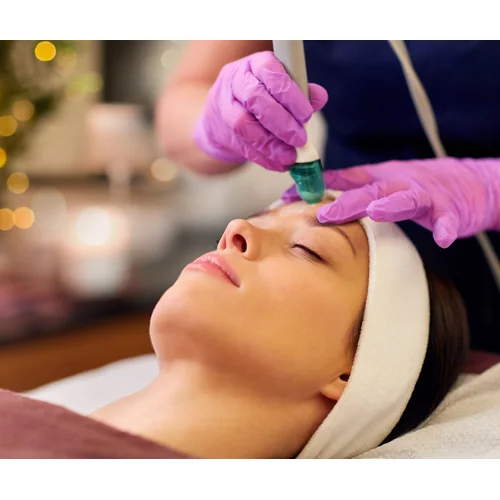
Microdermabrasion takes a different approach to exfoliation. The treatment uses a handheld device that either sprays fine crystals onto your skin while vacuuming them away (crystal microdermabrasion) or uses a diamond-tipped wand to physically buff away dead cells (diamond-tip microdermabrasion). Both techniques achieve the same goal through mechanical exfoliation, though diamond-tip is becoming more popular because it's more precise and doesn't involve loose crystals.
During the treatment, you'll feel a scratching or vibrating sensation along with some suction pressure as the device moves across your face. It's not painful, though it's slightly more aggressive than dermaplaning. The vacuum action also helps stimulate blood flow and can clear out clogged pores while removing surface debris. Some people find the suction sensation relaxing, while others describe it as mildly uncomfortable but totally tolerable.
A typical microdermabrasion session lasts 30 to 40 minutes. The treatment removes the dead outer layer of skin and stimulates collagen production in the deeper layers, which is why it can be effective for reducing fine lines and improving overall texture over time. You might notice some pinkness or mild sensitivity immediately after, but this typically fades within a few hours. The deeper exfoliation means microdermabrasion can address concerns that sit below the very surface of your skin in ways that dermaplaning can't.
Key Differences in Dermaplaning vs Microdermabrasion
What Each Treatment Removes
Dermaplaning removes:
- Dead skin cells from the outermost layer
- Vellus hair (peach fuzz) across the entire treatment area
- Surface debris and makeup residue trapped in fine hairs
- Very superficial dry or flaky patches
Microdermabrasion removes:
- Dead skin cells with deeper penetration
- Debris lodged inside pores through suction
- Superficial pigmented cells
- Surface-level imperfections through abrasion
The vellus hair removal is the biggest differentiator. If you're bothered by peach fuzz or want that ultra-smooth texture for makeup application, only dermaplaning addresses this concern. However, if your primary issue is texture, discoloration, or aging signs, microdermabrasion's deeper action typically delivers better results.
Depth of Exfoliation
This is where dermaplaning or microdermabrasion really diverge in their capabilities. Dermaplaning works exclusively on the stratum corneum, the very topmost layer of your skin. It's extremely superficial, removing only what's sitting on the surface. This makes it incredibly gentle but limits its ability to address concerns that exist deeper in the epidermis.
Microdermabrasion penetrates into the epidermis beyond just the surface layer. The abrasive crystals or diamond tip, combined with the vacuum suction, can reach deeper to stimulate cellular turnover and collagen production. This deeper penetration is why microdermabrasion shows more dramatic results for issues like fine lines, acne scarring, and hyperpigmentation that exist below the very surface.
Skin Type Suitability
Dermaplaning is remarkably versatile across different skin types:
- Safe for all Fitzpatrick skin types, including very dark skin tones
- Ideal for sensitive skin that can't tolerate aggressive treatments
- Appropriate during pregnancy when many cosmetic treatments are restricted
- Works well on dry skin that needs gentle exfoliation
- Can be performed on skin with rosacea (if not actively flaring)
Microdermabrasion requires more careful consideration:
- Generally safe for all skin tones but slightly higher risk of post-inflammatory hyperpigmentation in darker skin
- May be too aggressive for very sensitive skin or active rosacea
- Not recommended for skin with fragile capillaries or severe eczema
- Works particularly well on oily, congested skin
- Should be avoided if you've recently taken isotretinoin for acne
Dermaplaning vs Microdermabrasion Results Over Time
Right after dermaplaning, you'll notice several immediate changes. Your skin feels incredibly smooth, almost like touching a baby's skin. There's an instant radiance and glow that comes from removing the dead cell layer and the light-diffusing vellus hair. Your complexion looks brighter and more even. Makeup glides on flawlessly because there's no texture or fine hair creating resistance. Most people can see and feel the difference within seconds of looking in the mirror post-treatment.
Microdermabrasion also delivers visible immediate results, though they're slightly different in character. Your skin looks fresher and more radiant from the exfoliation and increased circulation. Pores appear smaller and less noticeable because debris has been vacuumed out. Fine lines look softer immediately, though the most significant improvements in lines develop over subsequent weeks. You might have some pinkness for a few hours that makes you look slightly flushed, but once that settles, you'll notice improved texture and brightness.
Microdermabrasion builds progressive improvements over a series. Your first session provides immediate smoothing, but the real transformation happens over six to twelve treatments. Fine lines gradually become less noticeable as collagen production increases. Acne scars and uneven texture improve incrementally with each session. Hyperpigmentation fades progressively as pigmented cells are removed and replaced with fresh, evenly toned skin. By the end of a complete series, the cumulative effects are often quite dramatic compared to a single session.
Recovery Time and Aftercare Differences
Dermaplaning requires essentially zero recovery time. Immediately after treatment, your skin might be slightly pink for 30 minutes to an hour, but this fades quickly. There's no swelling, no sensitivity that prevents you from going about your day, and no visible signs that you've had a treatment done.
Microdermabrasion has slightly more involved aftercare, though it still doesn't require true "downtime" in the way laser treatments or chemical peels do. Your skin will be pink or flushed for several hours after treatment, possibly up to 24 hours depending on the intensity and your skin's sensitivity. You can return to normal activities immediately, including work and social obligations, but you might feel slightly self-conscious about the pinkness if you have important photos or presentations right after.
Both treatments make your skin more vulnerable to sun damage for several days. This sun sensitivity is actually more significant than any visible recovery signs, so sun protection is critical regardless of which treatment you choose.
Cost Considerations in Dermaplaning vs Microdermabrasion
The investment required for these treatments is fairly similar, though there are some differences worth noting. Dermaplaning typically costs $75 to $150 per session at most providers, with an average around $100 to $125. The lower equipment costs (just a high-quality scalpel blade) mean providers can offer competitive pricing while still making the treatment profitable.
Microdermabrasion usually runs $100 to $250 per session, with an average of $135 to $150. The higher cost reflects the equipment investment required for quality microdermabrasion machines, plus the ongoing costs of maintaining that equipment, replacing diamond tips or crystals, and ensuring everything remains sanitary and functional.
Many providers offer package pricing that reduces per-session costs when you prepay for a series. You might save 15-25% by buying six to ten sessions upfront. Some medical spas also offer membership programs where you pay a monthly fee in exchange for discounted services, which can make regular treatments more affordable.
Want to dive deeper into pricing factors? Check out our detailed guide on microdermabrasion cost to understand what affects the final price.
Making Your Choice: Which Treatment Fits Your Goals?
Choose Dermaplaning If You Want To:
- Remove peach fuzz that bothers you or interferes with makeup application
- Achieve immediate smoothness and glow with zero recovery time
- Get pre-event skin prep that delivers instant radiance
- Try professional exfoliation for the first time with minimal risk
- Treat sensitive skin that can't tolerate aggressive procedures
Choose Microdermabrasion If You're Addressing:
- Fine lines, wrinkles, or early aging signs
- Acne scars or uneven texture from past breakouts
- Hyperpigmentation, sun spots, or age spots
- Enlarged pores or chronically congested skin
- Rough skin texture that doesn't improve with gentler methods
Finding the Right Provider
The quality of your results depends significantly on who performs your treatment. Both procedures require skill, though in different ways. For dermaplaning, look for licensed aestheticians, nurses, or physicians who have received specific training in the technique. For microdermabrasion, aestheticians, nurses, dermatologists, and plastic surgeons can all perform the treatment. Focus on finding someone with extensive experience using the specific type of equipment and who customizes intensity levels based on individual skin assessment.
Ready to find qualified providers in your area? Visit our main microdermabrasion page to search by location, read detailed provider profiles, and see what services they offer. You can also learn more about the benefits of microdermabrasion to better understand what this treatment can do for your specific skin goals.