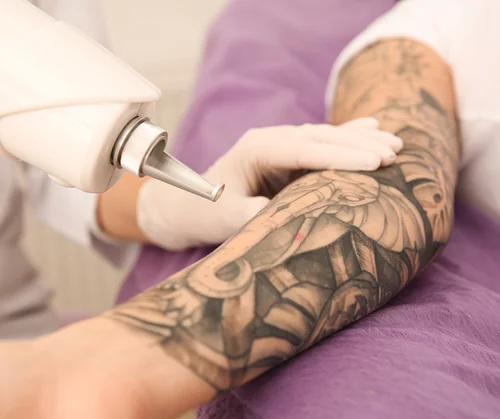
What Laser Tattoo Removal Pain Actually Feels Like
Most people describe the sensation during laser tattoo removal as a sharp, quick sting similar to having a rubber band snapped repeatedly against your skin. The pain comes in rapid bursts that last only fractions of a second as each laser pulse hits your skin.
Common pain descriptions:
- Sharp stinging or snapping sensation, like a rubber band hitting skin at high speed
- Hot grease splattering or brief contact with something extremely hot
- Quick needle pricks concentrated in rapid succession
- Intense burning that immediately stops when each pulse ends
The pain differs significantly from getting a tattoo. Tattooing involves a steady, grinding sensation that continues for extended periods as the artist works. Laser removal creates sharper, more concentrated bursts, but each pulse is over almost instantly. Sessions are also much shorter, with small tattoos taking just seconds to a few minutes of active laser time compared to hours of tattooing.
Between laser pulses, the pain immediately subsides, giving you brief moments of relief during treatment. Understanding how laser tattoo removal works helps explain why the sensation is so different from getting inked.
As with any medical procedure, this information is for educational purposes only and should not replace professional advice from qualified providers.
How Painful Is Laser Tattoo Removal Compared to Getting a Tattoo
Laser tattoo removal typically produces a different type of pain than getting a tattoo, and which one hurts more depends on several factors.
Getting a tattoo:
- Involves prolonged, continuous discomfort as needles repeatedly puncture your skin
- Sessions last 1 to 4 hours of constant pain
- Pain builds and becomes wearing over time, creating fatigue
- Skin becomes increasingly tender as the session progresses
- Fresh tattoos typically ache for several days during healing
Laser removal:
- Delivers pain in extremely brief but more intense bursts
- Each pulse lasts just nanoseconds or picoseconds
- Small tattoos receive only 20 to 50 pulses (seconds of actual pain time)
- Even large tattoos rarely exceed 15 to 20 minutes of laser application
- Post-treatment discomfort feels like sunburn and fades within 1 to 2 days
According to the American Society for Dermatologic Surgery, both procedures involve discomfort, but individual tolerance and expectations play huge roles. The concentrated nature of removal pain can feel more intense in the moment, but the shorter duration makes it more bearable for many people.
Your mental state affects pain perception significantly. When getting a tattoo, you're excited about the result, which helps you tolerate discomfort. During removal, you're undoing a permanent decision, which can make the pain feel less worthwhile or harder to endure.
Body Areas That Hurt Most During Tattoo Removal
Pain levels vary dramatically depending where your tattoo is located because different body areas have different nerve density, skin thickness, and proximity to bone. The same factors that made certain spots hurt more when you got your tattoo typically apply to removal as well.
High pain areas: Bony areas with thin skin and many nerve endings hurt the most during laser removal. Ankles, feet, hands, wrists, ribs, spine, and collarbones typically rate highest on the pain scale because there's minimal cushioning between the laser and your bones. The vibration from laser pulses can resonate through bone, intensifying the sensation. These spots also tend to heal more slowly due to constant movement and friction.
Sensitive facial areas including the neck, face, and areas near the armpit experience heightened pain because of dense nerve networks and thin, delicate skin. The head and face contain particularly concentrated nerve endings, making even small tattoos in these locations quite uncomfortable to remove. Areas with loose or crepey skin can also hurt more because the skin moves more under the laser pressure.
Joint areas and body parts you use constantly pose additional challenges. Removing tattoos on elbows, knees, or fingers means you'll feel residual soreness every time you bend or use those joints after treatment. Inner arms, inner thighs, and the bikini area combine thin skin with high sensitivity, making them particularly uncomfortable during removal sessions.
Lower pain areas: Fleshier body parts with more fat and muscle provide natural cushioning that reduces discomfort. Upper arms, shoulders, thighs, calves, and buttocks typically hurt less during removal. These areas have thicker skin and more tissue between the laser and your bones, dampening the intensity of each pulse.
The outer portions of limbs generally hurt less than inner portions because skin tends to be slightly thicker and less sensitive. For instance, the outer forearm causes less discomfort than the inner forearm. Your upper back and chest (for men) also tend to be more tolerable than other areas.
Individual variation means these guidelines aren't absolute. Some people have higher pain tolerance in typically sensitive areas, while others find supposedly easier spots surprisingly uncomfortable. Your personal nerve density and sensitivity patterns are unique.
Factors That Influence Your Tattoo Removal Pain Level
Personal pain tolerance varies enormously between individuals and even varies for the same person on different days. Factors like stress, fatigue, anxiety, hormone levels, and overall health affect how much discomfort you feel.
Tattoo characteristics affecting pain:
- Ink density and saturation impact treatment intensity. Heavily saturated professional tattoos require more laser energy, potentially creating more heat and discomfort. Amateur tattoos with lighter ink might need gentler settings that cause less pain.
- Tattoo age influences treatment needs. Very old, faded tattoos often require less aggressive treatment than vibrant, fresh ink, resulting in less discomfort during sessions.
- Ink colors affect laser type and energy levels. Black ink responds to most wavelengths and lower settings. Stubborn colors like green and yellow require specific wavelengths and sometimes higher power, potentially increasing pain.
- Tattoo size correlates with pain duration. A tiny finger tattoo might receive 15 seconds of pulses, while a full back piece could require 20 to 30 minutes of continuous treatment.
Provider skill and equipment quality:
- Experienced providers work efficiently, minimizing treatment time and total pain exposure
- They understand optimal laser settings for different skin types and ink colors
- Skilled technicians work with steady rhythm, making the experience more predictable
- Modern picosecond lasers often cause less thermal damage than older Q-switched systems
- Integrated cooling systems and properly maintained equipment improve comfort
- Well-trained providers adjust settings based on your real-time feedback
Does Pain Change From Session to Session
The first removal session often feels most uncomfortable because you don't know what to expect, making anxiety amplify the pain. Once you've experienced one session, subsequent treatments typically feel more manageable because you know what's coming and can prepare mentally.
Why pain generally decreases:
- As your tattoo fades, there's progressively less ink requiring treatment
- Providers can sometimes reduce laser intensity as ink lightens
- Fewer ink particles absorbing laser energy may create less heat
- Each session addresses less material than the previous one
- Psychological boost from seeing visible progress makes pain easier to tolerate
Session-to-session variations:
- Arriving tired, stressed, or during hormonal sensitivity (like menstruation) lowers pain threshold
- Seasonal factors matter, with winter sessions sometimes more uncomfortable due to skin dryness
- Treatment adjustments can change pain levels (increased power for stubborn ink, different wavelengths for colors)
- Skin sensitivity increases if you don't wait adequate time between sessions (6 to 8 weeks recommended)
- Progress plateaus can make same pain level feel harder to endure psychologically
Effective Pain Management Options for Laser Tattoo Removal
Topical numbing creams:
- Most common pain management approach using lidocaine
- Applied 30 to 60 minutes before appointment and covered with plastic wrap
- Significantly reduce surface sensation for most patients
- Effectiveness varies (some get near-complete numbness, others partial relief)
- Work best on smaller tattoos where thorough coverage is easy
Professional pain management methods:
- Local anesthetic injections provide most complete pain relief, essentially eliminating sensation
- Provider injects lidocaine around and under tattoo (similar to dental work)
- Works well for very large tattoos, sensitive areas, or low pain tolerance patients
- Injections themselves cause brief discomfort but numbness develops within minutes
Cooling systems:
- Integrated cooling or separate devices blow extremely cold air during treatment
- Counteracts heat from laser pulses while temporarily numbing nerve endings
- Makes significant difference between barely tolerable and genuinely manageable
- Ice packs before treatment pre-numb the area and reduce baseline inflammation
- Ice after treatment minimizes swelling and soothes burning sensation
Over-the-counter pain relief:
- Take acetaminophen (Tylenol) about an hour before appointment
- Avoid aspirin, ibuprofen, or NSAIDs before treatment (they increase bruising risk)
- These medications are safe after your session to manage residual soreness
- Always check with provider about which medications are appropriate
Relaxation techniques:
- Deep breathing, meditation, or music help many patients tolerate treatment better
- Distraction works remarkably well for brief procedures
- Bring headphones and focus on podcasts or playlists
- Counting pulses or breathing techniques give sense of control
What to Expect for Post-Treatment Pain and Discomfort
Immediately after treatment, your skin typically feels hot and tender, similar to a moderate sunburn. This burning sensation peaks within the first hour, then gradually subsides over several hours. Most people find the immediate post-treatment discomfort more annoying than genuinely painful, especially compared to the acute sensation during laser pulses.
Normal healing sensations: Redness and swelling appear within minutes and may intensify over the first 24 hours. The treated area often looks alarming, but this inflammatory response is normal and necessary for healing. Swelling typically resolves within 2 to 3 days, while redness may persist for a week.
Blistering occurs in some cases, particularly with aggressive treatment or darker inks. Small blisters typically form within 24 hours and should heal naturally within a week. Resist popping blisters, as this increases infection and scarring risk. Proper aftercare for laser tattoo removal significantly impacts healing and comfort.
Scabbing develops as blisters heal, typically beginning 3 to 5 days post-treatment. The itching that accompanies scabbing can be more bothersome than actual pain. Avoid picking at scabs, which can cause scarring and remove ink that should flush out naturally.
Managing post-treatment discomfort: Apply ice packs for 15 to 20 minutes several times during the first 24 hours to control swelling and numb residual pain. Over-the-counter pain relievers like acetaminophen or ibuprofen effectively manage lingering soreness. Keep the area clean, moisturized, and protected from sun exposure. Wear loose clothing that won't rub against treated skin.
Numbing Cream and Other Pre-Treatment Pain Strategies
Prescription-strength numbing creams (typically 4-5% lidocaine) provide stronger relief than over-the-counter options. Your provider can prescribe these or supply them at your appointment. Apply the cream thickly to the entire tattoo area, then cover tightly with plastic wrap. The occlusion dramatically improves absorption. Plan for at least 45 to 60 minutes of numbing time before your appointment.
Maximizing numbing cream effectiveness: Layer the cream generously rather than rubbing it in thinly. You want a thick coating covering every bit of the tattoo. Some providers recommend applying at home before driving to your appointment, giving it maximum time to work. The cream only numbs top skin layers, so you'll still feel deeper sensation with aggressive treatments. Set realistic expectations, typically 30 to 60% pain reduction.
Multiple applications aren't more effective and can be unsafe. Too much lidocaine absorbed through skin can cause systemic effects including dizziness or irregular heartbeat. Follow your provider's instructions precisely about how much to apply and how long to leave it on.
Alternative pre-treatment strategies: Hydrate exceptionally well in the days before your appointment. Well-hydrated skin may be slightly less sensitive. Avoid alcohol for 24 hours before treatment. Get good sleep, as fatigue lowers your pain threshold significantly.
Eat something before your appointment to keep blood sugar stable. Schedule when you're least likely to be stressed. Wear comfortable clothing providing easy access to your tattoo. Feeling physically comfortable helps you relax mentally, reducing perceived pain.
How Provider Experience Affects Your Pain Level
Skilled providers work efficiently, minimizing treatment time and total pain exposure. They know exactly how to position the laser, what overlap pattern to use, and how quickly to move across the tattoo.
Why technical skill matters:
- Proper laser settings balance effectiveness with comfort
- Experienced providers use minimum energy necessary to break down ink
- They adjust parameters based on your skin type and real-time feedback
- Steady, rhythmic application creates predictable patterns easier to mentally prepare for
- Providers warn you before starting or pausing, helping you anticipate changes
- Proper technique prevents unnecessary complications that increase discomfort
Impact of training and experience:
- Prevents overlapping laser pulses too much (causes excessive tissue damage)
- Ensures adequate coverage to avoid requiring additional sessions
- Ability to read and respond to your discomfort makes huge difference
- Attentive practitioners offer breaks, adjust settings, or suggest additional pain management
- Creates environment where you feel comfortable communicating your needs
Understanding laser tattoo removal costs helps you evaluate whether providers are priced appropriately for their experience level. Ask potential providers about their specific experience with laser tattoo removal, not just general aesthetic procedures.
Comparing Laser Pain to Other Removal Methods
Surgical excision:
- Involves cutting tattooed skin away and stitching remaining skin together
- Requires local anesthesia, so procedure itself shouldn't hurt
- Post-operative pain can be significant (healing from surgical wound)
- Pain typically lasts several days to weeks
- May require prescription pain medication
- Works in one session for small tattoos versus multiple laser sessions
Dermabrasion:
- Literally sands away skin layers using rotating abrasive device
- Most providers use local anesthesia (pain would otherwise be severe)
- Healing process involves significant discomfort (similar to severe road rash)
- Typically causes more post-procedure pain than laser removal
- Carries higher scarring risk than laser treatment
Chemical peels:
- Use acids to burn away skin layers containing tattoo ink
- Application creates intense burning and stinging sensations
- Post-peel healing involves pain similar to chemical burn
- Often worse than laser removal recovery
- Multiple aggressive peels may be needed (multiplying pain exposure)
Over-the-counter removal creams:
- Promise painless tattoo fading at home
- Largely ineffective at reaching ink deep in dermis
- Some contain harsh chemicals causing irritation without removing tattoo
- Create frustration of wasted time and money
Laser removal stands out as the most effective option with manageable, predictable pain that's temporary and controllable. While not painless, the brief nature of sessions and various pain management strategies make it tolerable for most people.