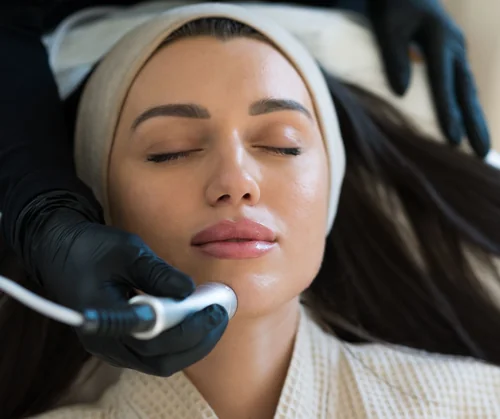
The Core Difference: Physical vs. Chemical Exfoliation
Both DiamondGlow and HydraFacial deliver deep cleansing, extraction, and serum infusion in one treatment. They both use specialized devices with vacuum technology to remove impurities while simultaneously delivering nourishing ingredients. On the surface, they seem nearly identical. The fundamental difference lies in how they exfoliate your skin.
DiamondGlow uses physical exfoliation with a diamond-tipped wand. The diamond tip manually buffs away dead skin cells through gentle abrasion. Six different diamond tips allow providers to adjust the intensity based on your skin type and sensitivity level. This mechanical exfoliation provides precise control over how much skin is removed and where.
HydraFacial relies on chemical exfoliation using a combination of glycolic and salicylic acids. These alpha and beta hydroxy acids dissolve the bonds between dead skin cells, allowing them to be lifted away. The chemical approach works more gently on the skin's surface but penetrates into pores to loosen debris from within.
This distinction matters because physical and chemical exfoliation affect skin differently. Physical exfoliation with DiamondGlow tends to provide more immediate smoothing and can target specific areas with precision. Chemical exfoliation with HydraFacial penetrates deeper into pores and works well for people who find physical exfoliation too aggressive. Neither method is inherently better, they're simply different approaches to achieving similar goals.
The extraction and infusion steps work similarly in both treatments, using vacuum suction to pull impurities from pores while simultaneously pushing beneficial serums into the skin. Where they diverge again is in the specific serums used and how deeply those serums penetrate. Understanding the complete HydraFacial treatment process provides context for how it compares to DiamondGlow's approach.
As with any cosmetic treatment, this information is for educational purposes only and should not replace professional medical advice from qualified providers.
Serum Delivery: Medical-Grade vs. Customizable Boosters
DiamondGlow uses SkinMedica Pro-Infusion serums:
- Medical-grade formulations designed for specific skin concerns
- Applied when pores are most open and receptive (right after exfoliation)
- Can deliver up to two condition-specific serums per treatment
- Options include pore-clarifying, vitamin C brightening, hyperpigmentation formulas, plumping hyaluronic acid, and growth factor serums
- Claims to penetrate to the dermal-epidermal junction for deeper, longer-lasting results
- Simultaneous exfoliation and infusion maximizes absorption
HydraFacial uses proprietary boosters:
- Customizable formulations for individual concerns
- Include antioxidants, peptides, hyaluronic acid, and specialty boosters
- Target specific issues like redness, aging signs, or acne
- Multiple boosters can be combined in one treatment
- Primarily work at the skin's surface rather than deeper dermal layers
- Extensive variety allows for highly personalized treatments
Both systems offer customization, but the range and depth differ. DiamondGlow emphasizes medical-grade formulations with deeper penetration claims. HydraFacial emphasizes versatility with multiple booster options that can be combined various ways. Your provider's expertise in selecting the right serums for your specific concerns matters as much as which system they use.
Treatment Experience and Sensation
DiamondGlow treatments take 30 to 45 minutes. You'll feel the diamond-tipped wand moving across your skin with gentle pressure and suction. Most describe the sensation as comfortable, like a mild massage. The physical exfoliation can feel slightly more aggressive than HydraFacial, though it shouldn't hurt. Providers can adjust tip type and pressure for comfort.
HydraFacial sessions also run 30 to 45 minutes (premium treatments extend to 60 or 90 minutes). The experience is typically soothing and relaxing. Chemical exfoliation doesn't involve the same physical buffing sensation, so it often feels gentler. You'll feel cool serums and gentle suction during extraction.
Neither should hurt. Both involve minimal to no downtime with possible slight pinkness that fades within an hour or two.
Results: Immediate and Long-Term
Both treatments deliver immediate visible results. DiamondGlow provides instant texture improvement with noticeably smoother, brighter skin right after treatment. The physical exfoliation creates immediate smoothing effects that make it popular before events.
HydraFacial also provides that instant glow with plumper, more hydrated, refreshed-looking skin immediately after treatment. The chemical exfoliation and serum infusion create a dewy, luminous appearance with cleaner-looking pores.
For long-term results, DiamondGlow advocates claim deeper serum penetration provides more lasting improvements, potentially several weeks to months with proper care, while HydraFacial results may begin fading after one to two weeks. However, both treatments typically recommend monthly sessions for sustained benefits.
Result longevity depends on multiple factors: skin type, age, aftercare compliance, home skincare routine, sun protection, and overall skin health. Both work best as part of ongoing maintenance rather than one-time fixes. The benefits of consistent treatments apply to both when maintained regularly.
Skin Type Suitability and Concerns Addressed
DiamondGlow works well for most skin types with the ability to switch between six different diamond tips for customized intensity. Aging skin with fine lines and wrinkles benefits from aggressive exfoliation and medical-grade serums. Dull, rough texture sees significant smoothing. Hyperpigmentation and sun damage respond to brightening serums and deep exfoliation. Acne-prone skin can be treated using gentler brush tips for active breakouts while delivering pore-clarifying serums.
HydraFacial is often recommended for sensitive skin because chemical exfoliation is gentler than physical abrasion. People with rosacea or easily irritated skin may tolerate it better. Dehydrated skin gets immediate relief from intense hydration focus. Combination skin benefits from different boosters for different facial zones. HydraFacial also works beyond the face on neck, chest, back, and scalp.
Neither treatment is recommended during active skin infections, severe sunburn, or open wounds. Both should be avoided with extremely inflamed acne or very compromised skin barriers. For moderate acne, opinions vary between providers about which approach works better.
Cost Comparison
DiamondGlow and HydraFacial fall in similar price ranges, typically $150 to $350 per session. Specific cost depends more on location, provider credentials, and customization than which system is used.
DiamondGlow sessions often start around $175 to $250 for basic treatment, reaching $300 to $400 when combined with additional services like dermaplaning or specialized masks.
HydraFacial pricing runs $150 to $350 depending on treatment tier. Basic sessions cost less, while deluxe and platinum packages with multiple boosters reach the higher end.
Both recommend monthly maintenance for optimal results, so annual investment is similar. Package deals and memberships can reduce per-session costs for both. Understanding HydraFacial pricing factors helps you budget appropriately, with similar considerations applying to DiamondGlow.
Geographic location and provider credentials impact pricing for both treatments equally. Board-certified dermatologists charge more than licensed estheticians regardless of which device they use.
Which Treatment Is More Aggressive?
DiamondGlow is generally considered the more aggressive treatment. Here's how they compare:
DiamondGlow:
- Physical diamond-tip exfoliation mechanically removes dead skin cells
- Involves more direct skin contact and friction
- Provides more intensive exfoliation
- Better for those who want or need deeper exfoliation
- Can be adjusted with different diamond tips for varying intensity
- May feel too intense for very sensitive or reactive skin
HydraFacial:
- Chemical exfoliation using acids works more gently on the surface
- No mechanical buffing action
- Acids penetrate pores differently than physical exfoliation
- Better choice for reactive, thin, or easily irritated skin
- Ideal for those with negative experiences with physical exfoliation
- Still effective without the aggressive approach
"Aggressive" doesn't mean worse or riskier, it simply means more intensive. Some skin concerns respond better to aggressive exfoliation, while others benefit from gentler approaches. The best choice depends on your specific skin type and concerns rather than one being universally superior.
Customization and Versatility
DiamondGlow offers customization through its six different diamond tips and medical-grade serum selection. Providers can adjust the treatment intensity by choosing the appropriate tip for your skin. The SkinMedica serums address specific concerns like aging, discoloration, acne, or general skin health. You can typically receive up to two different serums in one treatment, allowing for targeted multi-concern treatment.
The diamond tip system provides precise control over exfoliation intensity and the ability to focus on specific areas. If your forehead needs more aggressive exfoliation than your sensitive cheek area, the provider can adjust accordingly. This precision is one of DiamondGlow's strengths.
HydraFacial offers extensive customization through its booster system. Multiple boosters can be combined in a single treatment to address various concerns simultaneously. Want to target both aging and acne? Your provider can include both relevant boosters. Concerned about hydration and brightening? Those can be combined as well.
HydraFacial's versatility extends beyond facial skin. The treatment can be performed on the scalp (HydraFacial Keravive for hair and scalp health), the back (for back acne or skin quality), hands (for aging hand skin), and other body areas. DiamondGlow is primarily a facial treatment, though some providers may treat the neck and décolletage.
Choosing Between DiamondGlow and HydraFacial
The "better" treatment depends entirely on your individual needs, concerns, and preferences. Neither is objectively superior, they're different approaches to similar goals.
Consider DiamondGlow if you:
- Prefer physical exfoliation and diamond-tip technology
- Have skin that tolerates more intensive exfoliation without irritation
- Want medical-grade serums with potentially deeper penetration
- Are targeting significant skin texture issues, aging signs, or hyperpigmentation
- Prefer results that potentially last longer between treatments
- Are addressing moderate concerns that benefit from corrective treatment
Consider HydraFacial if you:
- Have sensitive skin that reacts poorly to physical exfoliation
- Prefer chemical exfoliation approaches
- Want extensive customization through multiple booster combinations
- Are interested in treatments beyond facial skin (scalp, body areas)
- Need intense hydration for very dehydrated skin
- Prefer a gentler, more maintenance-focused treatment
- Like the specific feel and experience based on trying both
Either treatment works well for:
- General skin maintenance and improved overall appearance
- Immediate results with zero downtime
- Regular professional facials to complement at-home skincare
- Common concerns like dullness, fine lines, uneven texture, or mild congestion
- Non-invasive approaches to skin improvement
The best way to choose is consulting with qualified providers who offer both treatments. They can assess your skin, discuss your goals, and recommend which approach suits your specific situation. Some people alternate between the two, using DiamondGlow for intensive sessions and HydraFacial for gentler maintenance.
Can You Combine or Alternate Between Treatments?
Some people benefit from using both treatments strategically. You might use DiamondGlow quarterly for intensive exfoliation while maintaining with monthly HydraFacials, or alternate between the two for benefits of both physical and chemical exfoliation.
However, don't combine both in the same session or schedule them too close together. Your skin needs at least two to four weeks between professional exfoliation treatments. If you're considering alternating, discuss this approach with your provider to create a schedule that maximizes benefits without over-treating your skin.