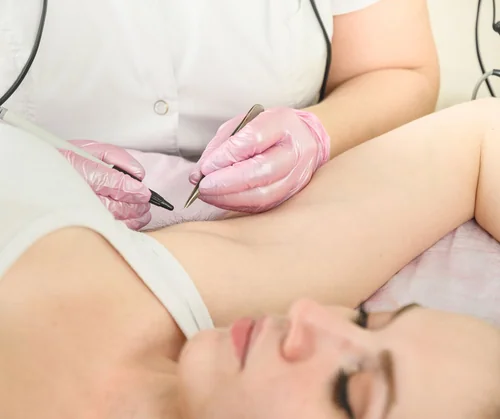
Electrolysis pain
Electrolysis can hurt, but the experience is usually more "quick stings or heat zaps" than one long, unbearable pain. How intense it feels depends on the area you're treating, your sensitivity, hair thickness, session length, and your provider's technique.
Many people feel the most discomfort on areas with thinner skin or lots of nerve endings, like the upper lip, chin, and certain parts of the bikini line, while areas like arms or legs may feel more tolerable for some people. It's also normal to have days where it feels easier and days where you're more sensitive, even if nothing changed in the treatment itself.
Most people have some redness and warmth after, and that usually settles down with basic aftercare and a little time. This page is general education and isn't medical advice, so if you have a skin condition, take certain medications, or you're worried about reactions, a qualified provider can help you choose a safer plan.
Pain varies depending on several factors
A lot of people ask "is electrolysis painful?" because they want certainty. The tricky part is that electrolysis is a very personal sensory experience, and it also varies by appointment. Your stress level, sleep, hydration, caffeine, menstrual cycle (for some people), and even how recently you exfoliated can change how your skin reacts.
The other reason it varies is technique. Electrolysis is skill-based. A provider who is careful with insertions, settings, and pacing can make sessions feel very different than someone rushing through. You're not being "dramatic" if you notice a big difference between providers or between areas.
If you want to understand the basics of what's happening during treatment, the Cleveland Clinic's explanation of electrolysis describes the process and notes that discomfort is typically manageable for many people, with numbing options sometimes discussed.
What electrolysis actually feels like
People describe electrolysis in a bunch of ways, but these are the most common "real" descriptions you'll hear:
- A quick sting or pinch that lasts a second or two, then it's gone.
- A tiny burst of heat that feels sharp in more sensitive areas.
- A prickly, zappy sensation that's easier when the area is less sensitive and harder when it's not.
- A building discomfort during longer sessions, mostly because your skin gets irritated over time.
One helpful way to think about it is this: electrolysis isn't usually one giant pain event. It's repeated tiny sensations. That can actually feel more manageable mentally, because you can get into a rhythm and take breaks when you need them.
The part no one tells you early enough
Session length matters as much as pain tolerance. A 10 to 15 minute session on the upper lip can feel totally doable, while a 60 minute session on the same zone might feel like a lot simply because your skin gets tired and reactive.
Where is the most painful place for electrolysis?
The most intense spots tend to be areas with thinner skin, more nerve endings, and tighter curves.
Areas that often feel more intense
Upper lip: This is one of the most commonly mentioned "spicy" zones because the skin is sensitive and the area is small, so you feel everything. People often prefer shorter sessions here at first.
Chin and jawline: Chin hair can be coarse, and coarse hair can make the sensation feel sharper. Jawline work can also feel more noticeable depending on where exactly you're treating.
Nostrils and around the mouth: Tiny areas can feel intense because they're nerve-dense and close to mucous membranes, even though the surface area is small.
Bikini line (especially inner edges): The bikini line is sensitive for many people, and friction from clothing afterward can make it feel extra tender.
Areas many people find more tolerable
Arms and legs: These areas are larger, but the sensation can be easier for some people than facial zones. That said, longer sessions can still feel tiring.
Back or shoulders (for some): These can be more tolerable depending on density and sensitivity, but large-area sessions can be uncomfortable simply due to time.
The best way to find your personal "most painful" area is honestly starting with a short test session and seeing how your body reacts. You're allowed to build your plan around comfort.
How long does electrolysis hurt after the session?
A lot of the worry isn't just "does electrolysis hurt in the moment," it's "am I going to be sore for days and unable to leave the house?"
Most people notice some combination of redness, warmth, and mild swelling right after. For many, that calms down within hours, but for more reactive skin it can last longer. The face can also look more noticeable than other areas because it's exposed and you're looking at it constantly.
Here's what "normal" often looks like:
- Immediately after: pinkness, warmth, mild puffiness
- Later that day: calmer, but still sensitive to touch
- Next day: either mostly normal or slightly irritated, depending on skin and session intensity
Cleveland Clinic notes that many people can resume normal activities immediately after electrolysis, which lines up with the idea that most reactions are temporary and manageable with basic care.
What might make tenderness last longer
- A longer session on a sensitive area
- Treating very dense growth in one appointment
- Touching the area a lot afterward (it's so tempting, but it can irritate it more)
- Heat, sweating, or friction soon after treatment
Is electrolysis less painful than laser?
This depends! Laser often feels like quick snaps or hot rubber-band flicks, usually spaced out across a larger area. Electrolysis feels like repeated tiny stings in one zone, because each hair is treated individually. Some people find laser more intense because the sensation can feel hotter. Others find electrolysis more intense because it's repetitive and localized.
If you're comparing the two, it helps to compare three things:
- The sensation type (snap vs sting/heat)
- How long you're in the chair
- Whether you're treating dense hair or just a small cluster
For general safety context about laser, the American Academy of Dermatology notes that laser hair removal can have risks in inexperienced hands, which is one reason choosing a qualified provider matters for comfort and skin safety.
If you want the full side-by-side decision guide, you can read electrolysis vs laser hair removal. It's useful if you're deciding based on pain, hair type, and total time investment.
What makes electrolysis more painful (and what makes it easier)
There are some things in your control when it comes to pain during electrolysis treatments.
Things that can make electrolysis feel more intense
- Long sessions on the face (your skin can get sensitized as time goes on)
- Coarse hair (it can feel sharper, especially on chin hair)
- High stress or poor sleep (your nervous system is just more reactive)
- Too much caffeine for your body (some people notice it makes them jumpier)
- Skin irritation before the session (over-exfoliation, sunburn, harsh actives)
- Being close to your period for some people (sensitivity can change)
Things that can make electrolysis feel easier
- Shorter sessions at first so you learn your tolerance and your skin's reaction
- Good pacing and breaks (a good provider won't rush you)
- Clear communication about which moments feel intense so they can adjust
- Topical numbing options if appropriate and offered
- A consistent schedule so you're not "starting over" after long gaps
None of this is about toughness. It's about planning.
How to prepare if you're worried electrolysis will hurt
Preparation isn't about doing a perfect ritual. It's about avoiding the things that make you more sensitive and setting yourself up to feel calm.
The day before
- Keep skincare gentle in the area. Skip harsh exfoliation or strong actives if you're prone to irritation.
- Hydrate like a normal person. You don't need to chug water, just don't go in dehydrated.
- Try to sleep. Even one decent night can change how sensitive you feel.
The day of
- Don't arrive rushed. Stress can make everything feel sharper.
- Avoid scheduling right after a workout if you tend to feel inflamed or flushed.
- Eat something light beforehand so you're not shaky or tense.
One big "planning move" for your first appointment
Book a shorter session, especially if it's facial hair. Ten to twenty minutes is enough to understand how it feels and how your skin reacts without committing to an hour you might regret.
If you're treating facial hair, this companion guide on electrolysis facial hair removal can help you decide which zones to start with and what to expect afterward.
What you can ask your provider to reduce pain
If you want "least painful electrolysis," the goal isn't finding a magic setting. The goal is finding someone who can personalize the approach for your skin and your comfort.
Ask questions like:
- "Can we start with a shorter session to see how my skin reacts?"
- "If a spot feels intense, what adjustments can you make?"
- "Do you offer topical numbing, and is it appropriate for this area?"
- "What aftercare do you recommend to keep irritation down?"
A good provider won't treat these questions like you're being difficult. They'll treat them like you're being smart.
During the session: what helps in the moment
This is the practical stuff that makes a real difference when you're in the chair.
Try a "signal system"
Agree on a simple signal, like raising your hand when you need a pause. It's a small thing, but it can take you out of the "I have to endure this" mindset.
Focus on pacing, not bravery
If you notice the discomfort building, ask for a break. Tiny breaks can reset your nervous system and help you get through the session without spiraling into tension.
Ask for a plan for sensitive areas
For example, if the upper lip is intense, you can do it in short bursts and then switch to a less sensitive area for a minute. Mixing zones can make a session feel much easier.
Aftercare that reduces soreness and keeps skin calm
Aftercare matters for two reasons: comfort and skin recovery. You want your skin calm enough that you can keep your appointment schedule without needing long breaks.
A good basic aftercare mindset:
- Keep the area clean.
- Avoid friction, scratching, and heavy picking, even if you see tiny bumps.
- Avoid heat and sweating right after if your skin tends to puff up.
- Use gentle skincare and skip harsh actives briefly if you're reactive.
If you tend to break out easily, it's worth asking your provider what they recommend specifically for your skin type. "Gentle" doesn't mean the same routine works for everyone.
When pain is a sign to slow down (and what's worth flagging)
You don't need to panic at every sting, but you also don't need to ignore your body.
It's worth speaking up if:
- Pain feels suddenly very different than usual in the same area
- Your skin reaction seems extreme compared to your typical response
- You're getting repeated scabbing or persistent irritation that doesn't calm down
A careful provider should be able to adjust the plan and talk you through what's going on. If they dismiss you or act annoyed, that's a good reason to consider a different provider.
How pain ties into timelines (and why that can be reassuring)
A lot of people assume pain means something is "going wrong." That's not usually the case. Electrolysis is a series, and most people find that once they get used to the sensation and the routine, it feels more manageable.
Your timeline also affects comfort. If you're booking super long sessions right away, you may dread it and avoid appointments. If you pace it and stay consistent, many people find it becomes a manageable part of their routine rather than a scary event.
If you want to understand how scheduling affects progress, read how long does electrolysis take. It'll help you plan sessions in a way you can actually sustain.