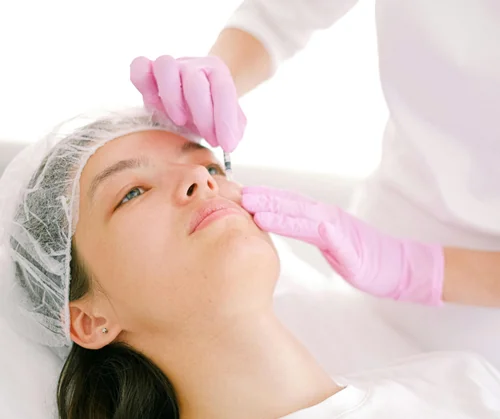
Jeuveau vs Xeomin
Both Jeuveau and Xeomin are FDA-approved neurotoxins that temporarily relax facial muscles to reduce wrinkles. The main differences include formulation (Jeuveau uses Hi-Pure technology with proteins, Xeomin is protein-free), FDA approvals (Xeomin has broader approvals for multiple facial areas and medical conditions, Jeuveau is approved only for glabellar lines), onset (Jeuveau 2-3 days, Xeomin 3-4 days), and cost (Jeuveau $8-$16/unit, Xeomin $10-$15/unit).
Key similarities:
- Both contain botulinum toxin type A
- Both last approximately 3-4 months
- Both work by blocking nerve signals to muscles
- Both are injected using similar techniques
- Both have comparable safety profiles
Key differences:
- Formulation: Jeuveau contains complexing proteins, Xeomin is protein-free ("naked injectable")
- FDA approvals: Xeomin approved for glabellar lines, forehead lines, and crow's feet plus medical uses; Jeuveau approved only for glabellar lines
- Onset: Jeuveau typically 2-3 days, Xeomin 3-4 days
- Manufacturing: Jeuveau uses Hi-Pure vacuum-drying, Xeomin removes all complexing proteins
- Cost: Jeuveau often slightly less expensive ($8-$16 vs $10-$15 per unit)
Understanding the Difference Between Jeuveau and Xeomin
The formulation and development approach create distinct characteristics.
Jeuveau: Modern Cosmetic-Focused Formulation
What is Jeuveau explains that this neurotoxin (prabotulinumtoxinA-xvfs) was developed by Evolus specifically for aesthetic use and FDA-approved in 2019. Jeuveau uses Hi-Pure technology, a proprietary vacuum-drying manufacturing process that produces smaller, more uniform protein complexes surrounding the botulinum toxin.
Jeuveau characteristics:
- Active ingredient: PrabotulinumtoxinA-xvfs
- Manufactured using Hi-Pure vacuum-drying technology
- Contains complexing proteins (smaller and more uniform than traditional formulations)
- Developed exclusively for cosmetic purposes
- FDA-approved February 2019 for glabellar lines
- Marketed as "Newtox" targeting younger demographic
- Stored frozen or refrigerated before reconstitution
Xeomin: Pure Protein-Free Formulation
Xeomin (incobotulinumtoxinA) was developed by Merz Pharmaceuticals and FDA-approved in 2010 for therapeutic uses, with cosmetic approvals added over time. Xeomin is unique for being completely free of complexing proteins, earning it the nickname "naked injectable."
Xeomin characteristics:
- Active ingredient: IncobotulinumtoxinA
- Manufactured without any accessory or complexing proteins
- Pure 150-kDa botulinum toxin molecule only
- Developed for both medical and cosmetic applications
- FDA-approved 2010 initially, with cosmetic approvals expanded through 2024
- Can be stored at room temperature before reconstitution (unique advantage)
- Lower theoretical risk of antibody formation due to protein-free formulation
Manufacturing Process Differences
The manufacturing differences influence product characteristics and potentially patient response.
Jeuveau's Hi-Pure process:
- Vacuum-drying technology (vs traditional freeze-drying)
- Creates smaller, more uniform protein complexes
- Results in 900 kDa molecular weight formulation
- Achieves 95%+ purity
- May contribute to faster onset for some patients
Xeomin's purification process:
- Removes all complexing proteins entirely
- Only the active 150-kDa neurotoxin remains
- Potentially reduces risk of developing resistance over time
- Stable at room temperature, simplifying storage
- May be better for patients with previous neurotoxin resistance
Jeuveau vs Xeomin: FDA Approvals and Uses
According to the FDA, approval differences significantly impact how providers can use these products.
Jeuveau FDA Approvals
Jeuveau has limited FDA approvals focused exclusively on cosmetic use.
FDA-approved use:
- Moderate to severe glabellar lines (frown lines between eyebrows)
Common off-label cosmetic uses:
- Forehead lines (horizontal wrinkles)
- Crow's feet (lines around eyes)
- Bunny lines (nose wrinkles)
- Brow lift
- Masseter reduction (jaw slimming)
No medical indications: Jeuveau has no FDA approvals for medical conditions, distinguishing it from other neurotoxins.
Xeomin FDA Approvals
Xeomin has broader FDA approvals for both cosmetic and medical applications.
FDA-approved cosmetic uses:
- Moderate to severe glabellar lines (frown lines)
- Forehead lines (horizontal wrinkles)
- Crow's feet (periorbital lines)
FDA-approved medical uses:
- Cervical dystonia (neck muscle spasms)
- Blepharospasm (eyelid twitching)
- Upper limb spasticity
- Chronic sialorrhea (excessive drooling)
Common off-label cosmetic uses:
- Bunny lines
- Lip lines
- Gummy smile correction
- Platysmal bands (neck lines)
Treatment Versatility
Xeomin's broader FDA approvals make it more versatile for providers who treat both cosmetic and medical concerns. Jeuveau's cosmetic-only positioning appeals to practices focused exclusively on aesthetic treatments.
Onset and Duration: How Long Results Last
Timing differences matter for scheduling and planning.
Jeuveau Onset and Duration
Jeuveau typically shows faster initial results than Xeomin.
Timeline:
- Days 1-2: Binding to nerve receptors (no visible changes)
- Days 2-3: Initial visible improvements (30-50% result)
- Days 3-5: Noticeable smoothing (50-70% result)
- Days 10-14: Full effects (100% maximum muscle relaxation)
- Months 1-3: Peak results stable period
- Months 3-4: Gradual return of muscle function
Duration factors:
- Average duration: 3-4 months
- Some patients report: 4-5 months with regular treatments
- Individual variation based on metabolism, muscle strength, and lifestyle
- How long does Jeuveau last details factors affecting longevity
Xeomin Onset and Duration
Xeomin has slightly slower onset but comparable duration.
Timeline:
- Days 1-3: Binding phase (minimal visible changes)
- Days 3-4: Initial improvements (20-40% result)
- Days 5-7: Progressive smoothing (50-70% result)
- Days 10-14: Full effects (100% maximum relaxation)
- Months 1-3: Stable peak results
- Months 3-4: Gradual fading
Duration factors:
- Average duration: 3-4 months
- Comparable longevity to Jeuveau in clinical studies
- Same individual factors affect duration (metabolism, muscle activity)
- Regular treatments may extend duration slightly over time
Clinical Significance of Onset Differences
The 1-2 day difference in onset is clinically minor but may matter for event planning. If you need results for a specific occasion, Jeuveau's faster onset (often visible by day 2-3) provides a slight advantage over Xeomin (day 3-4). For routine maintenance, this difference is negligible.
Cost Comparison: Jeuveau vs Xeomin Pricing
Understanding pricing helps with budgeting and value assessment.
Per-Unit Cost Comparison
Both products are priced by the unit, with Jeuveau typically slightly less expensive.
Jeuveau pricing:
- National average: $8-$16 per unit
- Most common range: $10-$14 per unit
- Positioned as more affordable option
- Evolus rewards program available
Xeomin pricing:
- National average: $10-$15 per unit
- Most common range: $11-$14 per unit
- Mid-range pricing among neurotoxins
- Comparable to Botox in many markets
Cost comparison by region:
- Major metros: Jeuveau $12-$16, Xeomin $13-$15
- Suburban areas: Jeuveau $10-$14, Xeomin $11-$14
- Rural areas: Jeuveau $8-$12, Xeomin $10-$13
Unit Requirements and Total Cost
Both products use approximately 1:1 unit conversion, so unit requirements are similar for equivalent treatments. Jeuveau cost provides detailed area-specific pricing.
Typical units by area:
Glabellar lines (both products):
- Standard dose: 20 units
- Jeuveau cost: $160-$320 (at $8-$16/unit)
- Xeomin cost: $200-$300 (at $10-$15/unit)
Forehead lines:
- Standard dose: 15-20 units
- Jeuveau cost: $120-$320
- Xeomin cost: $150-$300
Crow's feet (both sides):
- Standard dose: 24 units
- Jeuveau cost: $192-$384
- Xeomin cost: $240-$360
Full upper face:
- Standard dose: 60-64 units
- Jeuveau cost: $480-$1,024
- Xeomin cost: $600-$960
Annual Cost Considerations
With both lasting 3-4 months, annual costs depend on treatment frequency.
Annual cost for glabellar lines (3.5 treatments/year at average pricing):
- Jeuveau at $12/unit: $240 × 3.5 = $840 annually
- Xeomin at $13/unit: $260 × 3.5 = $910 annually
- Potential annual savings with Jeuveau: $70
The cost difference is modest but can add up over years of regular treatment.
Results and Effectiveness
Both products deliver comparable wrinkle reduction.
Clinical Trial Results
Published studies show similar efficacy for both neurotoxins.
Jeuveau clinical data:
- Phase III trials (EV-001 and EV-002): 67.5-70.4% of patients showed visible improvement in frown lines at day 30
- Non-inferiority studies: Comparable efficacy to Botox (and by extension, similar neurotoxins)
- High patient satisfaction rates: 91% on RealSelf reviews
- Consistent results across diverse patient populations
Xeomin clinical data:
- Multiple studies demonstrate efficacy for glabellar lines, forehead lines, and crow's feet
- Non-inferiority to Botox in head-to-head trials
- High patient satisfaction: 96% on RealSelf reviews
- Extensive safety data from both cosmetic and medical uses
Real-World Results
Patient experiences confirm similar effectiveness.
What to expect with Jeuveau:
- Smooth, natural-looking results
- Preservation of facial expression when properly dosed
- Consistent wrinkle reduction across treatment areas
- Faster visible onset (days 2-3) appreciated by many patients
- Even spread across treatment area
What to expect with Xeomin:
- Natural, subtle wrinkle smoothing
- Maintained facial mobility
- Reliable, predictable results
- Slightly slower onset but equally effective final results
- May feel more comfortable during injection (some patients report)
Comparing Natural Appearance
Both products can achieve natural-looking results when administered by experienced injectors. The "natural vs frozen" outcome depends far more on injector technique, dosing accuracy, and placement than on product choice. Neither Jeuveau nor Xeomin inherently produces more natural or more frozen results.
Jeuveau or Xeomin: Who Should Choose Which
Ideal candidates differ based on specific circumstances.
Best Candidates for Jeuveau
Jeuveau may be the better choice if you fit these criteria.
Ideal for:
- First-time neurotoxin users seeking an affordable entry point
- Younger patients (20s-30s) using preventive treatments
- Those wanting faster visible results (event planning)
- Patients focused exclusively on cosmetic goals
- Budget-conscious individuals seeking quality at lower cost
- People who prefer newer, modern formulations
Particularly good for:
- Glabellar line treatment (FDA-approved indication)
- Preventive "baby Botox" approaches
- Patients without medical neurotoxin needs
- Those who respond well to protein-containing formulations
- Individuals enrolled in Evolus rewards programs
Best Candidates for Xeomin
Xeomin may be preferable in these situations.
Ideal for:
- Patients with history of reduced response to other neurotoxins (potential antibody resistance)
- Those treating multiple facial areas beyond glabellar lines
- Patients needing both cosmetic and medical neurotoxin treatments
- People with sensitive skin or protein sensitivities
- Those who prefer the most purified formulation
- Patients with storage/refrigeration concerns (providers)
Particularly good for:
- Long-term neurotoxin users experiencing reduced effectiveness
- Treatment of forehead lines and crow's feet (FDA-approved)
- Patients with medical conditions like cervical dystonia or blepharospasm
- Those prioritizing lowest antibody formation risk
- Comprehensive facial rejuvenation across multiple areas
When Either Works Equally Well
For many patients, either product delivers excellent results.
Scenarios where choice matters less:
- Standard glabellar line treatment in healthy adults
- First or second neurotoxin treatment (no resistance concerns)
- Patients with no protein sensitivities
- When treated by experienced injector familiar with both products
- Budget differences aren't significant concern
In these cases, provider preference, pricing, and availability may be deciding factors.
Safety and Side Effects
Both neurotoxins have well-established safety profiles.
Common Side Effects
Expected mild, temporary reactions are similar for both products.
Typical side effects (both products):
- Injection site reactions: redness, swelling, tenderness, bruising
- Headache (mild, temporary)
- Flu-like symptoms (rare)
- Temporary eyelid heaviness (if product migrates)
Duration: Most side effects resolve within 24-48 hours, with bruising potentially lasting up to one week.
Rare Serious Risks
As with all botulinum toxin products, serious risks exist but are rare when treatments are performed correctly.
Potential serious complications (both products):
- Difficulty breathing or swallowing
- Severe muscle weakness
- Vision problems
- Allergic reactions (anaphylaxis extremely rare)
- Unintended spread to distant muscles
These serious effects are extremely uncommon with properly administered cosmetic doses by qualified providers.
Antibody Formation Risk
Theoretical differences exist in antibody development potential.
Xeomin advantage:
- Protein-free formulation theoretically reduces antibody formation risk
- May be better option for long-term users (10+ years of regular treatments)
- Potentially lower immunogenicity
- Clinical significance of this advantage remains debated
Jeuveau considerations:
- Contains proteins but uses smaller, more uniform protein complexes
- Hi-Pure technology may reduce antibody risk compared to traditional formulations
- Limited long-term data (newer product approved 2019)
- Most patients won't develop antibodies regardless of product
For most people, antibody formation is not a practical concern with either product.
Provider Selection and Treatment Process
Choosing a qualified injector matters more than product selection.
Finding Qualified Providers
Look for these credentials and characteristics.
Essential qualifications:
- Board certification in dermatology, plastic surgery, or related field
- Extensive neurotoxin injection experience (minimum 2-3 years)
- Proper medical licensing and facility oversight
- Portfolio of before/after photos demonstrating natural results
- Detailed consultation process
- Transparent pricing and treatment planning
Questions to ask providers:
- How much experience do you have with Jeuveau and Xeomin?
- Which product do you recommend for my specific concerns and why?
- How many units do you typically use for [your treatment area]?
- What's your approach to achieving natural-looking results?
- What happens if I'm not satisfied with results?
Treatment Process
The injection process is identical regardless of product choice.
Typical appointment timeline:
Consultation (10-15 minutes):
- Facial assessment and muscle analysis
- Medical history review
- Treatment area determination
- Unit calculation and cost estimate
- Before photos
Injection procedure (10-20 minutes):
- Face cleansing and marking injection sites
- Ice or numbing cream application (optional)
- Precise injections into targeted muscles
- Post-treatment assessment
Aftercare instructions (5 minutes):
- First 4 hours: Stay upright, avoid touching treated areas
- First 24 hours: No exercise, no lying flat, no alcohol
- Following days: Normal activities resume, protect from sun
Follow-up:
- 2-week check-in for results assessment
- Touch-up if needed (additional cost may apply)
- Schedule next maintenance treatment
Switching Between Products
Many patients try different neurotoxins or switch over time.
Can You Switch from Xeomin to Jeuveau or Vice Versa?
Yes, switching between neurotoxins is safe and common. Because both use botulinum toxin type A, transitioning doesn't require special protocols beyond waiting for previous treatment to wear off completely.
Switching considerations:
- Wait until previous product has fully worn off (3-4 months)
- Expect approximately 1:1 unit conversion
- Results should be comparable if properly dosed
- Some patients respond slightly better to one formulation
- Trial and error helps determine which works best for you
Why Patients Switch
Common reasons to switch from Xeomin to Jeuveau:
- Cost savings (if Jeuveau priced lower in your area)
- Desire for faster onset
- Interest in trying newer formulation
- Provider recommendation based on response patterns
Common reasons to switch from Jeuveau to Xeomin:
- Reduced effectiveness over time (antibody concerns)
- Need for medical applications (Jeuveau has no medical FDA approvals)
- Treatment of multiple facial areas (Xeomin has broader cosmetic approvals)
- Protein sensitivity concerns
Comparing Jeuveau and Xeomin to Other Neurotoxins
Understanding the broader competitive landscape provides context.
Jeuveau vs Botox vs Xeomin
Jeuveau vs Botox shows these three products have distinct positioning.
Quick comparison:
- Botox: Most established (FDA-approved 2002), broadest applications, highest brand recognition, $10-$20/unit
- Jeuveau: Newest cosmetic-only option (2019), fastest onset, most affordable, $8-$16/unit
- Xeomin: Middle ground (2010), protein-free "naked" formulation, medical and cosmetic uses, $10-$15/unit
Jeuveau vs Dysport vs Xeomin
Jeuveau vs Dysport adds another comparison point.
Key differentiators:
- Dysport: Fastest onset (2-3 days), wider spread pattern, often needs more units, $4-$8/unit
- Jeuveau: Moderate onset (2-3 days), precise spread, standard dosing, $8-$16/unit
- Xeomin: Slower onset (3-4 days), precise spread, protein-free, $10-$15/unit